1800 998 122Contact

News

The Pacific Conference of Churches has released a new resource for the Season of Creation 2025.

The Season of Creation (1 September to 4 October 2025) is an annual call to pray, reflect and act together in care for the Earth, our common home and God’s beloved creation.

The new downloadable resource contains liturgies, reflections and action suggestions for each week.

There’s also a Faith Leaders’ Invitation Video where you can hear prophetic voices calling us to action.

The theme for Season of Creation this year is “Peace with creation” with the symbol “the garden of peace”, inspired by Isaiah 32:14-18,

14 The fortress will be abandoned,
the noisy city deserted;
citadel and watchtower will become a wasteland forever,
the delight of donkeys, a pasture for flocks,

15 till the Spirit is poured on us from on high,
and the desert becomes a fertile field,
and the fertile field seems like a forest.

16 The Lord’s justice will dwell in the desert,
his righteousness live in the fertile field.

17 The fruit of that righteousness will be peace;
its effect will be quietness and confidence forever.

18 My people will live in peaceful dwelling places,
in secure homes, in undisturbed places of rest.

Isaiah paints a stark image of a world wounded by human injustice, a creation crying out for peace. This vision resonates deeply with us: our planet is suffering, and yet, we believe in the promise of renewal and restoration. Amidst the growing climate emergency, our call is to be active agents of change—praying, acting, and transforming our way of living in communion with creation and the Creator.

Mark your calendar. Spread the word. Together, let’s make peace with Creation!

Find out more about Season of Creation here.

UnitingWorld launches regional initiative to support faith-led collaboration on gender justice

UnitingWorld and its church partners in the Pacific have launched the Oceania Faith Communities Advancing Safety and Equality project, with support from the Pacific Women Lead at the Pacific Community (PWL at SPC) program.

Each of our church partners brings unique strengths to efforts to end gender-based violence and promote equality and, by collaborating more closely, they can build on each other’s progress and create greater impact together.

The project meets the need expressed by the churches for stronger networks and opportunities to learn from one another by establishing a new Community of Practice (CoP) for Pacific churches working to advance gender equality, safeguarding and theological change.

The CoP will serve as a regional hub for collaboration, joint learning and advocacy, connecting women leaders, theologians and safeguarding focal points to share and develop resources, strategies and training. There will also be mentoring by theology experts for key gender leaders in the region.

Women and girls will be the ultimate beneficiaries, as churches deepen their commitment to safety, inclusion and the promotion of women’s leadership.

When theology is life-giving and affirms the dignity of all people, it becomes a powerful force for change, says Reverend Siera Bird, UnitingWorld’s Manager for Gender Equality and Safeguarding:

“Churches are already deeply embedded in their communities. By building their capacity and connection across the region, we’re equipping them to lead efforts for gender equality, social justice and family safety in ways that are culturally grounded and sustainable.”

The project is driven by a steering committee made up of leaders from seven Pacific church denominations* as well as the Pacific Conference of Churches and the Pasifika Communities University. The broad collaboration has the potential to reach more than 989,000 people across the region.

The CoP will co-create theological and practical resources, including a new biblical-theological framework exploring gender, masculinity and femininity, and support joint campaigns for gender equality and social change. It builds on years of UnitingWorld’s partnership with Pacific churches and is one of the first regional initiatives of its kind to bring faith-based actors together around these goals.

The first online event, taking place this August, will explore the intersection of gender and climate. It is an opportunity to explore how climate change affects individuals differently depending on gender, and share experiences and practical solutions, helping build stronger collaboration around gender equality in climate resilience work.

*Denominations: Methodist Church in Fiji (MCiF), Presbyterian Church of Vanuatu (PCV), Kiribati Uniting Church (KUC), United Church in the Solomon Islands (UCSI), United Church in PNG (UCPNG), Ekalesia Kelisiano Tuvalu (EKT) & Free Wesleyan Church of Tonga (FWCT).

You can help make a difference for women and girls in the Pacific
through gender justice – donate now!

The Oceania Faith Communities Advancing Safety and Equality project is an initiative of UnitingWorld and its Pacific partner churches, with funding and technical assistance from the Pacific Women Lead at the Pacific Community programme.

The views expressed in this publication are those of the author(s) and do not necessarily represent the views of the Australian Government, The Pacific Community (SPC), nor any affiliated organisations.


Pacific Women Lead (PWL) aims to promote women’s leadership, women’s rights and increase the effectiveness of regional gender equality efforts. The Pacific Community (SPC) is the key implementing partner of the regional Pacific Women Lead portfolio, through its PWL at SPC program.

Pacific Women Lead is supported by the Australian Government through the Department of Foreign Affairs and Trade.

Across rural Zimbabwe, families are facing long droughts, food insecurity and lack of clean water. Supported by UnitingWorld, the Methodist Church in Zimbabwe (MCZ) has begun working in schools to transform what is possible for children and families in poverty.

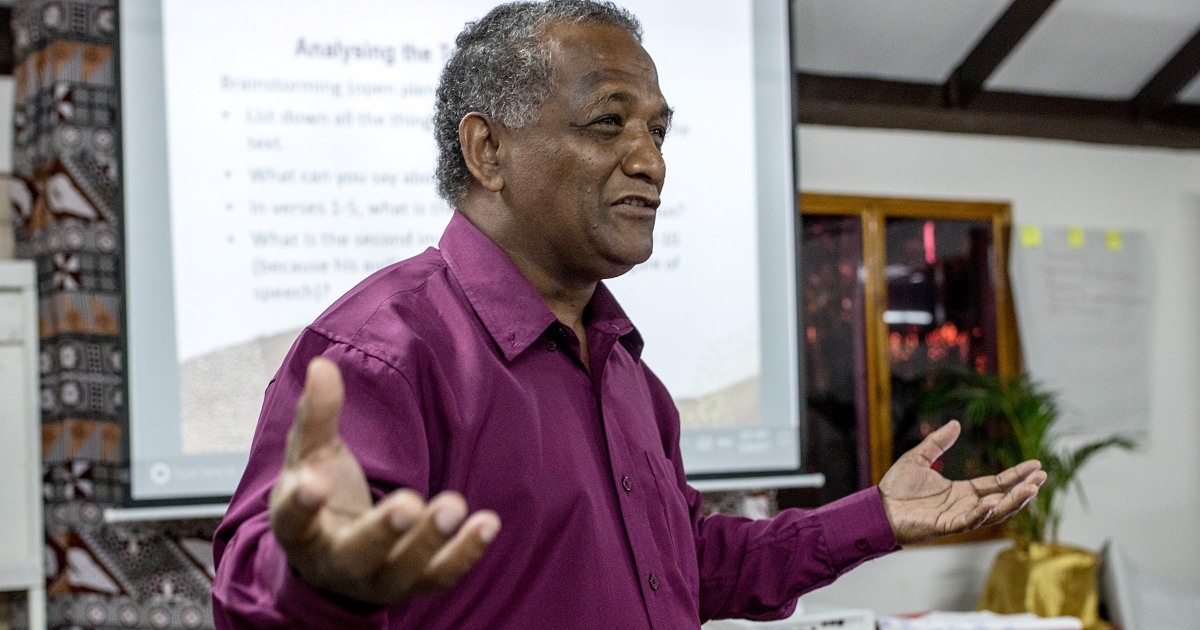
Rev Junior Paradza is one of the leaders championing the new project.

“It’s a difficult place,” Rev Junior says. “The problems are complex and cross over from the very practical, like hunger and disaster relief, to the fact that patriarchal and cultural beliefs mean women and girls have no voice and are vulnerable to high rates of abuse. All these things influence each other, and they don’t just impact the children but the adults too. People want change, but there’s a knowledge gap about how to make it happen.”

Through the schools, our partners found the ideal place to bring together resources, training, policy and communities in need. Selected schools are becoming hubs not only for climate resilience, giving students access to freshly grown food and clean water, but also for sharing knowledge that changes how women and girls are treated and how people with disabilities could be included in their communities.

Designed to impact not only students but their families and surrounding communities, Rev Junior believes the project will grow to reach more than 10,000 people.

“As soon as we began providing guidance and resources, and the school staff knew this was really possible, they have become zealous in planning! They know that this will transform life not just for the families at the school now, but for generations to come.”

Thank you for enabling our partners to lead change and transform lives. In rural Zimbabwe and beyond, your support is helping grow their impact and create lasting change. We’re so grateful. Find out more about the project at www.unitingworld.org.au/possibility


Read more good news from the frontlines of climate change.

Across the Pacific, churches are central to family and community, but leadership is predominantly male. The voices and representation of women are often excluded in decision-making, teaching and leadership, which reinforces gender power-imbalances in society.

We support women to study theology and seek ordination, equipping them for leadership in the Church and community.

Click here to support this project.

Several of our Women in Ministry scholars have graduated recently. We were thrilled to get this note from Rev Toobora from Kiribati:

“I thank God for the gift of life and for our shared calling to serve in the various ministries He has entrusted to us. It is my constant prayer that God will continue to pour out His abundant blessings upon UnitingWorld as it continues to serve His people across the globe.

I would like to express my deepest gratitude to UnitingWorld for its significant role in making my academic journey a successful one. Without the love, support and generosity extended by UnitingWorld in so many ways, I would not have reached this important milestone.Your collective efforts have made a lasting impact.
As we say in Kiribati, Kam bati n rab’a (thank you from the depths of my heart).”

Thanks to the UnitingWorld supporters who have donated and the congregations that have sponsored women like Rev Toobora to pursue their calling to serve God and change lives through their leadership. Currently we have two scholars at Davuilevu Theological College, Fiji, and we will share their progress in future updates.

UnitingWorld’s new-look Engagement Team is here to share stories about exciting change in difficult places and to help you get involved. They serve as a connection between UnitingWorld’s work and Uniting Church congregations throughout Australia.

Team leader Mardi Lumsden, with UnitingWorld since 2017, is inspired by the passion for justice of UnitingWorld supporters.
“I love to see how excited people get when they understand that what UnitingWorld does works – the key is working with local people who
understand the challenges their communities face. Their hope, courage and faith encourage those around them to realise that small
things, done intentionally, grow to make a big impact.”

Antony McMullen is based in Victoria and excited about seeing local congregations realise they can make a real difference in our region. “I think people respond well to the fact that UnitingWorld isn’t about fly-in-fly-out aid but collaborating with actual church communities in our region to support them in doing what they determine is needed in their local
context.”

Barry Higgins is based in NSW and previously worked in international development and the local community services sector. “Community-owned decision making is a bit of a buzz word, but it’s the most effective way to create change and it’s what our partners are doing in our projects around the world. People’s eyes light up when you talk about it because it works, and seeing that happen is what I enjoy most about sharing UnitingWorld stories.”

Rev Cyrus Kung in South Australia is energised by spending time with people to dream together of what’s possible for creating change in the world. “I like hearing stories that are not like my own; they challenge me to open myself a little wider. There’s so much we can learn from our partners when we hear of their stories, and what hopes, dreams and struggles are a reality in their part of the world.”

Long-term team member Jenny Guyatt is a regular on the rural circuit in Queensland, speaking at churches up and down the coast. “They really appreciate the visit, knowing they’re not forgotten, and love hearing about the work of the wider Church. I love to share the stories of our partners who, like our congregations here, really understand the needs of their local communities and want to do what’s best for them.”

Invite the UnitingWorld Engagement Team to speak at your church or group, or ask them how you can support a project – email info@unitingworld.org.au or call 1800 998 122.

(Originally published in UnitingWorld Update Issue 2 2025.)
Read the full newsletter here.

There’s a lot happening in the world right now. Big, overwhelming things. It can feel like all we hear is noise, conflict and fear.

But when I spend time with our partners, in person or through their stories, I see something else. I see courage, determination and love.

I see communities standing firm in the face of poverty, injustice and the growing climate crisis. They’re finding ways to plant seeds for the future.

In the July newsletter, you’ve read about people like Rev Monim, Rev Oto and Rev Junior, leaders deeply rooted in their faith and their communities, doing the hard and hopeful work of change. They remind me that the best antidote to despair is action.

When we stand alongside our partners around the world, sharing resources, prayers and acts of solidarity with the poorest people, we bring God’s love to life.

I also see other reasons for hope.
Our government has made a conscious choice to stay committed to global partnerships and to the values of justice, generosity and cooperation, even as other world leaders turn to self-interest and cynicism.
It may not make headlines, but one of the reasons Australia has stayed this course is the faithful, persistent advocacy of Christians across the country.

Through the Micah Australia network of faith-based organisations, including us and many others, thousands have raised their voices to ensure our government remembers those most vulnerable to poverty and climate change, even with hard decisions to make. It’s a welcome reminder of the collective power we have. Our church partners are stepping up their work to address growing need with creativity and boldness.

And here at UnitingWorld, we’re thinking big about the future, seeking new opportunities to scale up our impact and reach more people with practical, faith-led solutions to poverty and climate change.We can’t do any of it without you.

Your prayers, generosity and partnership are what make this all possible.

Please keep walking with us. Keep sharing the stories. Keep believing, giving and acting.

Because yes, the world is changing and breaking in many ways. But what we do together in these critical times is how we are part of God’s restoration of all things.

Thanks for being with us.


Dr Sureka Goringe

National Director

UnitingWorld


Read more good news from the frontlines of climate change.

Thank you so much for your support during Lent Event this year! We shared inspiring stories of faith, courage and resilience from Tonga in the aftermath of the 2022 volcanic eruption and tsunami. Stories of people like Mr Folau, who miraculously survived more than 27 hours at sea after being swept offshore by the tsunami.

As we took 40 days of faith-filled action for God’s creation, we raised funds to help communities in the Pacific, Africa and Asia fight poverty, build food security and safeguard lives in the face of climate change and disasters.

Thanks to the generosity of supporters like you, we have raised more than $200,000!
If you missed it, you can still see the videos from Tonga at www.lentevent.com.au
And it’s not too late to donate.

Also as part of Lent Event we launched a great new initiative 40 for the Future, enabling individuals and church groups to take on a 40-day challenge to help build a fairer future.

Participants transformed the way they ate, shopped, travelled or used energy for 40 days to reduce their carbon footprint, and set a fundraising goal so their family and friends could sponsor their efforts. Uniting Church President Rev Charissa Suli was one of the people who took up a personal challenge to help make change.

She shared, “Lent is a season of reflection, sacrifice, and renewal and a time to draw closer to God and align our hearts with Christ’s call to love and serve. Lent reminds us that transformation is not just about giving something up, but about making space for something greater God’s justice, peace, and love in our lives and in the world. Through prayer, fasting, and acts of generosity, I hope to not only deepen my own faith but also contribute to the flourishing of others, particularly those in need.”

Thank you to everyone who took part!

Find out more at www.40forthefuture.com.au


Dr Sureka Goringe, National Director of UnitingWorld, recently joined around 60 civil society leaders from across the Pacific, Australia and Aotearoa New Zealand at the Civil Society Climate Summit in Suva, Fiji.

Convened by the Pacific Islands Association of NGOs (PIANGO) and the Australian Council for International Development (ACFID), with support from WWF, the gathering brought together diverse voices to coordinate regional advocacy ahead of COP30 and COP31— the latter set to be hosted by Australia.

“Everyone agrees on the high-level demands,” said Dr Goringe. “We’re all calling for strong mitigation, an exit from fossil fuels, a just transition and investment in loss and damage, adaptation and climate migration. The real challenge lies in how this advocacy happens, and who gets heard.”

Pacific civil society organisations have long collaborated to raise a united voice on climate justice. Their key call is for a COP31 presidency that ensures real influence and access for Indigenous and grassroots leaders, not symbolic participation.

“What Pacific and Indigenous leaders want is a seat at the table, not the side show,” said Dr Goringe. “They’re seeking a COP process that makes space for civil society to help shape decisions, not just respond to them.”

Meanwhile, Australian civil society acknowledged significant gaps in First Nations representation, raising difficult but necessary questions.

“Many First Nations communities are sensing yet another vital conversation happening without them,” Dr Goringe shared. “Everyone wants to centre First Nations voices, but the path to doing that well is complex. It requires time, trust and tangible support. There’s a real commitment to try, but no easy answers.”

“Justice is about the ‘how’ as much as it is about the ‘what,’” she reflected. “Relationships, trust and good process are what build lasting change.”

Australian delegates made two key commitments:

  1. To support the Pacific’s climate justice agenda through their own advocacy, and

  2. To work actively to remove barriers that prevent Pacific civil society from participating meaningfully in COP31, through lobbying, funding and platform-sharing.

“This is where solidarity becomes real,” said Dr Goringe. “It’s about sharing resources, stepping back, and making space for others to lead.”

Along the far north coast of West Papua, Indonesia, people are facing an intensifying struggle to survive on lands and seas that have sustained them for generations.

“Life is hard here and getting harder. Governments make promises about this area but then nothing happens. It feels like we’ve been forgotten.”

Travelling to the remote Tambrauw region in the far north of West Papua, it’s a sentiment you hear often. It’s not just poverty or the lack of services, it’s the sense of being left behind as the world changes around them.
In 2011, more than 70% of Tambrauw was declared a conservation zone, the highest form of environmental protection in Indonesia. The designation was a hard-won victory for Indigenous leaders resisting corporate mining and logging interests. But while most of the forests became protected on paper, the people were not. Development stalled. Poverty deepened. Climate impacts worsened.

“The lack of economic opportunities is the main challenge here,” says Wehermos, a villager who was part of a community consultation carried out by our church partner, the Evangelical Christian Church in the Land of Papua (GKI-TP). The problem with that, he explains, is when a crisis hits a family—a sick child or a garden washed away by floods—they don’t have money to pay for the long trip to a hospital, or to even cover the cost of food when their crops get wiped out.

The situation has created a paradox trapping the people: either protect the nature they depend on or exploit it to survive in the short term; clearing forests, overfishing or selling their land to foreign developers.

In April, GKI-TP and UnitingWorld staff hosted an extensive community consultation and climate analysis to identify the drivers of poverty for men, women and children, and the ways human development can be done sustainably.

“We want to help people make a living and have long-term food security without destroying the forests,” says GKI-TP Program Manager Donaltus Rumbesu. “If our approach works here, we can use it as a model to adapt for communities across Papua.”

Our partners already making change

GKI-TP is one of the largest and most trusted institutions in West Papua. It’s filled with inspiring leaders who are fighting to improve the lives of people across their communities as well as protect the natural environment they depend on. But they need help, and we in Australia can play a powerful role.

In a village where sea levels are rising and fish are disappearing, Rev Oto and his congregation are learning a hard truth: when you destroy the environment, you put your future at risk.

“It used to be all mangrove forests and coral along here,” he says. “But people cut down the mangrove trees and sold the coral to the tourist shops so they could build their houses.”

Most homes now sit on stilts to escape the encroaching sea. And the cost is becoming clear.

“The king tides are getting higher. The mangroves used to be a fence that softened the waves, and now it floods badly. During typhoons, even when they’re far offshore, no one sleeps.  It feels completely exposed, like we’ll be swept away.”

Mangroves are also habitats and breeding grounds for many of the local fish populations. Destroying them has meant fishing families have to go much further and the daily catch is getting harder.
So Rev Oto is working to restore the mangroves, even knowing it will take years. As well as overseeing hundreds of seedlings being planted, he’s found strong support from his church, GKI-TP. Their statement of faith commits the church to caring for the environment to ensure the flourishing of future generations, giving him confidence to speak boldly.

“I tell people it took just a few years to destroy the mangroves and coral.
It will take 30 years to bring them back… but only if we start today.”

In a region of West Papua battling poverty, malnutrition, gender-based violence and climate extremes, Rev Monim spreads hope wherever she can.

Rev Monim’s story begins with deep loss. In 2010, she was away at a church training when torrential rain triggered a landslide. The blocked river overflowed, flooding the town where her two children were staying with friends. They tried to reach higher ground, but as they ran, the riverbank and part of the mountainside gave way. Days later, her son was found alive, buried under metres of debris, cut, broken and stripped by the force of the water. Her daughter was never found. The disaster killed 145 people, left thousands injured and homeless, and destroyed the entire town.

Today, Rev Monim leads a humble but vibrant church in the remote Tambrauw region. Her faith, rooted in grief and resilience, is now deeply connected to protecting life, both human and ecological. “This region really needs help. People want to look after the forests, but life is hard and so many live in poverty. The quickest way for people to make money is to cut down the trees or sell their land.”

In the coming months, we’ll share more from West Papua, where our partners are rolling out nature-based solutions to poverty and climate challenges.

Together, we’re helping communities grow food, earn income and protect the environment they rely on. But we need our help to make it happen.

Visit www.unitingworld.org.au/westpapua to discover the next part of the story
and the impact your donation can have.


See possibility in the face of poverty and climate change

UnitingWorld has launched its 2025 End of Financial Year Appeal, inviting supporters to see possibility where the world often sees only poverty.

This year’s appeal supports a bold initiative in Zimbabwe, where our local partner, the Methodist Church in Zimbabwe, is transforming rural schools into hubs of resilience. The program tackles hunger, water scarcity and climate change by installing solar-powered water systems, growing school gardens and training families in climate-smart agriculture.

Thirteen-year-old Tanaka Chiza is one of the students already experiencing the change.

“Before, it was hard to concentrate in class when I was hungry,” she said.

“But now we have a garden and food at school. I’m learning how to grow vegetables and I want to teach my mother so we can eat better at home.”

The impact reaches far beyond school gates. Rev. Junior Paradza, a former lawyer turned minister, is helping lead the project.

“Water means everything in these villages,” she said.

“Now, families have enough to grow their own food. We’re seeing real change, and people are full of hope.”

Please give generously before 30 June.

Thanks to UnitingWorld’s partnership with the Australian Government, gifts can go up to six times further to support life-changing work in Zimbabwe and across the Pacific, Asia and Africa.

Visit unitingworld.org.au/possibility to learn more and make a tax-deductible donation.