1800 998 122Contact

Project Updates

During the worst economic crisis in Sri Lanka’s history, our partners have been reaching out to help vulnerable communities.

With inflation now above 50%, the cost of everyday goods like food, fuel and medicine has skyrocketed. Essential services have shut down and there have been widespread power cuts. As frustrations boil over and protests escalate, our partner, the Methodist Church Sri Lanka (MCSL), has called for people to refrain from violence and called on leaders to facilitate a swift return to electoral democracy (read full statement).

The human suffering is difficult to comprehend.

Early in the crisis, our partners pledged to do everything in their means to alleviate suffering.

They’ve been doing exactly that. Much of it is happening through Deaf Link and the disability outreach work of the church.

Established by MCSL, Deaf Link is a centre committed to providing access to education for children with disabilities and occupational training to adults with disabilities.

Despite the difficulties of public transport, the Deaf Link team of Rev Gnanarajah and Rev Kandeepan were able to travel in June to visit participants of the Empowering People with Disabilities project in rural areas identified as most vulnerable. They delivered dry ration packs to project participants and to other families identified as needing assistance.

“Due to the present economic crisis in our Island, many people are affected,” said Rev Kandeepan.

“We gave help according to our capacity, but the local Rural Development Society said there are many more families who need help. Hopefully more can be provided as soon as possible.”

“Those who received dry ration packs expressed their gratitude to Deaf Link  and UnitingWorld,” said Rev Kandeepan.

The Deaf Link team also visited self-help groups run by the project, which connect people with disabilities to share knowledge and encourage each other through the crisis. The project also promotes home gardening by providing seeds, training and assistance to market their produce.

A member of the self-help group who lost one of his hands during the civil war was keen to show his home garden and how he can cultivate it with just one hand (pictured right).

The Deaf Link team were planning to visit projects in the Eastern Province this month, but due to exorbitant costs of transport they instead met with the Coordinator in the region to get updates.

Please pray for their important work.

You can help our partners reach the most vulnerable during this unprecedented crisis. All funds raised will support the work of the Methodist Church Sri Lanka providing assistance through through their church and community networks.

People with disabilities are some of the most vulnerable people in Sri Lanka. Without support, disabilities can become a huge barrier to accessing appropriate education, employment and full participation in community life. Because of this, people with disabilities are up to five times more likely to live below the poverty line.

The Deaf Link project mentioned is supported by the Australian Government through the Australian NGO Cooperation Program (ANCP) and impacted the lives of 2,625 people with disabilities in Sri Lanka in FY 2020-21.

More

Previous Update from Partners in Sri Lanka

Calls for prayer as Sri Lanka faces deepening economic crisis


Have you ever reflected on what vulnerability and courage looks like in your life? Here are some excerpts of what one of the students from our Women in Ministry project, Rev. Geraldine from Fiji had to say as she gave her sermon on Genesis 16:1-15.

Genesis 16:1-15 (NRSV)

Now Sarai, Abram’s wife, bore him no children. She had an Egyptian slave whose name was Hagar, and Sarai said to Abram, “You see that the Lord has prevented me from bearing children; go in to my slave; it may be that I shall obtain children by her.” And Abram listened to the voice of Sarai. So, after Abram had lived ten years in the land of Canaan, Sarai, Abram’s wife, took Hagar the Egyptian, her slave, and gave her to her husband Abram as a wife. He went in to Hagar, and she conceived, and when she saw that she had conceived, she looked with contempt on her mistress. Then Sarai said to Abram, “May the wrong done to me be on you! I gave my slave to your embrace, and when she saw that she had conceived, she looked on me with contempt. May the Lord judge between you and me!” But Abram said to Sarai, “Your slave is in your power; do to her as you please.” Then Sarai dealt harshly with her, and she ran away from her.

The angel of the Lord found her by a spring of water in the wilderness, the spring on the way to Shur. And he said, “Hagar, slave of Sarai, where have you come from and where are you going?” She said, “I am running away from my mistress Sarai.” The angel of the Lord said to her, “Return to your mistress, and submit to her.” The angel of the Lord also said to her, “I will so greatly multiply your offspring that they cannot be counted for multitude.” And the angel of the Lord said to her, “Now you have conceived and shall bear a son; you shall call him Ishmael, for the Lord has given heed to your affliction. He shall be a wild ass of a man, with his hand against everyone, and everyone’s hand against him, and he shall live at odds with all his kin.”

So she named the Lord who spoke to her, “You are El-roi,” for she said, “Have I really seen God and remained alive after seeing him?” Therefore the well was called Beer-lahai-roi; it lies between Kadesh and Bered.

Hagar bore Abram a son, and Abram named his son, whom Hagar bore, Ishmael. Abram was eighty-six years old when Hagar bore him Ishmael.

Rev. Geraldine giving a sermon.

Rev. Geraldine’s Reflection

“Vulnerability – the state of being exposed to the possibility of being attacked or harmed, either physically or emotionally. It is that feeling of uneasiness when we are not in our comfort zone or when we lose control. For example, taking risks that might lead to rejection, talking about our mistakes, or facing difficult emotions like fear and shame. However, vulnerability is powerful. Brene Brown said, ‘Owning our story can be hard, but not nearly as difficult as spending our lives running from it. Embracing our vulnerability is risky. But not nearly as dangerous as giving up on love, intimacy and belonging.’

“Hagar entered the story as a vulnerable character. This was the first time she spoke in the story. She had no voice, a woman-servant, and an object for another’s command. But when she and her son were banished, and had to step out of her ‘comfort zone’ and journeyed into the wilderness, it symbolized the recognition of herself as a human being, an individual, rather than a property. It is an act of challenging the status quo that continues to dehumanize people.

“Being vulnerable maybe seen as a weakness but it is a strength. It is the birthplace of joy, creativity, belonging and love. Let us not forget to teach our students the value and the foundation of our faith.

“The wilderness presents a new perspective of seeing God’s covenant not only descending from a male but also from a woman, Hagar. Through Hagar, Ishmael found his place as a freed, courageous child who grew through the arms of her mother.

“Engaging with communities is risky and dangerous. We are submitting ourselves to more disagreements and headaches. But Hagar’s story reminded us that being courageous does not mean walking alone but rather walking with God.

“The belief in one God – monotheism – was more than simply the belief in one God. Because each human was in His image, and because each could be in direct relationship with Him, the individual was suddenly given significance – not just fathers but also mothers, and not just parents but also children. No longer were they fused into a single unit, with a single controlling will. They were each to become persons in their own right, with their own identity and integrity.

“Such changes do not happen overnight, and they do not happen without wrenching dislocations. That is what is happening at both ends of the Abraham story. At the beginning of his mission, Abraham was told to separate himself from his father, and towards the end he was told to separate himself, in different ways, from each of his two sons. These painful episodes represent the agonising birth-pangs of a new way of thinking about humanity.

“First separate, then connect. That is how God created the universe, by first separating domains – day and night, upper and lower waters, sea and dry land – then allowing them to be filled. And that is how we create real personal relationships. By separating and leaving space for the other. Parents should not seek to control children. Spouses should not seek to control one another. It is the carefully calibrated distance between us in which relationship allows each party to grow.

“As Matthew Syed (2017) said, ‘Letting go – that is the essential paradox of parenthood. You care, you nurture, you sacrifice, and then you watch as the little ones fly into the great unknown, often shouting recriminations as they depart. You will experience the stomach clenching pain of separation, but you do so with a smile and a hug, aware that the desire to protect and love must never morph into the tyranny of mollycoddling.’

“Hagar’s story in the wilderness, is the story about the birth of the individual. There must be separation for such momentous change to happen. But the story is also about God teaching us the delicate art of making space, without which no true individuality can grow. In the lovely words of the Irish poet John O’Donohue, our challenge is: ‘To bless the space between us.’”

With your help, Rev. Geraldine is receiving support through our Women in Ministry project. With this, Geraldine and women across the Pacific can receive the theological training and discipleship they need to lead within their communities. Click here to read the latest project update.

Read the latest Women in Ministry project update

Right on the India-Pakistan border, there’s a village of about 600 people. They’re hard-working and creative but overlooked by government for basic services like clean water and education. Families struggle to provide enough food for themselves, and education and employment opportunities do not come by often.

During India’s Delta wave of COVID-19 last year, the lockdowns were crippling for the village.

Those who were day labourers lost their jobs. Families despaired that with schools closed, their children would fall behind in their education, closing off a vital path out of poverty.

Our partner, the Church of North India through the Amritsar Diocese, stepped into the breach.

They got special permits to travel to the village to find out who needed help and why. And they set about casting their stones across the water to create ripples of change that continue today.

For one family, the project workers were a lifeline.

Ranjit and her two sons were struggling to find enough to eat, elder son Yash (pictured) had no work and younger son Patel was finding it almost impossible to keep up with his schooling.

Three years earlier, Ranjit’s husband had died, leaving the family without income. Ranjit is partly paralysed and has never been able to work, and there was no way for either of her sons to contribute because of the lockdowns and job losses.

Ranjit’s youngest son Patel had been invited to attend an education centre run by the Church. Education workers followed him up and discovered that his family had no food or medical supplies, and no source of income. They first provided immediate assistance: meals, information about the pandemic, masks and soap.

After providing emergency relief, CNI sat down with Ranjit to find out what they could do beyond just a band-aid solution.

They helped her to access a widow’s pension, something Ranjit had been trying to do on her own for three years without success. They were also able to get support for her sons: continuing education assistance for her youngest Patel through the study centre, and an employment opportunity for her eldest son, Yash.

It’s just one of thousands of examples of how your support makes lasting ripples of change alongside our partners.

CNI staff returned to the village recently to check in on how the family and others there are doing. Ranjit and her sons told them they’re feeling grateful for the support and hopeful for the future.

“We are very thankful to the Church and project staff who have been so kind to me and my family when we were in so much trouble,” Ranjit says. “I had tried so many sources to get the pension but everything failed. Now we have both education and income to help run the family.”

Click here to read more about the impact of this project.

Across the Pacific, Asia and Africa, this is the approach our partners are taking to transform their communities. They seek out the most vulnerable. They sit with them, learn about their lives and build relationships. If they can find a way to help, they go about leveraging skills and resources to make a long-term impact.

Throughout COVID-19 and other disasters before it, our partners have stayed at the frontlines, risking their lives to serve communities fighting fear, starvation, economic ruin and disease. They have lost leaders, friends and family to COVID-19, but despite the adversities they were able to impact the lives of 464,495 people across our programs last year.

Right now is an especially powerful time to stand in solidarity with our partners and support our shared mission.

As a partner of the Australian Government, we can access funding each year to implement poverty alleviation, gender equality and climate change projects overseas. But we need your help to do it.

We have committed to contribute at least $1 for every $5 we can access in government funding, which means right now your gift goes up to six times as far helping us extend the reach of our programs.

You can help us create more ripples of change by giving a gift today. Together, our impact spreads far and wide and changes lives in so many ways.

Click here to donate now.

Photos by CNI project staff

The Women in Ministry project supports women in the Pacific to study theology and seek ordination, equipping them for leadership in the Church and community.

UnitingWorld’s Mardi Lumsden and Tanya Lee Fenwick have prepared an update about the scholars currently supported.

“Our determined and resilient scholars have hit the ground running in Semester One. This is the first time all our students have been undertaking post-graduate study. It is a testament to their determination and the support of their churches. We also have some wonderful news to share about past students’ success. In this update, we have included video links with greetings from Rev Geraldine and 2021 graduate Asinate, as well as current student profiles. We encourage you to print these profiles and display them to remind you or your congregation of the women you are supporting. Your support, both financial and prayerful, is so important to the students, their churches and the team at UnitingWorld.”

Click here read the full update.

Download the student profiles (great prompts to learn about and pray for the scholars)

Late on a steamy afternoon in Ambon, Maluku, the invitation to visit the pig pen feels a bit overwhelming.

I’m here in Indonesia to meet people who are part of projects run by UnitingWorld’s partner, the Protestant Church of Maluku. My day started at 5am, soaring in over the archipelago after 12 hours in transit via Jakarta, and we’ve been on the run ever since.

The pigs, though, turn out to be well worth it.  And this is why.

“Owning and breeding the pigs changed our lives,” declares a young mum as she and her daughter usher us into the enclosure.

They sit beside a banner that proudly reveals they’re part of a project run by the Protestant Church of Maluku, funded by UnitingWorld.

“Especially because we are women, its good to be able to contribute to the household income and be responsible for making the money we need for school, oil, clothing, that sort of thing. We work hard to look after these animals because they give us so much.”

Like most places in Indonesia, it’s not easy to be a woman in Ambon. In such a patriarchal culture, women are often seen merely as home-makers without many options to make decisions. Girls aren’t always encouraged to dream big. A third of Ambon’s people live on less than dollar a day, and this deeply entrenched poverty hits women hardest.

The pigs are helping women push back.

“It’s not just we have the pigs – we are part of Women’s Groups that teach us all sorts of things,” Lianne explains. “We find out how to make a budget so we can buy more pigs. We each invest some of our savings into the group and then people can take out loans to build up their herd. We learn to make financial decisions too about when to buy or sell the herds.”

This brings genuine freedom and respect – and it doesn’t end with individual families. UnitingWorld’s partner have whole-scale transformation for the community in their sights.

“It started with the pigs, but it’s a support group for us all now,” Lianne acknowledges. “And the thing is, we are also meeting women from places we would not have shared things with before.”

Those ‘places’ are close at hand and have a painful history. The island of Ambon literally caught fire in conflict between Muslims and Christians two decades ago, the port choked with people trying to flee the fighting. 5,000 people died and half a million more were left homeless.

Lianne’s family lived for weeks in the hills, collecting water from plants, the sound of gunfire in their ears. “Religious violence” was likely a cover for political dissent, but rebuilding trust between the communities is long-term, painstaking work.

“We are Muslim and Christian women together in the groups,” Lianne says. “We work together to find creative ways to make a living. We would not have met each other before, but now we are friends.”

Friendship is a deliberate by-product of the livelihood projects run by UnitingWorld’s partner in Ambon.

The church is aware that a new generation of young people are keen to learn about one another’s faith. In response, they’ve initiated forums about peacebuilding as well as practical opportunities to rub shoulders with each other on projects that change lives.

“This is why we run our peace workshops in schools,” explains Rev Jeny Mahupale. She’s a minister within her own congregation as well as coordinating the peacebuilding and livelihood projects of the Church.

We talk about conflict resolution, human rights, how to listen to one another and accept difference. And we put that into action through the groups – hydroponic gardening, breeding animals, support for people with disability. All of these are bringing Muslims and Christians together.”

Pigs, it seems, are a deceptively simple intervention – they’re part of far-reaching work that looks to the future.

If that’s the kind of change you’re keen to support, click here to gift a pig this Christmas. It goes a whole lot further than you might imagine.

More than 70% of women in the Pacific experience violence at the hands of a man in their lifetimes.

With the vast majority of people across the Pacific self-identifying as Christian, Pacific churches have been taking responsibility to speak up for the rights of women and girls, and calling out violence and inequality as a sin. As part of their mission to support the welfare of communities, churches have been using biblical teaching to encourage men and boys to understand that gender justice sets people everywhere free to live life to the full.

While many countries in the Pacific escaped the health impacts of the COVID-19 pandemic, lockdowns and economic slow-downs placed additional pressure on communities already at risk of gender-based violence. UnitingWorld supported partner churches to step up their efforts to protect women’s safety and autonomy during a season of extreme crisis.

Pastor Dorothy remembers being astonished by the idea that God’s vision for humanity included equality between women and men.

“I attended my first workshop in December 2018 with Rev James Bhagwan from Fiji, who opened the Bible to show how gender equality is part of God’s plan for us,” Pastor Dorothy remembers. “It was incredibly eye opening. I had never seen it before, and it had certainly never been taught in theological college.”

Pastor Dorothy is now the Gender Equality Theology Minister with the Presbyterian Church of Vanuatu in a part of the world where women are too often held back from reaching their full potential. Men are the traditional gatekeepers of power and authority, and women have often been regarded as possessions, to be disciplined in whatever way a man chooses.

“The work we do is critical and allows me to help all different groups of people–clergy, administrators, congregations and children–to understand how equality between men and women is part of the Biblical story,” Pastor Dorothy says. “We work together to make practical changes like stopping family violence and giving women opportunities to lead in our homes, families, churches, communities and nation.” The Presbyterian Church of Vanuatu is actively evangelistic, and has oversight of schools and colleges, as well as a theological college to equip its ministers.

Like many Pacific nations, Vanuatu is constantly threatened by natural disasters and their impacts on people’s livelihoods and the wider economy. Alongside the gender justice work, the Presbyterian Church also educates people about the need to be prepared for and actively work against climate-related disasters.

“As a church we draw inspiration from John 10:10 where Jesus says, “I have come that you may have life, and life in abundance,” says Pastor Dorothy. “That means the gospel is relevant for every aspect of life. Jesus is a very practical saviour for humanity, a man of justice and compassion.”

UnitingWorld supports this Pacific-contextual biblical teaching, developed and led by respected Pacific theologians, to work in and through churches to address violence and advocate for gender equality. It challenges the patriarchal ideas of ‘male headship’ and ‘wifely submission’ that often justify gender-based violence, countering them with Bible-based theology of gender equality and respectful relationships.

Ultimately, this work shifts behaviours by changing beliefs: churches develop equality and protection policies, and preach and model equality in their communities.

Between January and June 2020, UnitingWorld’s partners delivered Bible-based messages supporting national government health and domestic violence advice to 49,675 people across four countries. This past financial year, 23,109 men and women engaged with our gender equality program.

Click here to find out more about the Gender Equality Theology project.

Want to support this life-changing work?

Give a gift card to support women leaders this Christmas.

In Zimbabwe, COVID-19 and its impacts severely disrupted livelihoods and expanded the number of extremely poor by 1.3 million in 2020. Ongoing lockdowns and the health crisis have drastically contracted people’s opportunities for earning an income, especially those in the majority informal workforce.

Australian NGO Cooperation Program (ANCP) NGO UnitingWorld and its partner MeDRA (Methodist Development and Relief Agency) have been helping community microfinance groups create lifelines for those in economic stress.

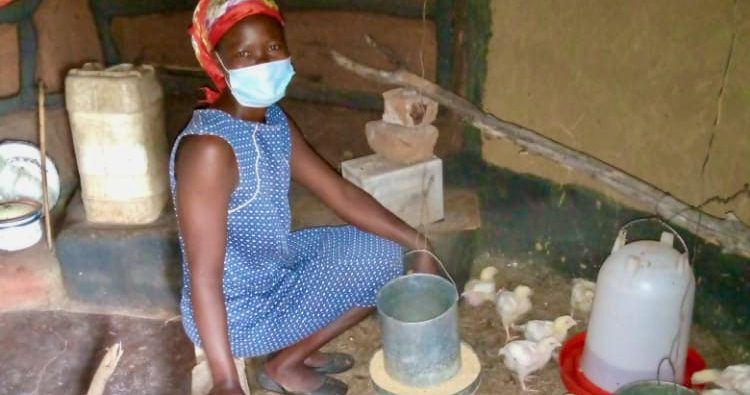
Mavis (pictured) is a member of an Internal Savings and Lending (ISAL) group in a village in Gokwe South. The group receives training from MeDRA and meets together monthly to assess their collective savings and share information.  Each member takes a turn to receive a loan from the group and invest it.

When Mavis’s turn came, she received a USD$215 loan. She discussed some ideas with her family, wanting a project that would give a large benefit, while still being able to pay back the loan to the group.

Supported by her family and the ISAL group, Mavis decided to back herself on a broiler poultry project and bought seventy-five chicks. With technical assistance from MeDRA on how to look after the broilers, she felt confident the venture would succeed.

“The chicks matured into good broilers after six weeks and they sold like hot cakes!” said Mavis.

She was able to use the earnings to expand the project right away.

“I am now doing batches of 100 broilers per cycle and earning close to US$100 each time. The project increased my family’s income, and I could pay back into the group loan. I sell at the local shopping centre to customers who come to the grinding mill or buy basic groceries at the shops. Access to Gokwe’s town center has been limited by the lockdown regulations,” she said.

Mavis now feels confident to expand and diversify her project to also include a ‘tuckshop’ that sells groceries alongside the broilers.

“Especially during this pandemic, I am so proud to be the owner of a project that is giving access to a good income. I am no longer so worried about food security and school fees for my family, as my project can meet the expenses. With proper guidance from the group and MeDRA, I feel like I can never go wrong in life. Thank you for this opportunity!”

Waluwanja gets up for work every day at 5am. After a drink of hot coffee, he’s straight into his back garden, clearing out weeds, watering each plant and making sure no pests are getting in. He grows all sorts of vegetables, but lately he’s been testing out mustard greens, carrots and rice paddies, which he will sell wholesale to street vendors in his community. When a crop becomes ready for harvest, he cleans, prepares and delivers the produce direct to his customers one by one.

Waluwanja learned how to run a productive garden business through UnitingWorld’s partner TLM in West Timor. In one of the poorest provinces in Indonesia, TLM acknowledge that people’s ability to improve their lives and their communities depends on opportunities to earn a sustainable income.

A few years ago, Waluwanja visited a community garden project run by TLM that produces food and teaches people about sustainable agriculture. He walked away with knowledge and inspiration to prepare the large plot of land behind his home to grow fresh food as well as his income.

Then when he lost his job, it was the perfect time to commit to the project.

After slow beginnings, hard work and many 5am mornings experimenting with different organic fertilizers and planting strategies, he started to build a customer base among the street vendors around his village.

He says his secret is delivering early and delivering fresh.

“I have more than 15 vegetable sellers around the village and they are happy to buy from me because I always deliver early in the morning so the vegetables they are selling are still fresh.”

The income it generated enabled him to meet his daily needs, but Waluwanja realised that if he was going to grow the business even more, he was going to need help. So he reached out to some of his neighbours to work with him and he’s now thrilled that he’s creating incomes for others.

Waluwanja’s garden business is now so productive that at different times of year it generates an income averaging between IDR 6 – 18,000,000 or AUD $545 – $1,636 per month. Lately he’s been keeping busy building a new stall to sell his vegetables and other daily necessities direct from the front of his home.

Waluwanja says he works so hard because he wants to earn enough to be able to send his five children to school and eventually university.

“Thank you so much TLM Foundation for giving me a lot of knowledge about agriculture and village governance, so that I can grow to become a successful farmer”.

This project is supported by the Australian Government through the Australian NGO Cooperation Program (ANCP) and impacted the lives of 27,162 people like Waluwanja in 2020-2021.

Thank you ANCP and our supporters! We can’t do this life-changing work without you.

Click here to support this project. 

People with disabilities are some of the most vulnerable people in Sri Lanka. Without support, disabilities can become a huge barrier to accessing appropriate education, employment and full participation in community life. Because of this, people with disabilities are up to five times more likely to live below the poverty line.

Some people never get the support they need to truly thrive.

That was nearly the story for Raj, a Tamil man who grew up on Sri Lanka’s West Coast. From an early age, his parents knew he was different because he couldn’t speak as well as other children and his teachers said he couldn’t understand their lessons and instructions.

His parents became worried and confused. Without adequate schooling, how could Raj get a job? Who would look after him when they were old?

Not long before he was due to start high school, Raj was diagnosed with Down syndrome. Local disability organisation Deaf Link became aware of the family and offered Raj a place in a disability-inclusive class in their school nearby.

Deaf Link is a partner of Australian NGO Cooperation Program (ANCP) NGO UnitingWorld, providing access to education for children with disabilities and occupational training to adults with disabilities.

Purpose-made for children like Raj, the class provided a place for him to feel included and valued while he learnt the skills he would need to succeed throughout his life.

He remembers it fondly. “It was good, better. I got to do sport and dance! I got to talk more,” said Raj.

Once he graduated, Deaf Link helped Raj find work. They know that education can only take you so far if you do not have connections that can lead to opportunities.

After being approached by Deaf Link, a mechanic agreed to take Raj on as an apprentice and for the past two years has been teaching him the tools of the trade. Raj now proudly demonstrates his welding prowess, chats with regular customers and jokes with his supervisor throughout the working week.

“We know what a difference we can make when we work together to support these families, and how much potential people with disabilities have,” said Rev Gnanarajah, who founded Deaf Link after his own son was born deaf.

Rev Gnanarajah can confirm Raj still loves to dance at every opportunity.

This project is supported by the Australian Government through the Australian NGO Cooperation Program (ANCP) and impacted the lives of 2,625 people with disabilities in Sri Lanka in FY 2020-21.

Thank you ANCP and our supporters for making this life-changing work possible!

Update on the COVID-19 outreach activities of the Diocese of Amritsar

Last week we received some encouraging news from our partners in the Diocese of Amritsar, Church of North India, who’ve been at the forefront of community outreach and support during the COVID-19 outbreaks. The second wave has been particularly devastating, pushing the number of deaths over 400,000 in July this year.

Thankfully, our partners report that the situation is improving, but have stressed the need to address the long-term impacts:

“India has seen an improvement in the COVID-19 situation in recent months after going through a crippling second wave. The number of daily new COVID-19 cases has gone down from 400,000 in May 2021 to less than 40,000 in September. However, this pandemic made a crushing impact on the socio cultural and economic fabric of the country. It has highlighted how the absence of physical expression of love and solidarity can be even more devastating than the Coronavirus.”

In a letter to partners, the Diocese of Amritsar sent the below information on the many ways they are addressing the ongoing challenges of COVID-19.

As a UnitingWorld supporter, you’re a partner in this work and we can’t thank you enough for helping make it happen. Please continue to pray for India and the work of our partners there.


Caring for COVID-19 patients

At the beginning of this year, all of the Diocesan hospitals were opened to care for COVID-19 patients. Lady Willingdon Hospital in Manali continues to treat COVID patients on a regular basis. The Oxygen generators provided to the hospitals have been helpful in treating non-COVID patients too. This has significantly reduced the burden on hospital staff during the present challenges posed by the pandemic.


Vaccination drive

The Diocesan workers and clergy have been encouraging people to get vaccinated. Since there is a general shortage of vaccines in the public health centres, the Socio-Economic Development Programme of the Diocese is teaming up with like-minded organisations and organising vaccination drives in the villages.


Microcredit activities

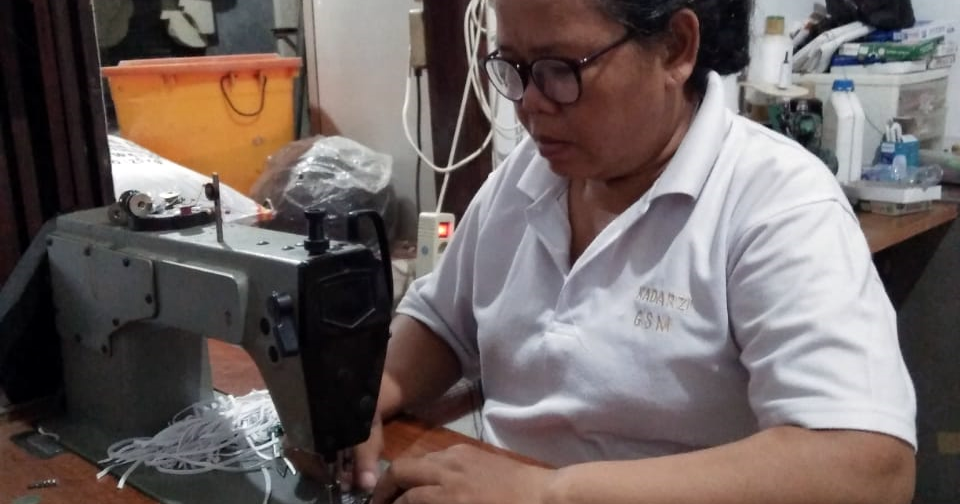
The Dalit communities in Punjab have suffered great economic setbacks during the COVID-19 pandemic. The Diocese is empowering rural women to strengthen their livelihood by encouraging women’s Self-Help Group members to produce saleable items such as face masks, cloth bags, woollens, and pickles.


Love in Action” Helpline:

The Diocese of Amritsar has been able to help numerous individuals and families in this time of crisis through the “Love in Action” Helpline. Grocery kits are also being distributed locally to persons in need. The diocesan workers continue to monitor the health of those who had suffered from the Coronavirus infection previously.

Restrictions on mobility and scarcity of resources has pushed many families to the brink of starvation and death. Among them is Meena*, a young mother from Bangalore. One of her two children suffers from multiple disabilities. Meena lives with her parents who are also dependent on her for their daily needs. When she called on the helpline number, she shared about her difficulty in procuring food for the family, in addition to paying for her son’s medical needs. The financial support provided to Meena from the Diocesan COVID-19 Outreach Programme has helped in ensuring her family’s wellbeing and also contributed towards her son’s ongoing treatment.


Awareness building on health, hygiene and nutrition

As the country is now gearing up for a possible third wave, there is a renewed emphasis on building awareness among the people regarding health, hygiene and proper nutrition. In Anantnag (Jammu and Kashmir), hospitals visitors are made aware of COVID-19 preventive practices through demonstrations by hospital staff. The Socio-Economic Development Project of the Diocese has been giving trainings on health and nutrition to pregnant and lactating women in rural Punjab. Rural households are also being encouraged to start “kitchen gardens” and grow vegetables and herbs for consumption and increase the overall health of family members. Children studying in the Diocesan Education Project enjoy brushing their teeth and washing their hands during their weekly lessons on oral and hand hygiene.


Protection of women and vulnerable groups

Women in disadvantaged positions have been made more vulnerable in the COVID-19 pandemic. The staff of the Jagriti Bhalai Kendra, the Diocesan Community Health Project, have been in regular contact with women who are facing harassment or abuse in the community. They are addressing issues of government pension schemes, domestic abuse, and violence, and are provided with trainings and legal counsel as required. The Diocese of Amritsar has also initiated a series of trainings for all the clergy and Diocesan workers on “Safeguarding”. The trainings focus on protection of women, children and persons with disabilities from abuse and sexual exploitation.


Peace-building and leadership programmes

Churches have now opened for physical worship services though various online programmes are also being organised to strengthen the bonds of community. A Harvest Festival was held in Kotgarh, Himachal Pradesh to celebrate the start of the apple harvest season. A youth leadership camp with 19 Diocesan youth was organised in Dalhousie, Himachal Pradesh. The Diocese of Amritsar in partnership with the Sadhu Sundar Singh Global Forum organised an online celebration of the 132nd birth anniversary of the great Indian missionary, Sadhu Sundar Singh. These programmes have boosted the morale of the people during this challenging period and strengthened the sense of unity and fellowship.


Challenges:

The major challenge faced by the people at this time is the loss of livelihood and employment opportunities. This has been further impacted by the continued farmers’ agitation. The future of the farming community is uncertain. The whole labour force is anxious as the harvest season begins at the end of this month. The Church expresses solidarity with the farming community for their demand for just wages so that they can support their families for the next few months.


The Diocese of Amritsar is grateful for your continued prayers and support. May God bless you and keep you safe.

With prayerful wishes,

The Most Rev. P. K. Samantaroy,
Bishop, Diocese of Amritsar, CNI


(Download original letter as a PDF)


UnitingWorld is the international aid and partnerships agency of the Uniting Church in Australia (UCA). The Diocese of Amritsar, Church of North India is a UCA partner. Click here to support our work in partnership with the global church.