1800 998 122Contact

Social Empowerment for Excluded Castes (India)

UnitingWorld is partnering with the Church of North India – Diocese of Eastern Himalaya to support a tea plantation community in India’s Darjeeling region. A community of 190 people are still recovering from a plantation closure that stripped them of income, housing and food security overnight.

With few transferable skills and increasingly severe climate impacts, including heavy rains, landslides and soil erosion, families have struggled to rebuild their livelihoods.

Senior Project Officer Rose Donovan recently facilitated a four-day consultation and planning workshop with Diocese staff and community members to design a project to help people adapt to the changing climate and find alternative incomes.

“The community took us on a very intimate walk, showing us how they grow their food, their water sources and the landslides scattered throughout the area, and welcoming us into their homes,” said Rose. “They shared their goals and dreams fortheir community, each family longing to shape their own future.”

The Diocese has already employed a local woman as field officer. She had been planning to migrate more than three hours away in search of work, but can now stay and serve her own community.

Over the next three years, our partners will be helping families through climate resilient farming, improved livestock management and access to markets, as well as vocational training and career guidance for young people. They will also be working with the entire community on a disaster preparedness plan, including building awareness on drainage issues, good land management and how to reduce landslide risks.

Diocese Program Manager Sanjay Khaling said, “the community is enthusiastic about working together, and while it is a huge learning process,they are ready to get started.”

This International Women’s Day, the global theme is ‘Balance the Scales.’ It is a call to address the structural barriers that continue to deny women and girls equal access to justice, opportunity and political power. For UnitingWorld and our partners, it is a theme we see reflected every day in the communities we work alongside.

Anya grew up in the Mirabai settlement, a low-income community in Durgapur, in northern India. Her father works as a driver and her mother as a housekeeper, together earning around AUD$100 a month to cover all household costs for a family of five. From an early age the odds were stacked against her. The life script for girls like Anya is a familiar one: leave school early, contribute to the household, and marry young. Her parents were hoping she would marry quickly, as often happens very young in their community. Poverty and social pressure made that script feel inevitable.

But it was not.

Since 2011, UnitingWorld has supported the Church of North India – Diocese of Durgapur to run an Education and Social Empowerment project in Anya’s community. Through study centres, life skills workshops, career counselling and vocational training, the project has transformed lives for many community members, giving young people the tools to write a different story for themselves.

For Anya, that meant access to a study centre and a teacher, Sophia Lakra, who invested in her potential. With that support, Anya completed primary school, went on to further study, joined computer classes and pursued her passion for basketball. She is now enrolled in a college degree and the National Cadet Corps, and is preparing for competitive exams she hopes will lead to stable employment.

Today, she also volunteers at the same study centre where her own journey began, helping to teach the next generation. “I would have drowned in darkness,” she reflects, “if the project and Ms Lakra had not guided me to the light of education.”

Anya’s story illustrates what balancing the scales can look like in practice: not sweeping policy change alone, but consistent, community-level investment in young women’s education, confidence and agency.

There are many more children in her settlement still without access to quality education. The work continues.

If you can support UnitingWorld’s partners as they expand this work, we would love to have you alongside us!


This project is supported by the Australian Government through the Australian NGO Cooperation Program (ANCP). Thanks to ANCP, we’re making a huge difference together; lifting families out of poverty and helping people improve their lives.

When Sohadi Soren received a single goat through her local self-help group, she never imagined how much her life could change.

A mother and grandmother from a small rural village in eastern India, Sohadi was struggling to make ends meet after the sudden loss of her husband. Her family survived on a small plot of land, growing rice and vegetables mostly for their own table. Money was always tight.

Then came the goat.

The gift was part of a community development program supported by UnitingWorld through the Church of North India, Diocese of Durgapur. With training and encouragement from her group, Sohadi began to raise and breed goats. One became two, then three, and before long, she had a small herd.

Over time, Sohadi sold goats to pay off her family’s debts and even buy back land that had been mortgaged. The income helped her invest in cows and a threshing machine for her crops. Today, she provides for her grandchildren, pays for their schooling, and helps others in her village do the same.

“With that one goat I was able to change my family’s life,” Sohadi said. “I wish more people could have the same opportunity.”

Her story is just one example of how practical gifts—simple as a goat, a water pump, or a handful of seeds—can grow into lasting hope.

Through Everything in Common, UnitingWorld’s annual gift catalogue, every card and donation represents love in action. Goats that become herds. Seeds that become gardens. Clean water, education, small business support and more — all helping families overcome poverty and build brighter futures.

This Christmas, you can help more families like Sohadi’s turn small gifts into life-changing opportunities.

Choose  that fight poverty and build hope
www.everythingincommon.com.au

Laboni (pictured above with her mother) grew up in a typical rural village in West Bengal, India, where education is out of reach for many because families are too poor to invest in it.

Stuck in a cycle of poverty like this, going to school never seems as vital as the tasks of daily survival. Children grow up to help in the household or in the fields as soon as they are able; girls are married off young.

“My family was eager to marry me off at an early age,” Laboni now reflects. “It was not just because of my family but also according to our tribal culture; every girl between the ages of 13 and 15 should get married.”

Our church partner, the Church of North India-Diocese of Durgapur, saw the situation and believed that things could, and should, be different.

They supported Laboni’s education, and she became the first in her family to ever finish school. Today she’s pursuing her dreams: working on a university degree and hoping to return to her community as a teacher to inspire others to follow in her footsteps.

“The girls of my village [now] see me, and they are encouraged to study. I’ll tell them to go further,” says Laboni.

“I would urge every girl to stand on her own feet. We girls can participate in the development of our family, society and village.”

Thanks to UnitingWorld supporters and our partnership with the Australian Government, our partners also helped transform Laboni’s whole village and beyond, providing hundreds of families with income-generation support, training in agriculture and animal husbandry, and family health interventions.

The Diocese of Durgapur now runs 27 study centres currently supporting 420 children and a community development program working across 25 villages and two urban slum communities. Since they began the project, our partners have helped more than 2,000 children like Laboni with high-quality education support and career skills.

The wider community development work has grown to impact 1,698 households and 7,691 people with income-generation support, training in agriculture and animal husbandry, and family health interventions.

Laboni’s village is now a different place because of the love, hard work and dedication of our partners spanning more than a decade.

That’s why we believe this type of sustainable community development, led by local partners is the most effective weapon we have against poverty and injustice.

It’s an incredible blessing that we can play a part in creating such profound and lasting change. 

You can play a role too. Your support can help expand this live-changing work in India and beyond.

Click here to join our network of faithful monthly givers working together to build a more just and equitable world. Or find out more about this project here.


This project is supported by the Australian Government
through the Australian NGO Cooperation Program (ANCP).

In the final months of the financial year, we told the story of Laboni, who grew up in a tribal village in remote West Bengal, India.

It’s a place where education is out of reach for many because families are too poor to invest in it. Children grow up to help in the household or in the fields as soon as they are able; girls are married off young.

Our church partner, the Church of North India – Diocese of Durgapur, supported Laboni’s education, and she became the first in her family to ever finish school. Today she’s pursuing her dreams: working on a university degree and hoping to return to her community as a teacher to inspire others to follow in her footsteps.

“The girls of my village [now] see me, and they and they are encouraged to study. I’ll tell them to go further!”  says Laboni.

“I would urge every girl to stand on her own feet.  We girls can participate in the development of our family, society and village.”

The impacts of our partner’s education support won’t stay with Laboni and her peers but will be felt for generations to come…

THANK YOU to everyone who donated to our End of Financial Year Appeal to enable our partners to give opportunities for people to live whole and hopeful lives, as God intended.

Together we raised $496,000, an incredible result! It will be combined with funding we can access from the Australian Government, which will help us make an even bigger impact on poverty and injustice in our world.

Here’s some more of the change you’ve helped create!

Just 20 years old, Simran is a tailor earning an income of around AUD$91 a month. The job represents a huge change for her whole family – and not just materially. Simran’s three elder sisters are all married, and Simran says her parents had been preoccupied with seeing her wed.

Simran met a Community Facilitator from the Diocese of Durgapur, who encouraged her to undertake training at their Stitching and Tailoring Centre. Her training allowed her to secure her first job as a tailor.

“Initially, my father discouraged me from taking up the tailoring job thinking that it might not look good for our family,” Simran says. “But he has since changed his perspective.”
Now, as a working woman, Simran is independent, contributes to the household income, and is eager to encourage other young women to consider a career before marriage.

Back in 2013, Sahadi’s family lived off what they could grow on a small patch of land – paddy, mustard and vegetables. Then Sahadi joined a Self-Help Group established by UnitingWorld’s partner in Durgapur. Within a year, she had received, as an investment from the group, a single goat and livestock breeding training – a huge opportunity she was eager to make the most of!

When food and water are scarce, it’s no small task to keep a goat alive and successfully breed it. But Sahadi was incredibly determined and over the past ten years she has increased her goat flock to 15! Already this year, she has sold seven goats and added an extra AUD$551 to the family income. Her entrepreneurial spirit on fire, Sahadi also invested in three cows – one for domestic use, the others for sale at market bringing in an additional AUD$147.

When a submersible water pump arrived in his village, courtesy of UnitingWorld partners in Durgapur, Dinanath Mahar was delighted. He’d watched his parents struggle as the land was so difficult to farm without irrigation.

And now – WATER! Dinanath underwent training with the Community Development Program and began cultivating crops, including sesame, mustard, paddy, and potatoes. The outcome? An additional AUD$991 per year. The family invested the money back into their farm, buying a second-hand power tiller and a motorcycle to move around the property.

For the first time, they could afford better health care and education. Dinanath’s granddaughter was born in a private health care facility, the first in her family with this start in life. Dinanath’s daughter-in-law, observing how effective the program was, joined also and is now breeding goats, bringing yet more income.

Sophia Lakra discovered a passion to help others early in life.  

Growing up among the poor in West Bengal, she saw the incredible potential of young people as well as the barriers preventing so many from realising their dreams. 

Children became either trapped in a cycle of poverty, or they found a way to escape.  

The difference, as Sophia saw it, was education.  

She wanted to help keep disadvantaged children in school. So she studied hard and at age 21, Sophia became a teacher. 

“I wanted to do something worthwhile in my life,” she says. “I love working with children and I always wanted to make a difference in their lives.” 

“Education has the ability to transform individuals and communities, giving children wisdom, skills and values that enable them to make important decisions and solve problems.” 

Sophia’s passion led her to further studies in social work, and to join the Community Development Program run by the Church of North India, Diocese of Durgapur.  

She is now a Program Facilitator, overseeing study centres that are impacting hundreds of children each year with much-needed education support for disadvantaged children. 

“The major barriers holding these children back are more than just living below the poverty line, it’s the low self-esteem, fear and self-doubt that comes from their families living that way,” she says. 

“Through education, we help children to become confident in who they are … to know what is right from wrong … to have the courage to raise their voice and speak against injustice.” 

“Their knowledge helps to fight social evils like poverty, gender inequality and the caste system. They have a healthier life.”  

Since joining the Community Development Program, she’s now watched generations of children born in slums walk into study centres as toddlers and leave as adolescents, vastly better equipped to find productive work or pursue further study. 

“Mentoring these young souls is such a beautiful experience,” she says. 

“Through education and life skills training, I believe I am preparing these children for life. I care for these children, guide and love them the way I would like my own daughter to be cared for.” 

“It can be stressful at times, but my passion rewards me when I see a smile on these children’s faces.” 

Sophia told me that many of the children stay in close touch and even come back to volunteer in the project to help others. I asked why she thought that was and for her it’s simple:  

“Education changes people… People change the world.” 

Amen.  

Our partners like Sophia are working hard alongside thousands more people on community-wide, sustainable initiatives to end poverty.  

Many of our supporters have already given generously to help us reach this year’s target of $500,000 so that we can fully fund our projects across Asia, Africa and the Pacific.  

With only a few days left in the financial year, please consider a donation to support our work to end poverty and create justice alongside people like Sophia.  

www.unitingworld.org.au/endpoverty

Happy International Women’s Day!  

The theme this year is a great one: Invest in women: Accelerate progress! 

Women’s empowerment and education in places where they are excluded or marginalised has long been a pillar of global development, but lesser known are the climate benefits. 

Women make up a large proportion of the agricultural sector and produce up to 80% of the food in developing countries. When climate disasters hit, women and girls bear a disproportionate burden of the impacts and they’re typically already held back by pre-existing socioeconomic disparities.  

Women are also at the forefront of climate action and are key players in sustainable development the world over. By investing in women as early as possible and ensuring their full participation, we can hear their wisdom, follow their lead and make powerful change.  

What about us in the church?  

Our church is blessed to have so many formidable and bold women leading the way in faith and justice, both in Australia and among our partners overseas.  

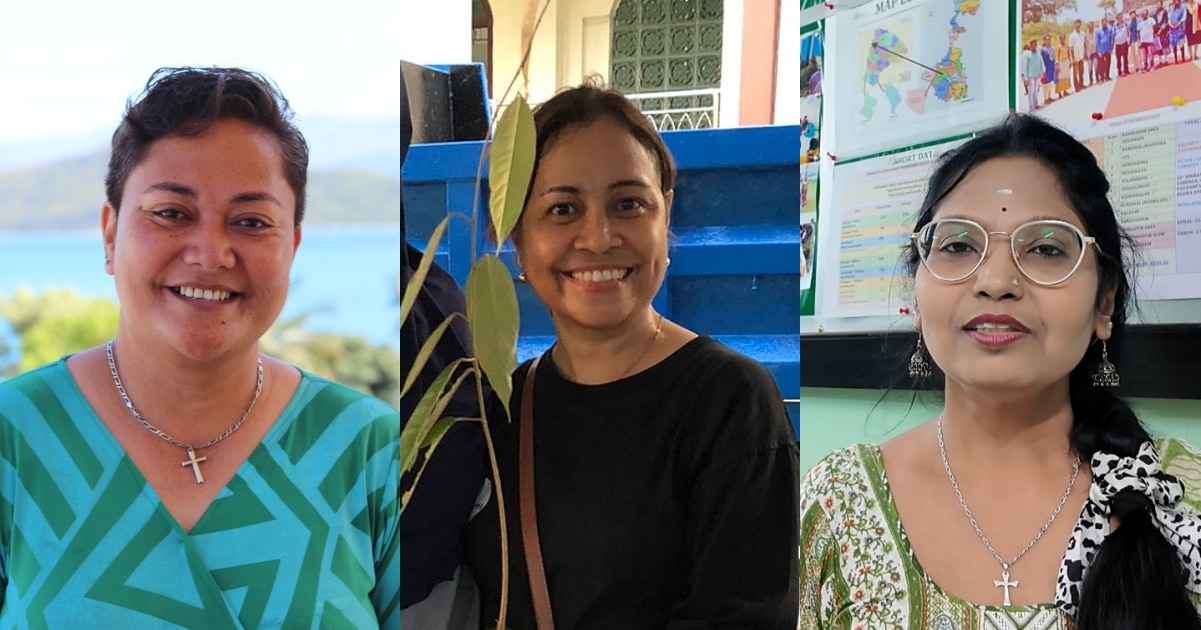
Here are three women we’ve been investing in! 
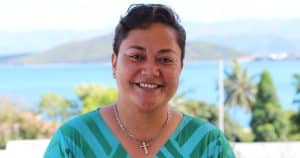
Rev Geraldine
Methodist Church in Fiji

Rev Geraldine from Rotuma in Fiji is an Old Testament theologian who is passionate about her community and culture. She is currently completing her PhD in theology, which was enabled through a scholarship funded by UnitingWorld supporters (thank you!)

Rev Geraldine is a strong advocate for theological education and the inclusion and leadership of women for a stronger, more vibrant church.

“We as leaders need to give space for all people to speak. Not just for scholars, but people in the community. They are living the impacts of climate change and the social issues we need to know about to direct the priorities of the church and its theology,” she says.

On climate action, she said, “the world I want to see is one where … humanity respects creation, animals and trees, because there is life in them; and where there is kindness, caring and loving. Because I see God in that world.”
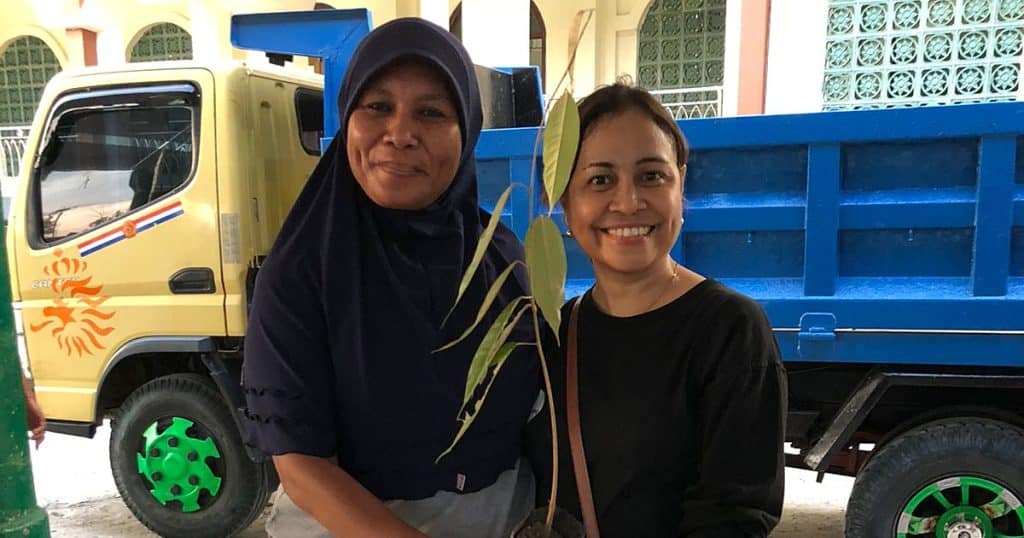
 

Rev Jeny Mahupale 
Protestant Church of Maluku (GPM) 

Rev Jeny (right) is the Project Coordinator of an initiative launched last year, working across six villages to teach and equip people to build and maintain productive kitchen gardens to grow their own food.  

Thanks to UnitingWorld supporters, GPM could access the resources needed to roll out the project in some pilot locations and is now expanding across the villages. Rev Jeny’s team has even been running popular workshops to show communities how to make their own organic fertilisers!  

Rev Jeny is also passionate about peacebuilding (she has been recognised by the United Nations for her work) and a central part of the project is to outreach to Muslim communities to build peace and greater understanding of God’s love for all creation. 

She and her team recently gave away 1,000 tree and plant seedlings in a single day as an outreach of the church, and to build awareness about the kitchen gardens project. 

“Please, as humans, let’s work together for saving the earth – saving our children’s future. Thank you so much for all your support for UnitingWorld and for us in the east part of Indonesia. One plant you give, one vegetable seed you share, is same as you share your breath for other people and nature. Thank You. big hug from Ambon-Maluku, East Indonesia.” 
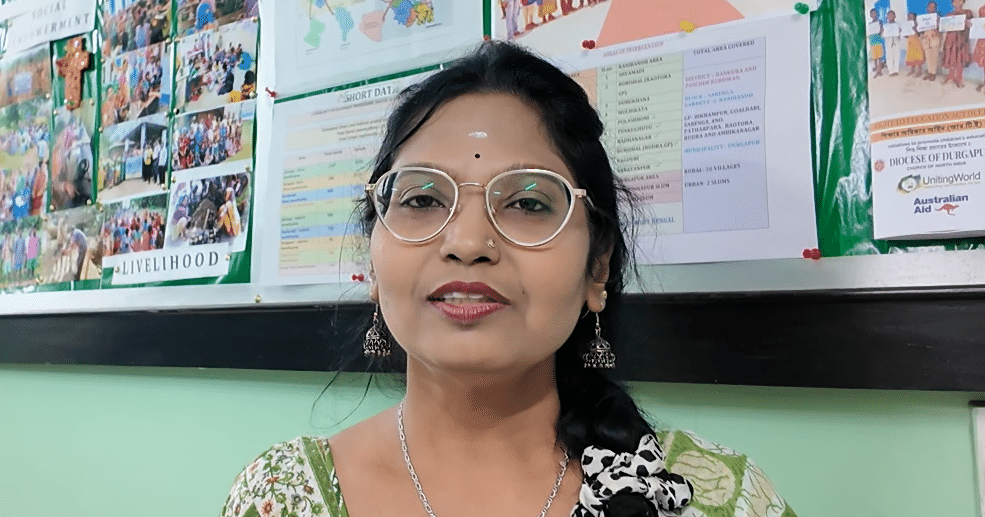
Sophia Lakra,
Church of North India – Diocese of Durgapur 

Sophia is a Program Facilitator for the Community Development Program we support in Durgapur, North India, and is passionate about expanding education access for those who are traditionally marginalised because of poverty, gender or caste.  

During the pandemic, she kept her school’s vacation program going safely by organising a virtual summer camp! Engaging the children’s creativity kept the children connected throughout the holidays during an isolating time. 

“I want to see a world where all children can access education, and all the children who come to our programs are hopeful for a better future. One way to do it is by making children and all people aware of how to take care of the environment. We can plant trees, save water, take care of plants, animals, birds…,” she said recently.
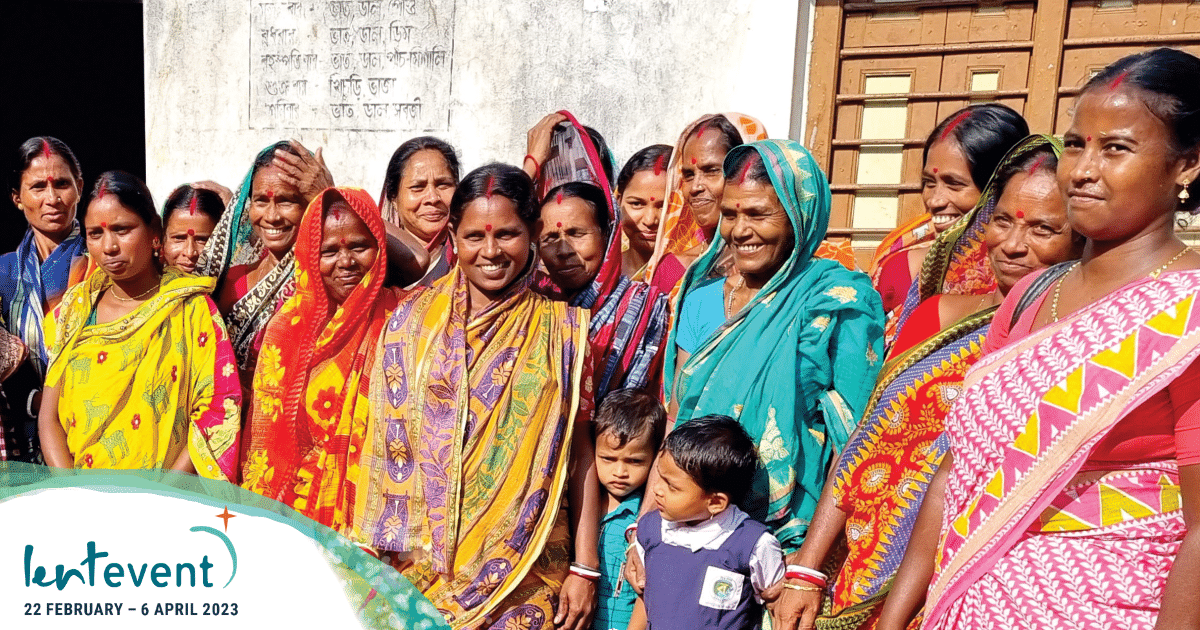

  

Imagine living in a rural village of about 250 people. It’s been your home since birth, and each day follows the simple but tough life of subsistence farming. Access to health services, education, and employment opportunities is severely limited, so, like everyone here, you make a living off the land and strive to give your children the opportunities that you didn’t have.

But for four to five months of every year, the dry season and erratic rainfall make it impossible to grow your crops. When the seasonal drought hits and there isn’t enough water for farming, you and every working-aged person along with your families must migrate far away from home to try to find work to survive. The village becomes practically deserted, leaving only the elderly. Think of what this instability does to your children’s education and the development of your community!

This was the case for a village in Sarenga, West Bengal before our partners the Church of North India (CNI) through the Diocese of Durgapur asked how they could help.

The villagers’ request was a simple one: find a way to put in place a sustainable source of crop irrigation that doesn’t dry up when the rain stops and the local streams become empty.

Thanks to the generosity of UnitingWorld supporters, our partners were able to purchase and install two submersible pumps that can channel large volumes of water across long distances. The new sources of irrigation mean that the community can continue farming throughout the year and not have to travel away and work for others to earn a living. Summer in Sarenga this year has the usual erratic rainfall and dryness. But due to this project, we know that there is now an entire village of people who no longer have to uproot their lives for months at a time and who are hard at work contributing to their families and community.

UnitingWorld’s Program Manager Shreshtha Kumar visited the village this year and was blown away by the complete turnaround described by the people.

It’s so heart-warming to see how the village has become a self-sufficient community. The people can now rely on far better food security and the whole life of the village is benefitting.

Our partners are also helping the community to access high-quality education through their study centre and self-help groups, teaching skills to people to help them develop extra sources of income and pathways to career opportunities.

This is how our partners are making incredible change in 26 rural villages across Sarenga and Ranibandh provinces as well as in two urban slums in Durgapur. These communities are extremely poor and marginalised but are on the way to having more sustainable, healthy and hopeful futures thanks to the love and support of our partners.

This project is such an inspiring example of the life-changing work that UnitingWorld and our supporters get to be a part of, and it’s a testament to our belief that just a few small interventions—guided by communities themselves—can lead to radically positive and long-term change for so many people.

As part of Lent Event, we’re fundraising to support this work that is changing lives and transforming communities in India and beyond. Will you help us reach our goal? Your gift will go a very long way to helping so many people and communities lead lives of dignity and hope.

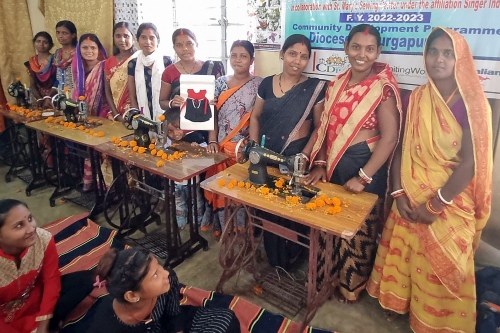
Durgapur Sewing Centre for Adolescent Girls and Married Women

This project is supported by the Australian Government through the Australian NGO Cooperation Program (ANCP). Thanks to ANCP, we’re making a huge difference together; lifting families out of poverty and helping people improve their lives.


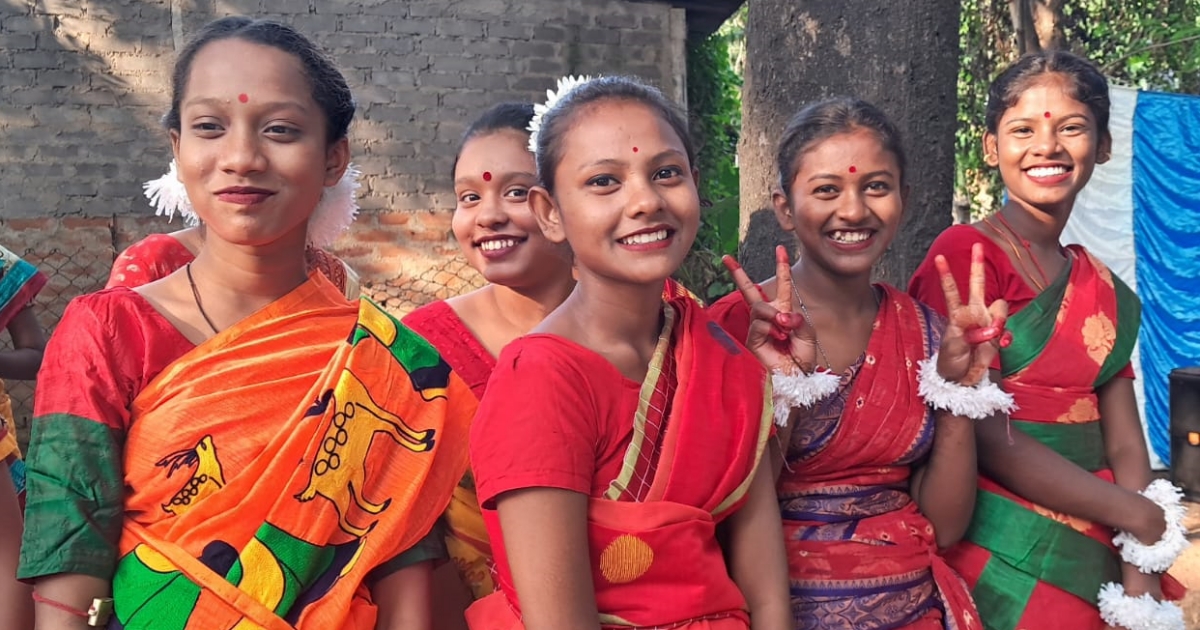
“I want to become a basketball champion when I grow up!” said Lakshmi* when asked about her aspirations for future.

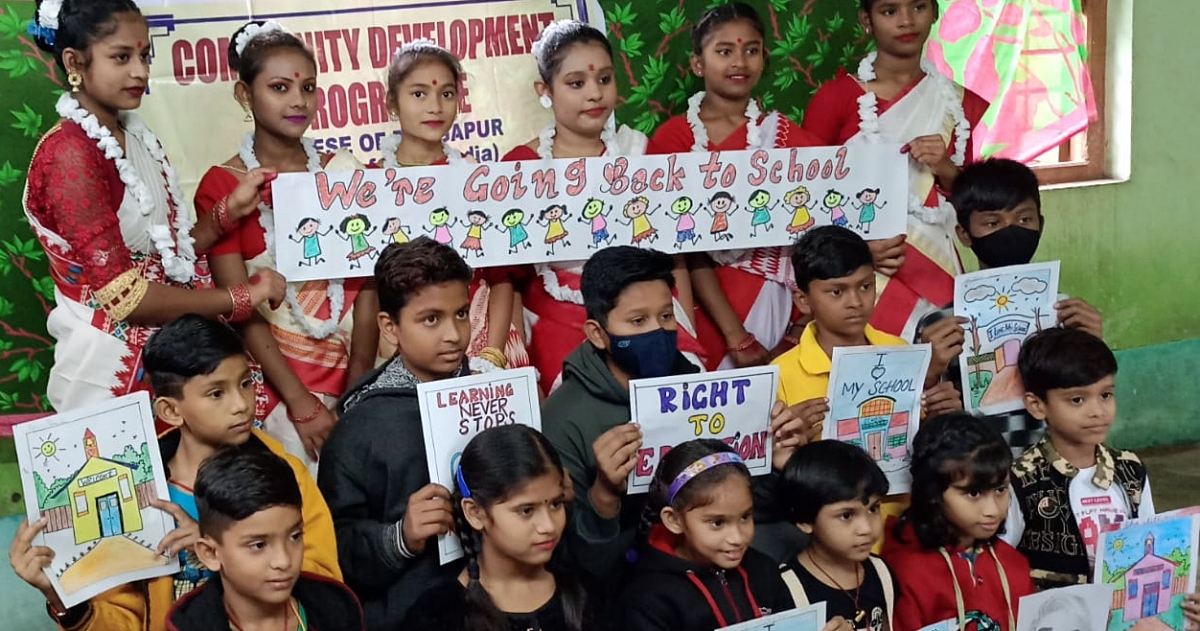
Like Lakshmi, many adolescent girls living in the Durgapur slum community want to pursue careers that defy gender norms and stereotypes. She attends a study centre that is part of the Community Development Program run by our partner, the Diocese of Durgapur. The study centre provides the girls with a safe space to learn, connect, practice extracurricular activities, and share their goals and aspirations for the future with their mentors.

Places like these are so valuable in India, allowing those who are traditionally excluded from opportunities to grow and develop into adulthood. Religious and caste discrimination is one of the leading causes of poverty and social exclusion in India, and this project exists to empower marginalised and economically disadvantaged communities by improving access to quality education, health services, livelihoods and government entitlements.

Looking at the unique needs of adolescents and youth, the project is now looking to expand its scope to include health, education, and career counselling to improve opportunities and prospects for young people.

This happens thanks to our generous supporters! The sale of Everything in Common ‘schoolbooks’ cards enables this project to grow and these girls to pursue their dreams.

Beyond the study centres, we’re supporting the Diocese of Durgapur to offer skills training to marginalised women and farmers so they can build sustainable incomes close to where they live, as well as providing communities with access to and information about a range of government services and schemes.

Thanks to UnitingWorld supporters, our partners are helping communities to become empowered, organised, educated and healthy, involved in local governance and capable of accessing government services and schemes. The project impacted the lives of more than 4,000 people in the last financial year.

*Name changed for privacy

If you want to support the study centres in Durgapur and give the gift of a brighter future for girls like Lakshmi, you can buy the ‘schoolbooks’ e-card or print-at-home card here or make a donation here.

Religious and caste discrimination is one of the leading causes of poverty and social exclusion in India. This has prevented access to basic services, including education, health facilities and other government services and schemes for large sections of society.

UnitingWorld supports the Church of North India’s Diocese of Durgapur and Diocese of Amritsar, to run study centres for children of vulnerable families. The projects operate in the urban slums and tribal villages of West Bengal and in Amritsar near the Pakistani border.

In Durgapur, skills training is also offered to marginalised women and farmers to build livelihoods and provide communities with access to and information about government services and schemes.

In Amritsar, the project also seeks to empower people from marginalised communities to advocate for their rights and entitlements and support women to generate income.

The result of this project is empowered, organised, educated and healthy communities, who are involved in local governance and capable of accessing government services and schemes.

Good news from 2021-2022

In Durgapur, over 3000 people were directly impacted by this work. This included:

  • 365 parents/carers took part in seminars on the importance of childhood education
  • 441 children took part in non-formal education and alternative education pathways
  • 585 people were helped through community health and wellbeing programs, including nutrition, infection control, and access to health care
  • 262 people received better access to essential medicines, health services and commodities
  • 2846 men and women gained access to various livelihoods and social empowerment schemes and services.

In Amritsar, over 7000 people were directly impacted by this work in the last financial year, including:

  • 954 children attending study centres received remedial education from trained teachers
  • 1400 parents attending monthly meetings on their children’s education, encouraging and motivating parents to keep their children in school
  • 425 adolescent children gained awareness on the value of higher education and increased knowledge in career options
  • 140 teenagers attended career guidance camps to help them identify future education and career opportunities
  • 28 teachers participating in training to strengthen teaching skills
  • More than 1200 people accessed their first COVID-19 vaccine
  • 2070 people participated in sessions on health and hygiene
  • 765 people were trained in how to access government services and schemes
  • 97 women involved in self-help groups accessed training on financial management and income generation

Work has also been done to help the Diocese of Amritsar strengthen their organisational systems and processes. The assessment was undertaken by a very helpful local agency.

You can read personal stories from our church partners here on our website.[/vc_column_text]

2022-23 plans

Both the Durgapur and Amritsar projects are changing to reflect new needs of their communities. Some of the activities that will be undertaken in the 2022-23 financial year include:

  • Supporting 467 children in Durgapur and 920 children in Amritsar to continue their studies, including providing healthy snacks, remedial education and training teachers.
  • Capacity building of staff and study centre teachers.
  • Supporting women’s self help groups to build skills and livelihoods.
  • Raising awareness among communities of available government services and schemes, through community workers, notice boards and Village Development Committees.
  • Supporting these communities and community leaders through advocacy, training and leadership development to advocate for the rights and entitlements of their community.

The Durgapur project also supports daily wage labourers and other migrant workers to set up and improve farming practices, building food security and income and enabling them to stay with their families. Vocational training is planned for teenagers to improve their career options.

The project is working to improve disability inclusion. So far, disability analyses have identified 40 people with disabilities in the villages. The project design process will include consulting with local Disabled Persons Organisations, as well as specialists in addressing violence against women.

In Amritsar, the key work continues but with a focus on sustainability and community ownership of the project. Local communities will, of course, need to be supported in a transition to make sure this great work continues without extra support from our partners or UnitingWorld. To no longer be needed is the goal of most projects we work on. The Amritsar project is also increasing their focus on teenagers to support them (as well as encourage their parents to support them) to pursue higher education and career goals.

Thank you for your partnership.