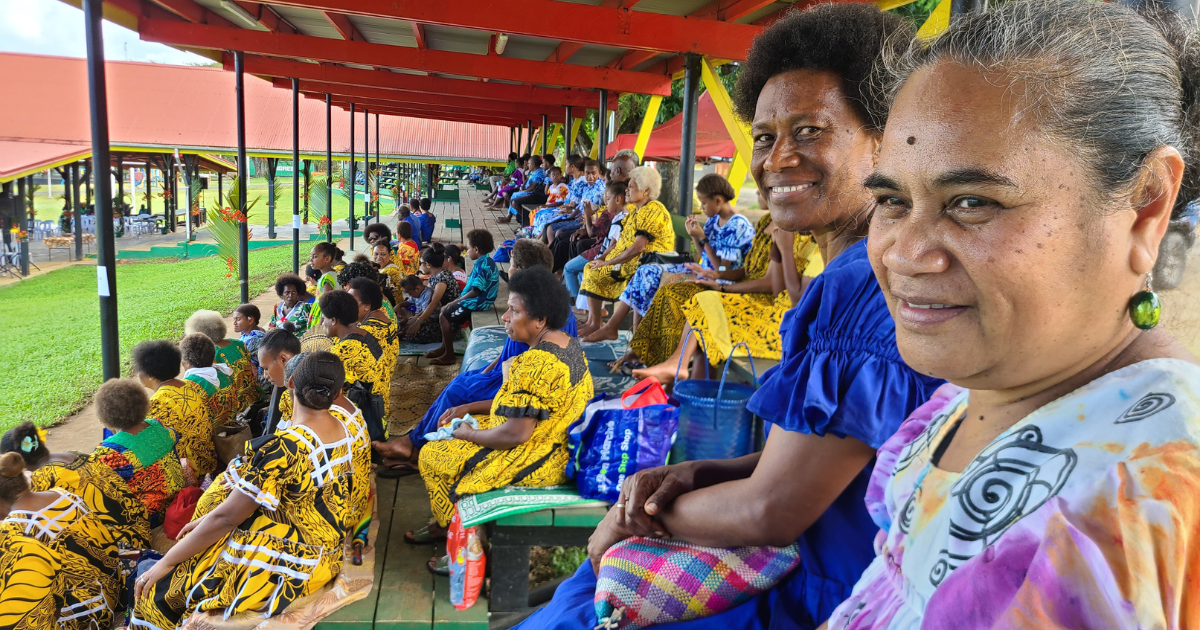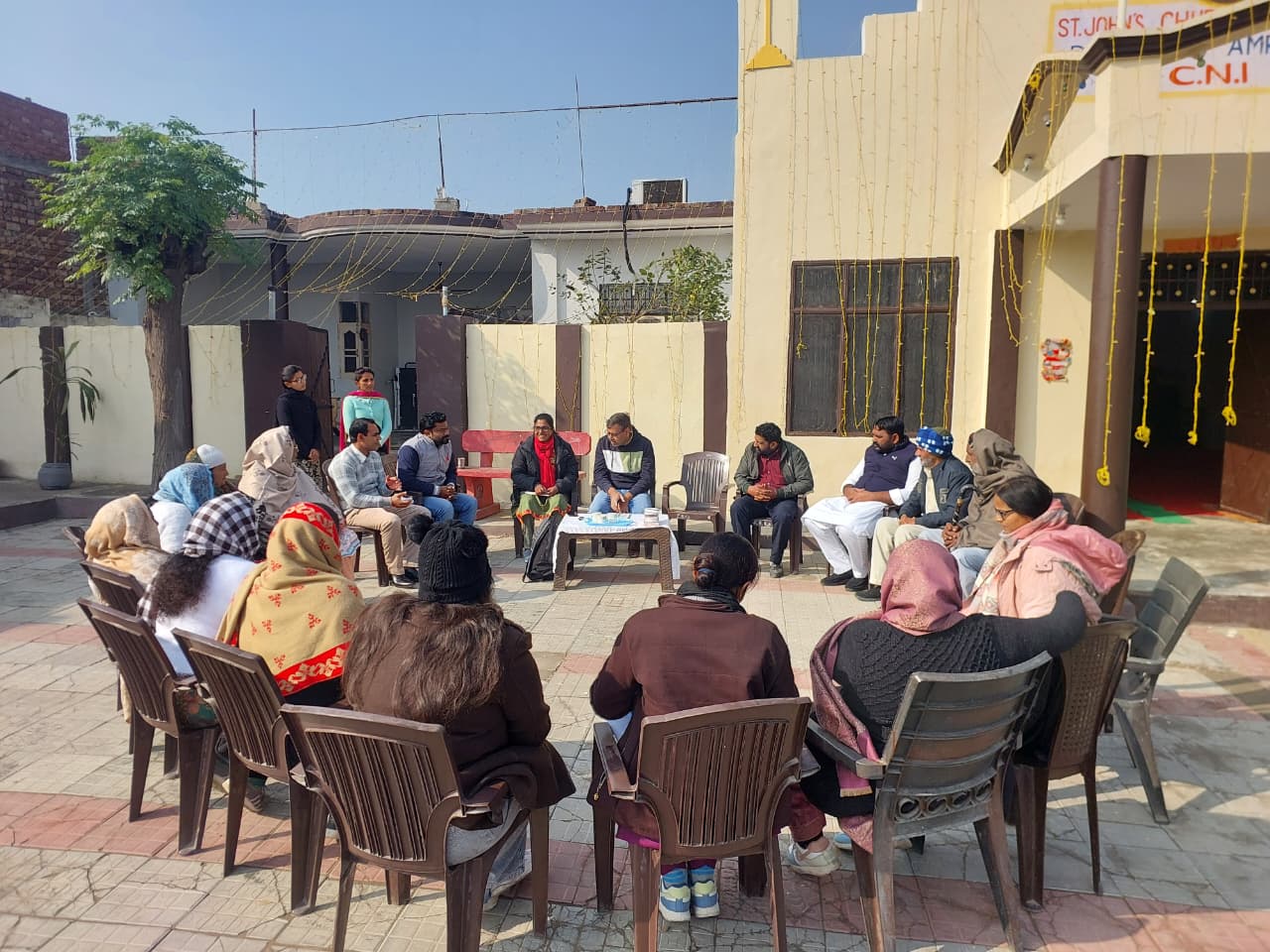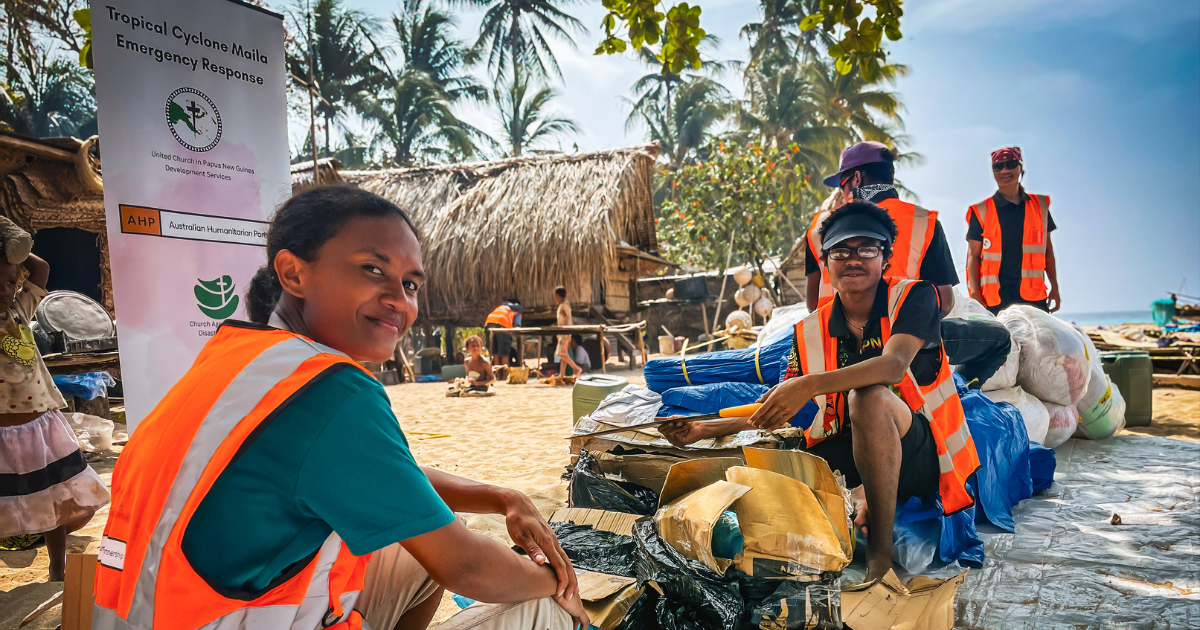
Category 5 Tropical Cyclone Maila passed over eastern Papua New Guinea between 6 and 8 April 2026, caused severe destruction across multiple provinces. On the remote outer islands of Milne Bay Province, wells and gardens that sustain whole communities were damaged. In response, the United Church in Papua New Guinea (UCPNG), supported by the Australian Government through the Australian Humanitarian Partnership (AHP), UnitingWorld and CAN DO*, mobilised to help communities restore access to clean water and rebuild damaged homes.
These islands have no mountains and no gravity-fed water systems. People rely on shallow wells for water and village gardens for food. Maila damaged both.
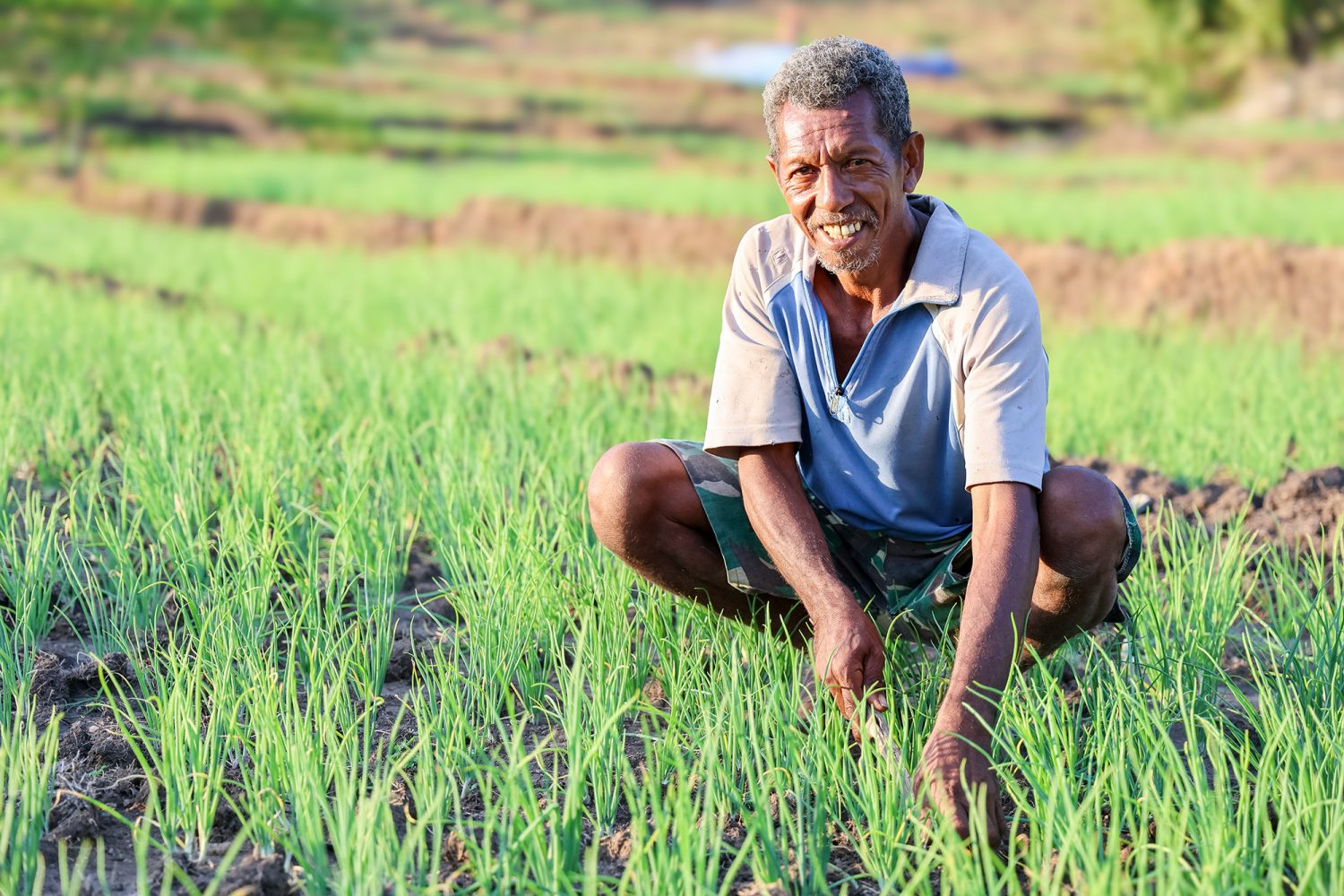
Stanley Dabalauta lives on Yanaba Island. “During the cyclone, the waves were rising up and the trees were falling down. Our gardens and houses were damaged and our water wells spoiled,” he said. The whole community depends on its gardens, and the cyclone wiped them out. Now people are relying on rainwater and coconut milk. Stanley says increasingly dry conditions are already affecting many households, and the dry season has only just begun.
“During the cyclone, the waves were rising up and the trees were falling down. Our gardens and houses were damaged and our water wells spoiled.”
Stanley Dabalauta, resident in Yanaba island
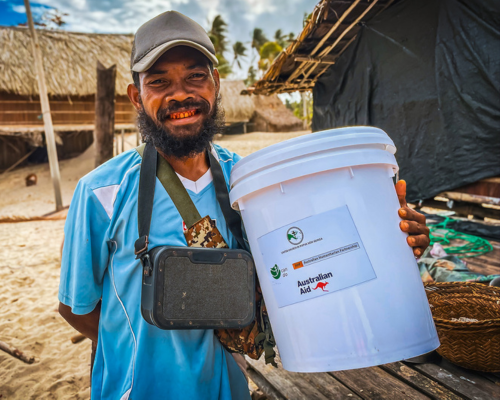
On Egom Island, Rev Gideon has been pastor for 14 years. He watched the cyclone blow the roof off his church. Wind and salt water destroyed the community’s tapioca crop, and wind carried soil and debris across the island and into most of its wells. Gideon says the fresh water in the ground turned salty. “We are now surviving only by eating coconuts and fish each day,” he said. People are walking further for coconuts and travelling to neighbouring communities to ask for bananas.
Housing was also severely impacted. Across two of the communities visited, homes had collapsed and many others were damaged so badly they were uninhabitable. Families relied on support from neighbours and extended family while beginning the recovery process.
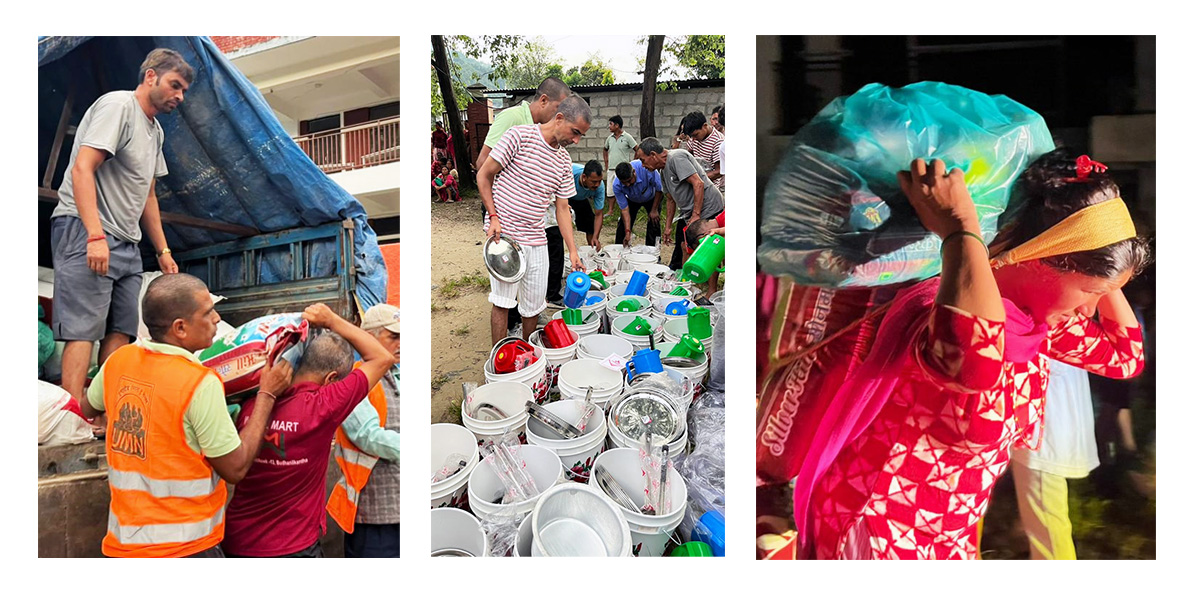
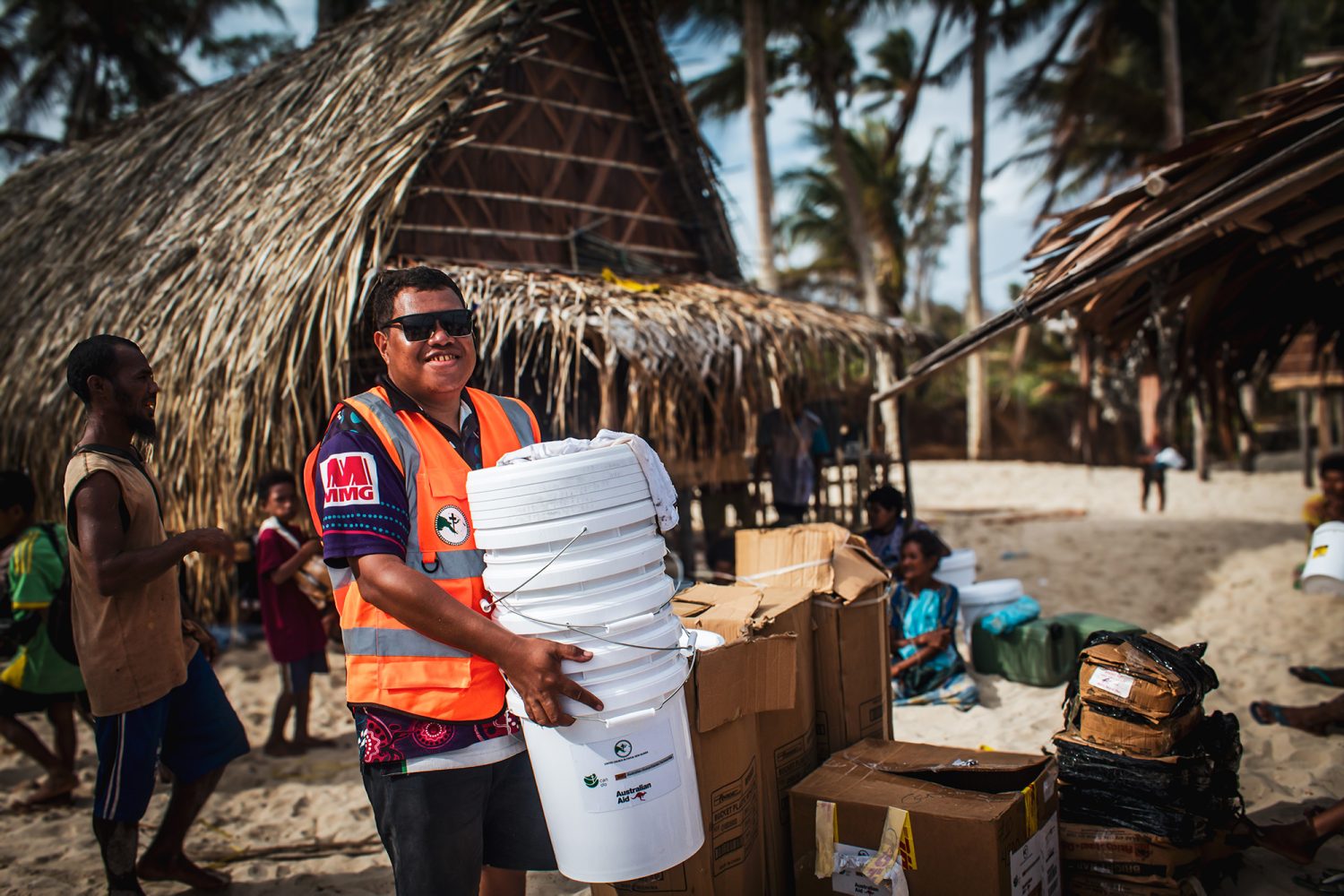
Drawing on its longstanding presence, trusted relationships and community networks across Milne Bay, UCPNG delivered portable water filters, tarpaulins and rebuilding kits, comprising of nails, saws, hammers and bush knives, to nine communities across the Kiriwina and Bwanabwana local-level governments. The response reached 1,619 households with water filters and the materials needed to repair and rebuild damaged homes, helping families restore access to safe water and begin their recovery.
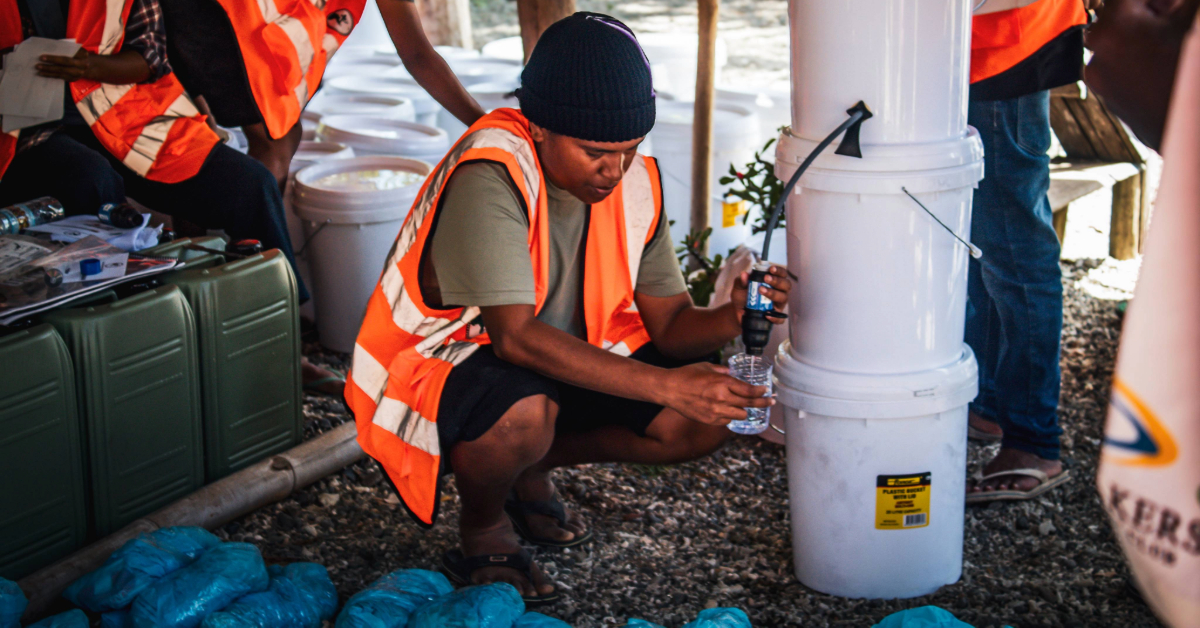
The choice of filters was deliberate. Clement Nusama, from UCPNG’s emergency response team, says wells on these islands are shallow and easily ruined by floodwaters and salt, and water tanks rely on rain that is scarce in the dry season. Filter buckets are a more sustainable option because they do not depend on a protected water source, and each community received water safety training to support the safe use and maintenance of the filters.
The shelter response was equally focused on long-term recovery. Alongside emergency water assistance, the response provided tools and materials that would help families repair and rebuild their homes themselves. “People really need these tools to rebuild because we are so exposed right now,” Stanley said.
Before UCPNG arrived, one woman whose house had been destroyed was unable to begin repairs. With the tools provided through the response, her family was able to begin rebuilding. Community members spoke about sharing resources and working together to rebuild, and about what the buckets and water filters mean in the drought season: clean water for drinking and cooking once again.
Communities are also driving their own recovery. For example, on Egom, the ward councillor and several community members caught coconut crabs and took them to Alotau town to sell. A buyer bought the whole lot at a good price, and the income was used to buy food in bulk for the island. Replanting is difficult while the drought continues, the councillor told her.
One of the reasons the Australian Humanitarian Partnership works is because Partners are often working in communities where they are already known and trusted. And under the TC Maila response, UCPNG did not arrive into communities as strangers. Through Phase 1 of Disaster READY, the same AHP program that channels support through CAN DO, the church had already run disaster preparedness training and a Theology of Disaster Resilience in a Changing Climate (TDRCC) workshop in the region. TC Maila demonstrated how investments in preparedness can strengthen emergency response. Volunteers trained before the disaster were able to support distributions and community engagement when the cyclone struck, distributing water filters and rebuilding kits to their own neighbours.
Tojo Imatana, a member of UCPNG’s Milne Bay Disaster Response Team, says the church network is what gets help to the outer islands.
“When we arrive under our own church’s umbrella, people are excited and willing to work with us. They feel they haven’t been left out, that the church still thinks of them in times like these.”
Tojo Imatana, a member of UCPNG’s Milne Bay Disaster Response Team
Preparing for the next disaster
With El Niño-driven dry conditions forecast for the months ahead, communities now face an additional challenge alongside the cyclone’s impacts. “We’re working to ensure people impacted by the cyclone can settle back to their normal lives in their own homes, but more than that, that they are better prepared for the next disaster, with sustainable clean water and greater awareness,” says Clement.
Rev Gideon says this is the second time UCPNG has come to help his community. “We’re very grateful for these things because we don’t have them here,” he says. “The dry season is long and hard and the cyclone really affected us.” His message to supporters in Australia is simple: “Thank you very much for your support and kindness to us.”
*The Church Agencies Network Disaster Operations (CAN DO) is a consortium of nine Australian aid agencies formed to better coordinate and strengthen their global humanitarian disaster response, risk reduction and resilience building work. CAN DO is supported by the Australian Government’s Department of Foreign Affairs and Trade (DFAT) through the Australian Humanitarian Partnership (AHP).

UnitingWorld was the lead CAN DO agency in the Cyclone Maila response in Papua New Guinea, supporting our church partner, the United Church in Papua New Guinea to implement.
 Photography and field reporting by Leila Parina (UCPNG / Pacific Conference of Churches) for UnitingWorld.