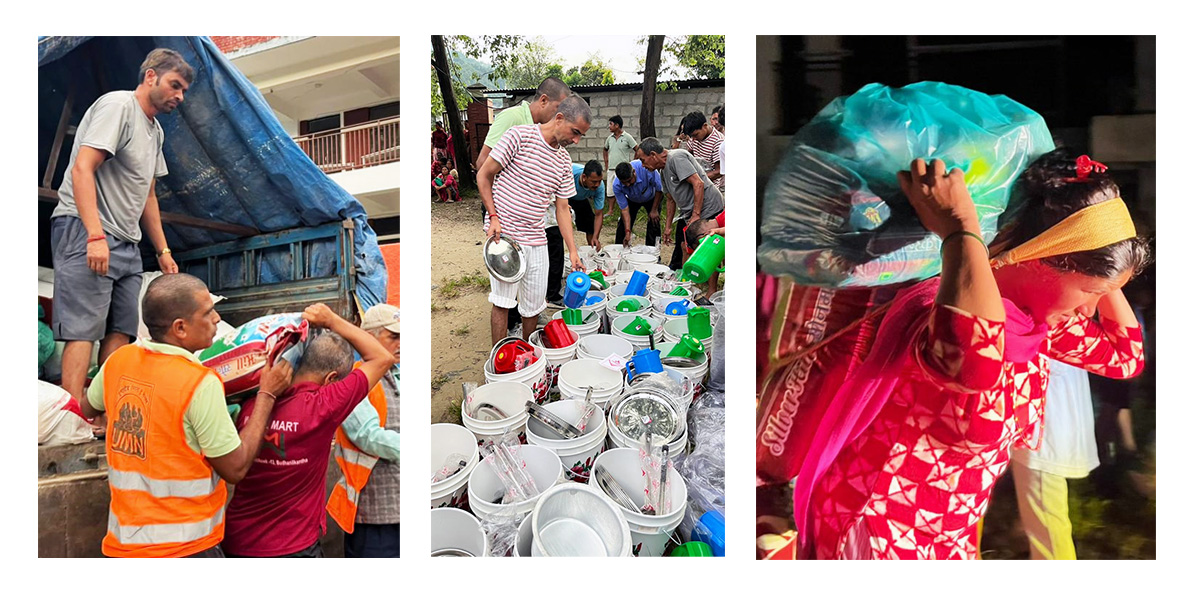
Deadly flash floods struck villages in the border region between Nepal and Tibet on Wednesday, 26 August 2026. Donations received through UnitingWorld will be directed to the work of United Mission to Nepal (UNM), to provide immediate relief and support for recovery.
You can help bring immediate aid and long-term support for people affected by the flash floods in Nepal.
You can also donate over the phone during business hours (AEDT). Ring 1800 998 122.
The need
On 26 August, floods of water and debris tore through communities in Rasuwa, Nuwakot and Dhading in the border region between Nepal and Tibet. Caused by ice breaking off a Himalayan glacier, the floods have wiped out entire villages and market areas in valleys downstream.
More than 1,500 people lost their lives and 5,600 remain missing. Some 100,000 people have been affected, including more than 30,000 children.*
How your support will help people impacted.
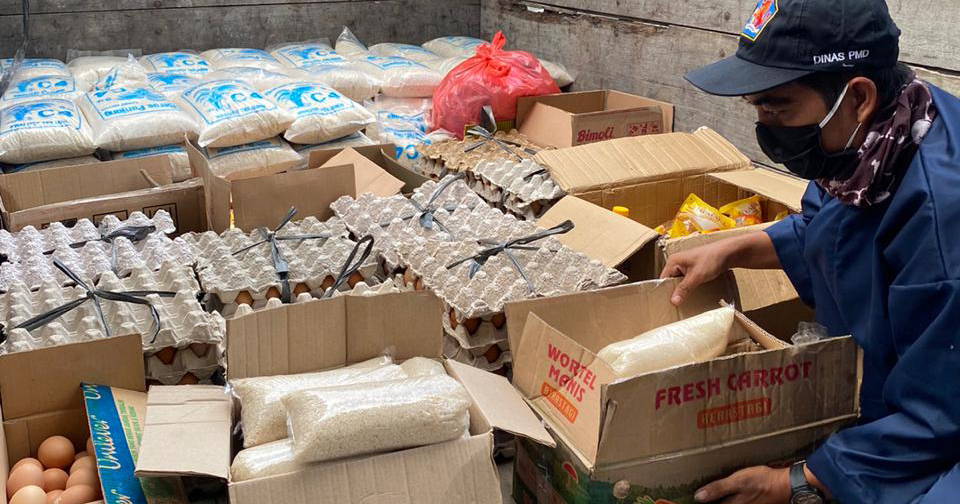
Immediate relief: Working in the Dhading and Nuwakot Districts, United Mision to Nepal are supporting approximately 1,000 affected families with essential food and non-food relief items, based on needs identified through rapid assessment.
Response and recovery: as communities move into recovery, they will focus on education, including rebuilding damaged schools and establishing temporary learning centres, so that children can resume their education as soon as possible. The scale and scope of this recovery work will depend on the needs identified and the funding available.
“The need remains urgent. For families who have lost everything: every food item, every utensil. Every helping hand matters. The devastation is immense.”
United Mission for Nepal Update, Sept 2026
Working in partnership
Our response to the Nepal floods is being delivered by United Mission to Nepal, working on the ground as the local partner of Baptist World Aid. UnitingWorld and Baptist World Aid are both members of CAN DO, a network of Australian church aid agencies that combine resources to respond faster and stronger to disasters.
Information and images from United Mission to Nepal website. Photo credit: Online Khabar
Village Health and Climate Resilience, West Timor (NTT)
In the villages of Alor and Rote in eastern Indonesia, many mothers go without enough nutritious food, and East Nusa Tenggara has some of the highest rates of child stunting in the country. Coastlines are eroding and farmland is drying out, so keeping children well gets harder every year.
Tanaoba Lais Manekat (TLM), the development agency of the Christian Evangelical Church in Timor, works with villages on Alor and Rote in East Nusa Tenggara (NTT) so mothers and children stay well and families can make a living through long term shifts in climatic conditions and weather patterns. At the heart of it are village health workers, local people trained by TLM to support pregnant women, new mothers and children who aren’t growing well. They monitor pregnant women for anaemia, teach healthy diets, and make sure no pregnancy goes unnoticed and unsupported.
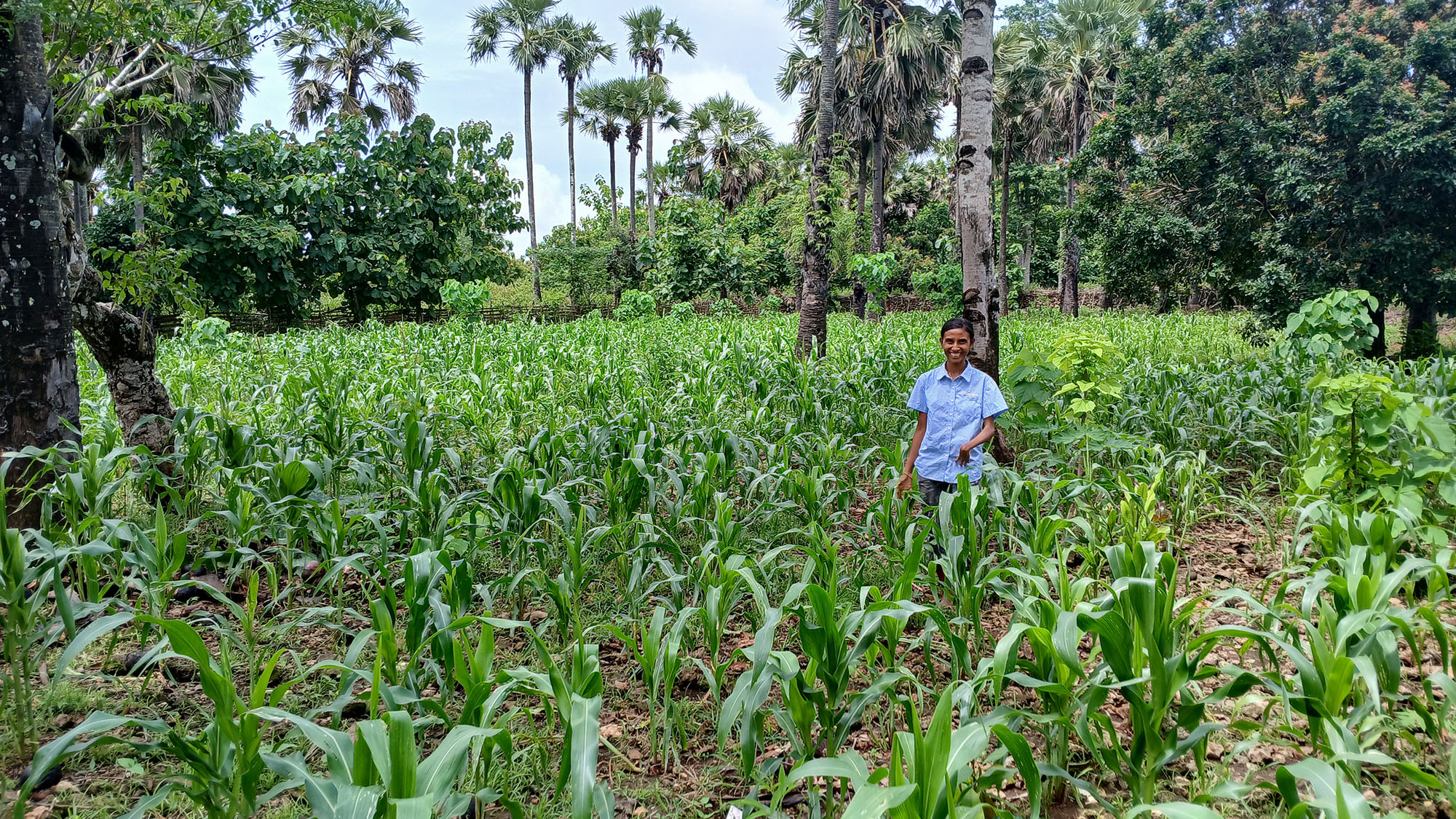
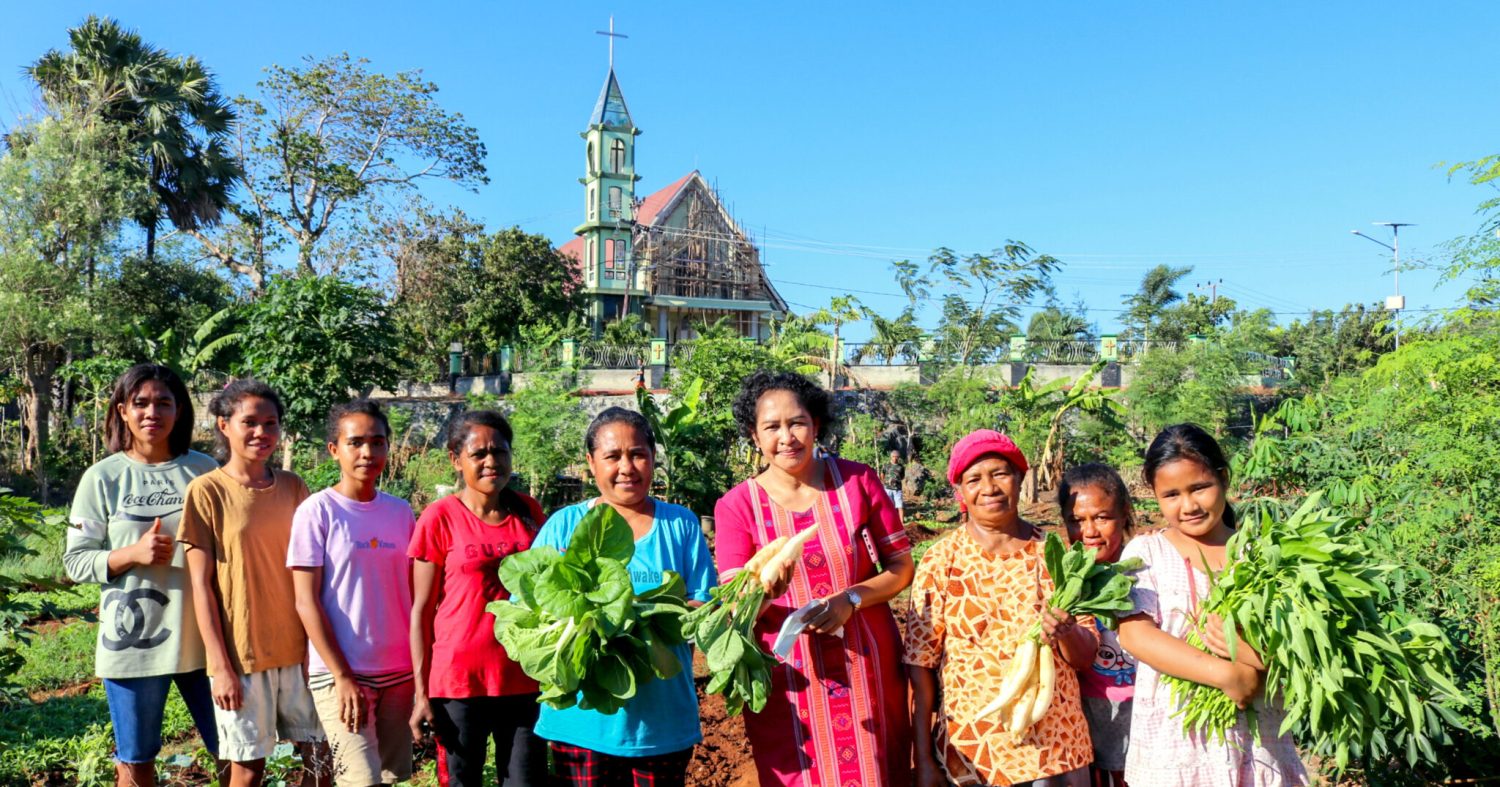
Food starts at home. Families learn to grow vegetables in small yards, keep egg-laying chickens for protein and share the harvest from church gardens, so mothers and children eat better and surplus produce brings in a little income. Communities are also preparing for for storms, floods and drought, from planting mangroves on eroding shorelines to forming village disaster teams.
An independent evaluation of the first phase of the project found the project contributed to a 51% fall in stunting. Village governments have noticed. In Kopidil, the village government now supports the village health workers with part of its own village fund, and other villages are copying the kitchen gardens and building the work into their village plans.
“I feel grateful every time my efforts succeed in raising awareness about health for pregnant women, mothers, and families. It reminds me that big changes can begin with care, commitment, and small, consistent actions.”
-Ance Ouwlaana, a community health worker with TLM
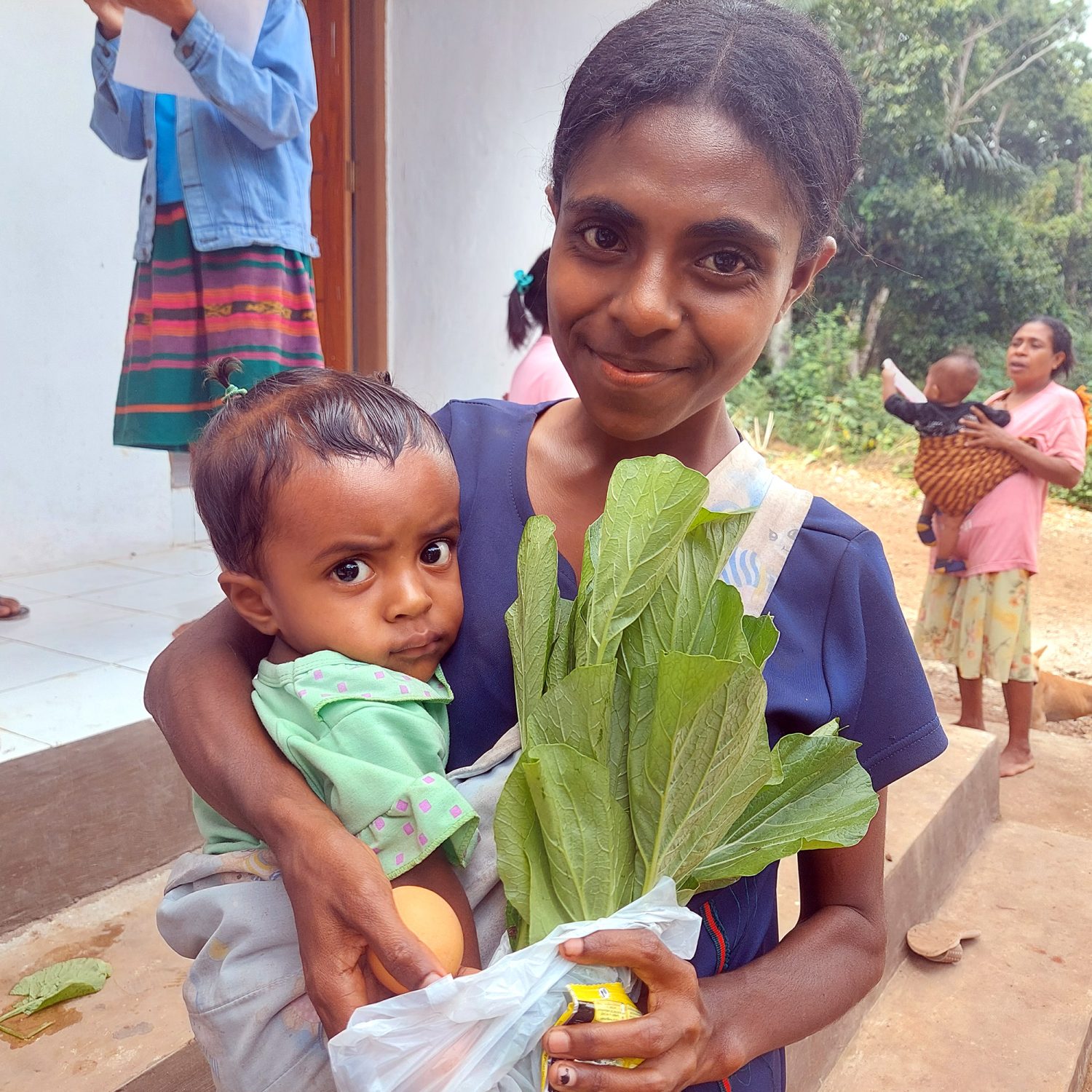
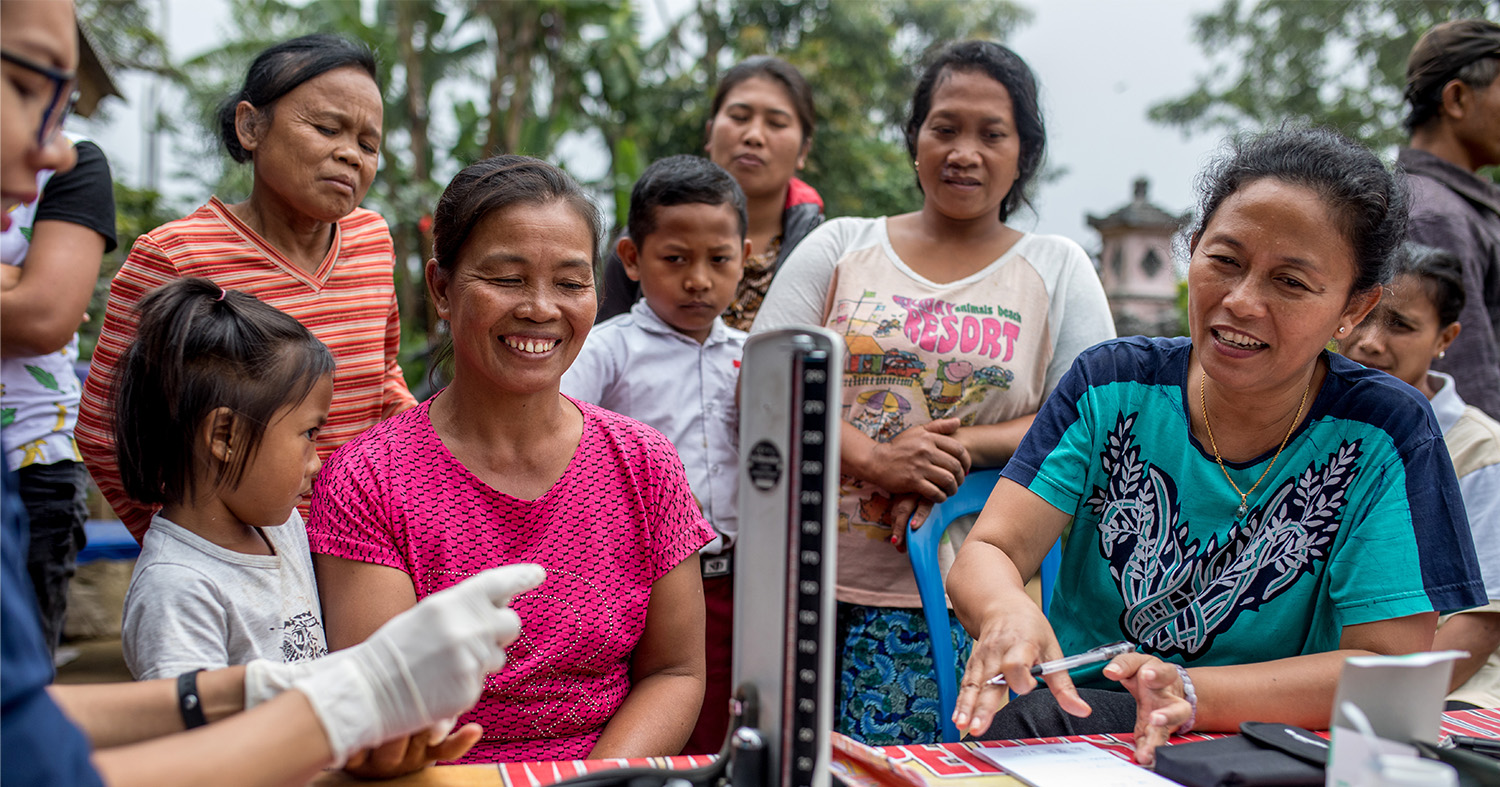
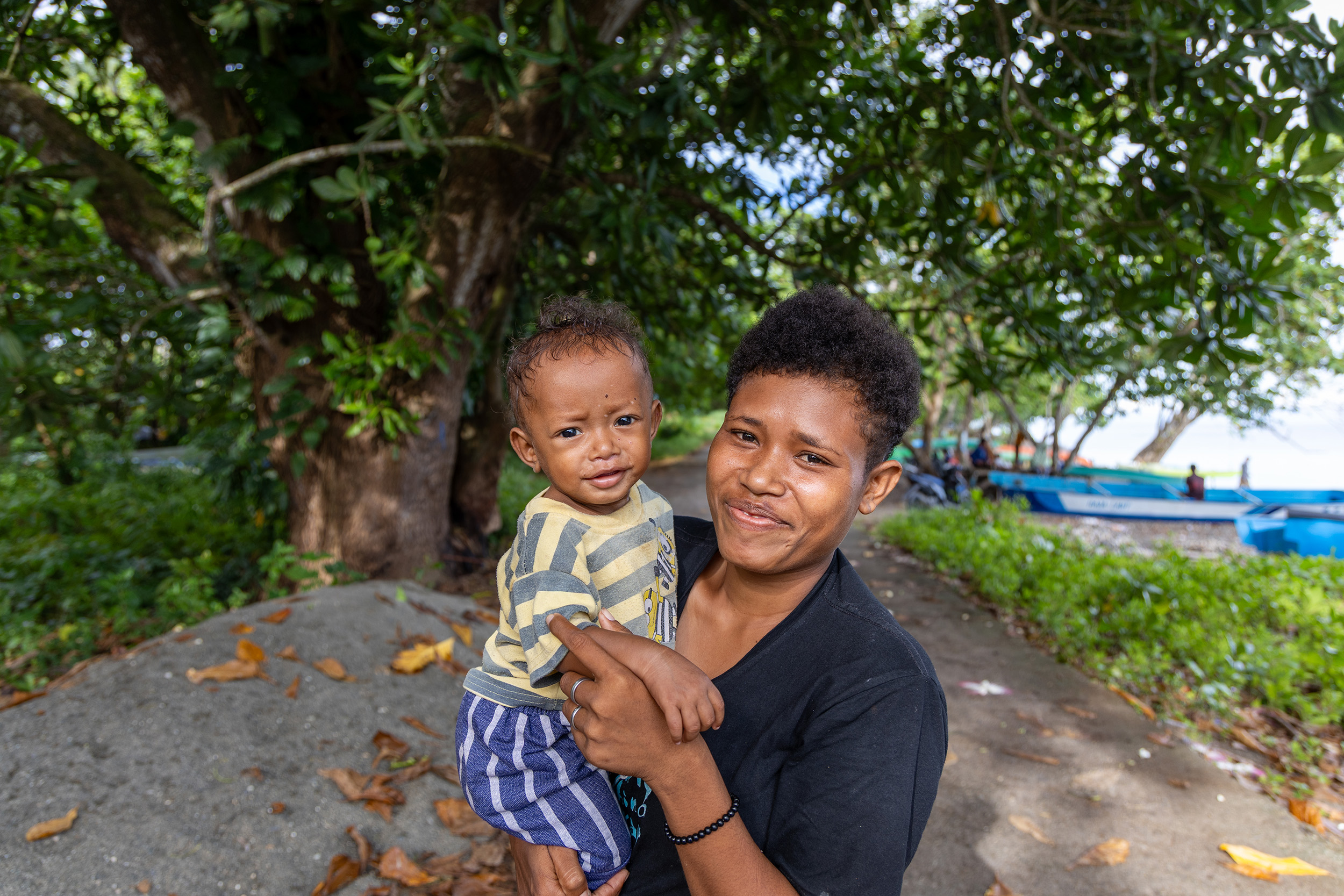
Pictured: A young mother receiving fresh vegetables and health screenings to prevent malnutrition and stunting among mothers and babies in rural NTT
Our partner
Tanaoba Lais Manekat (TLM) is the development agency of the Christian Evangelical Church in Timor (GMIT). Working hand in hand with village governments and congregations on Alor and Rote, it has been UnitingWorld’s partner for years, and village leaders say its programs address the issues they face every day.
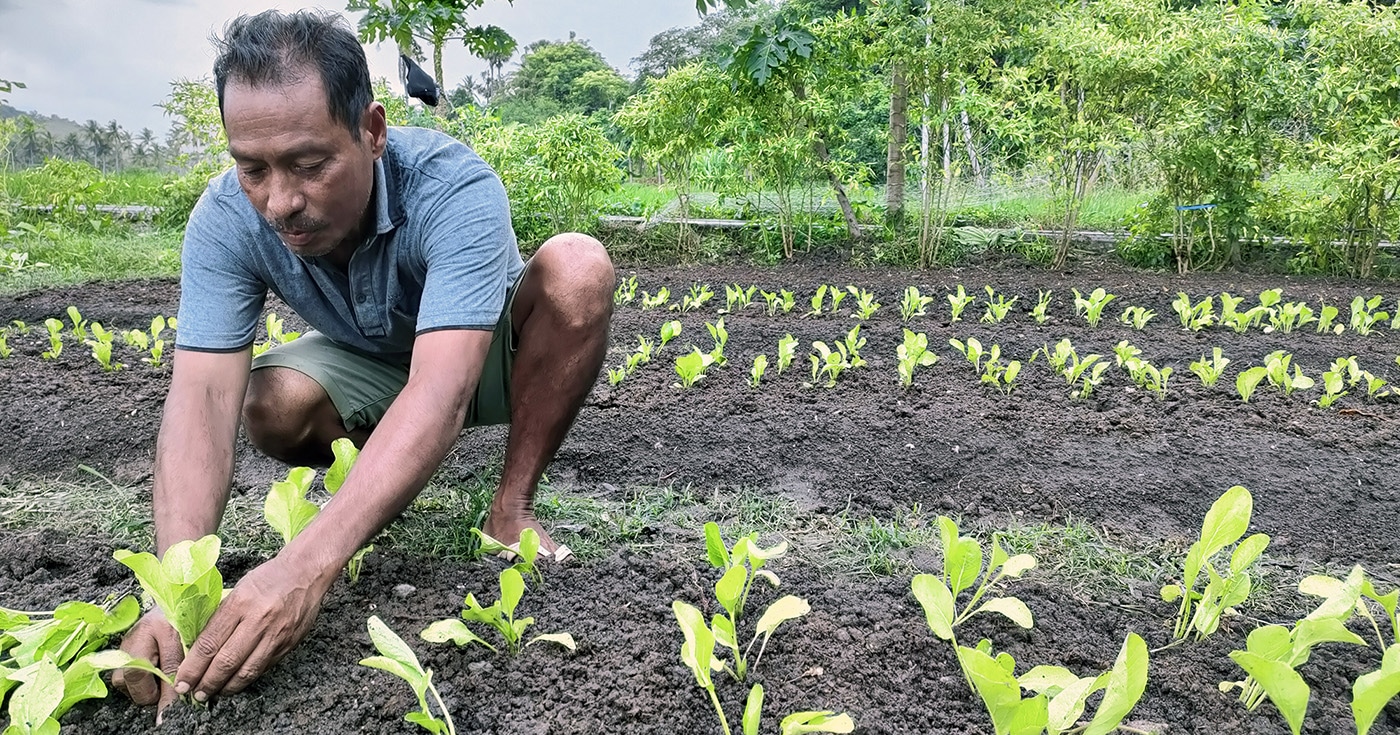
Waluwanja gets up for work every day at 5am. After a drink of hot coffee, he’s straight into his back garden, clearing out weeds, watering each plant and making sure no pests are getting in. He grows all sorts of vegetables, but lately he’s been testing out mustard greens, carrots and rice paddies, which he […]
Even before she was conceived, Mery Kolimon had a calling. Her parents, Timorese nationals from one of Indonesia’s most beautiful archipelagos, dedicated their first child to God’s work even before Mery’s mother fell pregnant. It was a promise with a profound impact. Rev Dr Mery Kolimon is now the first woman to become Moderator of […]
Read more
Help mothers and children in eastern Indonesia stay well
Your gift helps TLM train village health cadres, grow nutritious food at home and build the village support that keeps it going.
Eastern Himalaya Climate Resilience and Community Development
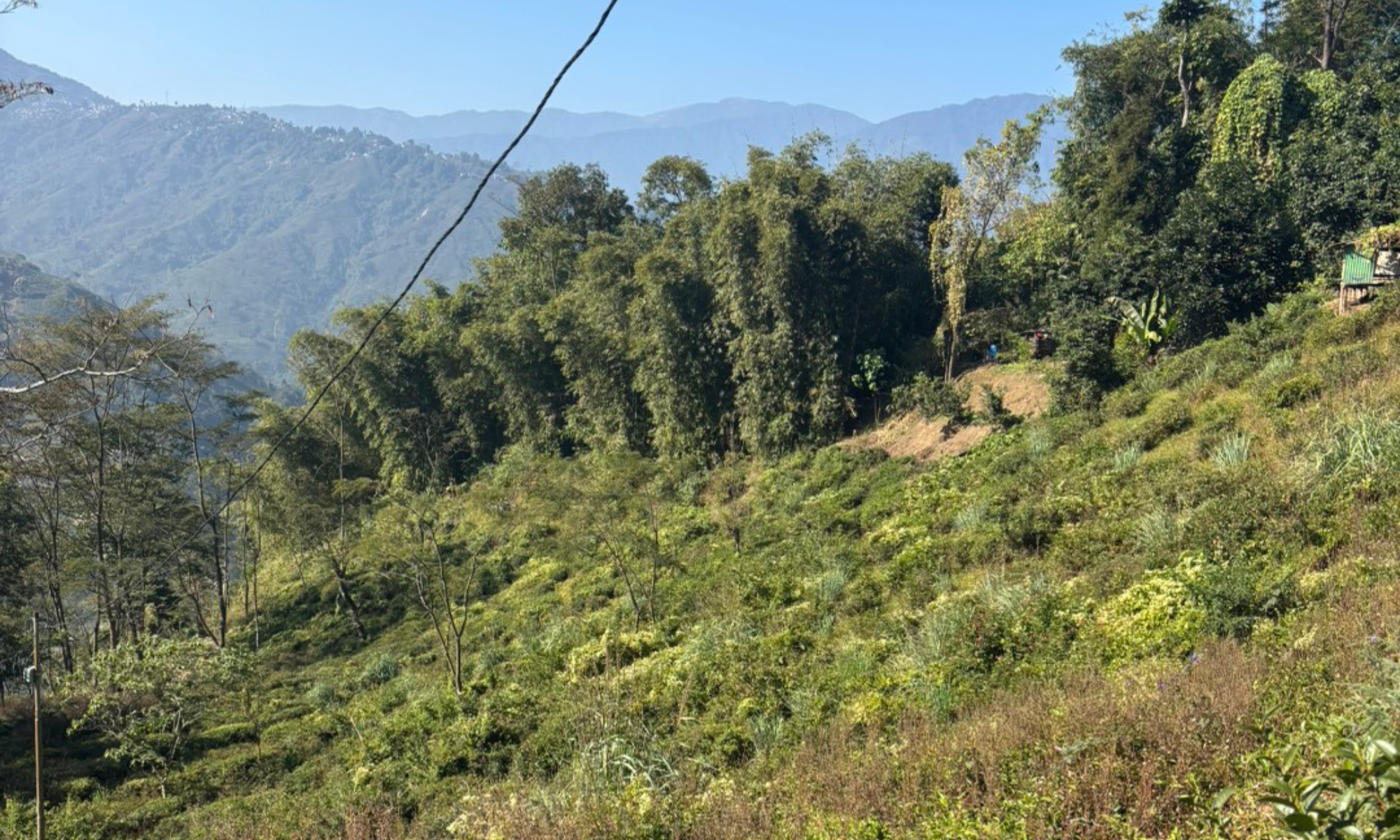
UnitingWorld is partnering with the Church of North India – Diocese of Eastern Himalaya to support a tea plantation community in India’s Darjeeling region. A community of 190 people are still recovering from a plantation closure that stripped them of income, housing and food security overnight.
A helping hand
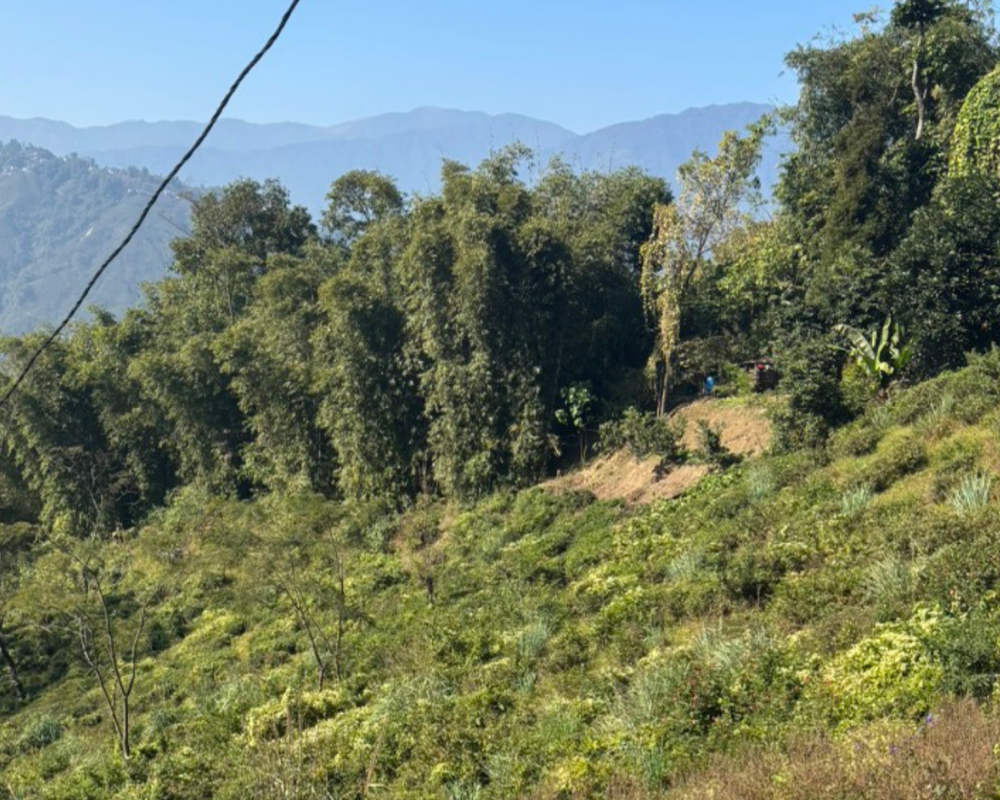
The changing climate has made tea-growing in the hill country of the Eastern Himalaya less viable, so plantations have been abandoned by their operators. Communities that depended on the tea industry for their livelihoods have been left without options. With few transferable skills and increasingly severe climate impacts, including heavy rains, landslides and soil erosion, families have struggled to rebuild their lives.
Our partner, the Diocese of Estern Himalaya, aims to provide a helping hand to vulnerable tea garden communities to achieve sustainable livelihoods, improved wellbeing and long term climate resilience.
By introducing climate resilient agricultural and livelihood activities, including kitchen gardens and poultry farming, training in improved land management, and disaster risk reduction and preparedness, communities will have improved productivity, be more resilient to climate variability, safer from erosion and landslides, and ready for disasters.
The Diocese will also provide access and support for vocational training and career pathways that enable employment or small business activities, with a focus on women, youth and people with disabilities. This is coupled with training in strengthened financial management capacity for households.
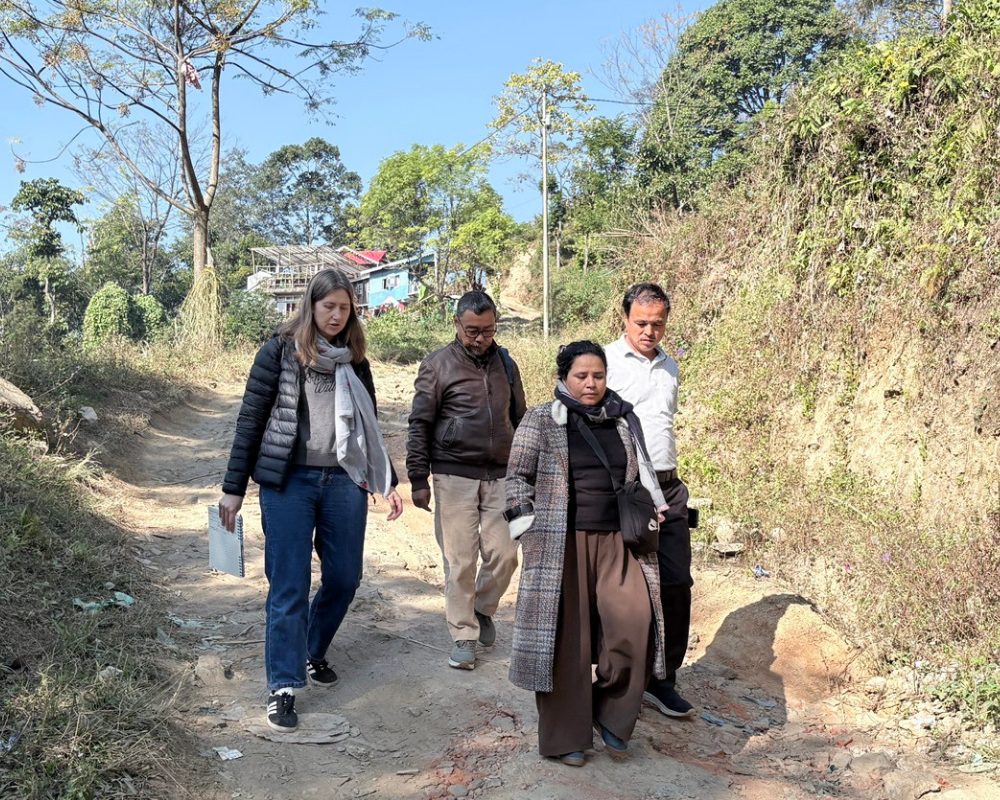
“The community took us on a very intimate walk, showing us how they grow their food, their water sources and the landslides scattered throughout the area, and welcoming us into their homes. They shared their goals and dreams for their community, each family longing to shape their own future.”
Rose Donovan, Senior Project Officer, UnitingWorld
UnitingWorld is partnering with the Church of North India – Diocese of Eastern Himalaya to support a tea plantation community in India’s Darjeeling region. A community of 190 people are still recovering from a plantation closure that stripped them of income, housing and food security overnight. With few transferable skills and increasingly severe climate impacts, […]
Climate-Sensitive Health and Livelihoods in Sumba and Bali
East Sumba is one of Indonesia’s poorest regions, and droughts are making it harder to grow food and find clean water. Mothers and young children feel it first. In Bali, villages are facing plastic pollution and a changing climate.
The Maha Bhoga Marga Foundation (MBM), the development agency of the Protestant Christian Church in Bali (GKPB), has spent more than 40 years working with families in Bali on health, food and livelihoods. More recently, it has taken that experience to Sumba, working with the Sumba Christian Church (GKS), because MBM has the capacity and expertise to share.
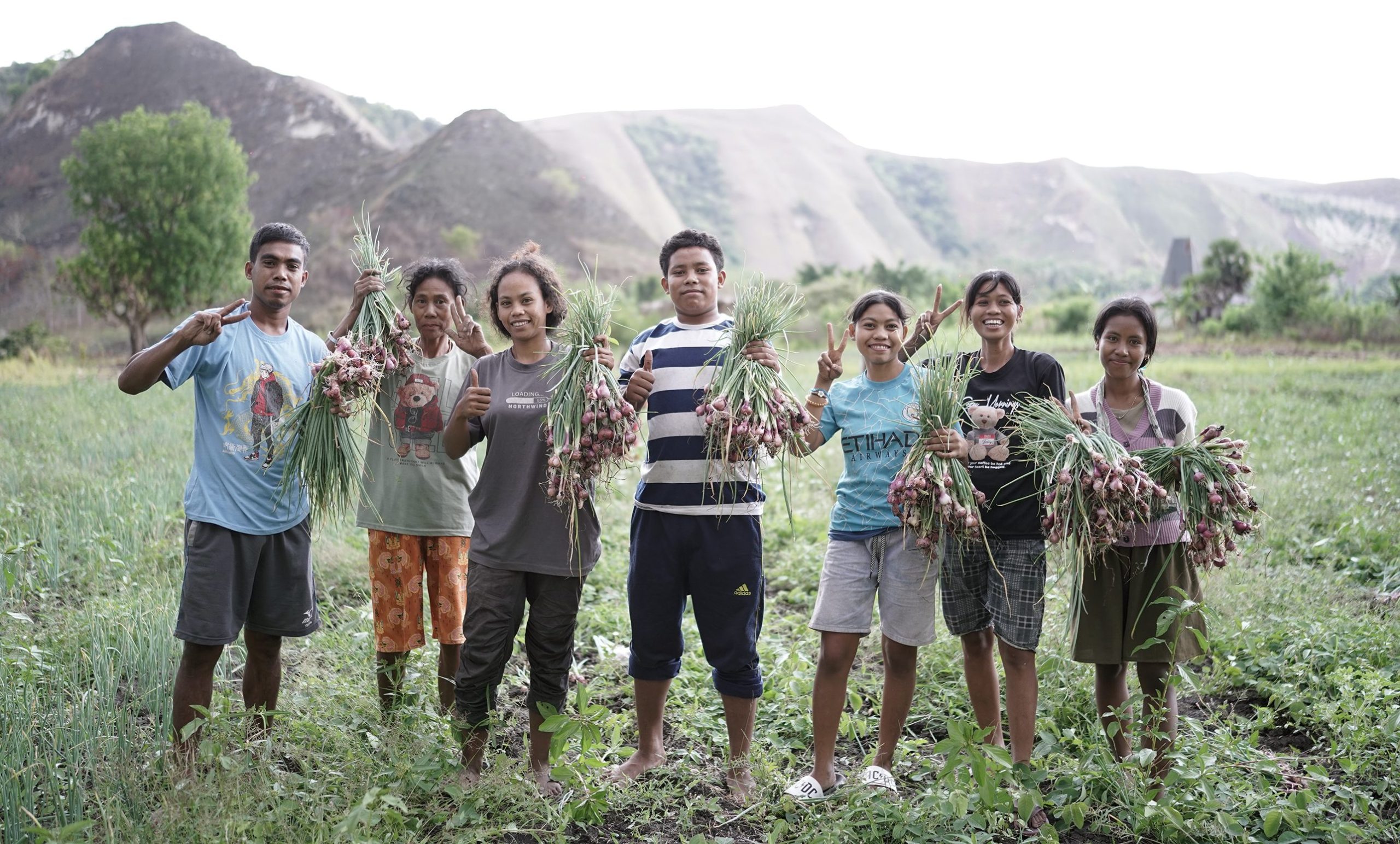
The approach is the same on both islands. Trained village volunteers bring health education and ongoing mentoring to families, with women at the centre. Families grow kitchen gardens and keep chickens, so there’s nutritious food at home even in dry seasons, communities plant trees to protect their springs, and small businesses turn waste into income. In East Sumba, the aim is also to ease the hungry season so young people aren’t forced to leave.
It’s already working. In Bali, Komang and Ni Luh learned kitchen gardening and business skills, and the income now pays their children’s school fees. In Sumba, Petrus Pandanga, a farmer and GKS member, has spent forty years persuading neighbours that the island can sustain them if they farm it differently. His demonstration farm is now part of a growing network of learning, because, as he puts it, “One person learns, and then brings two more.”
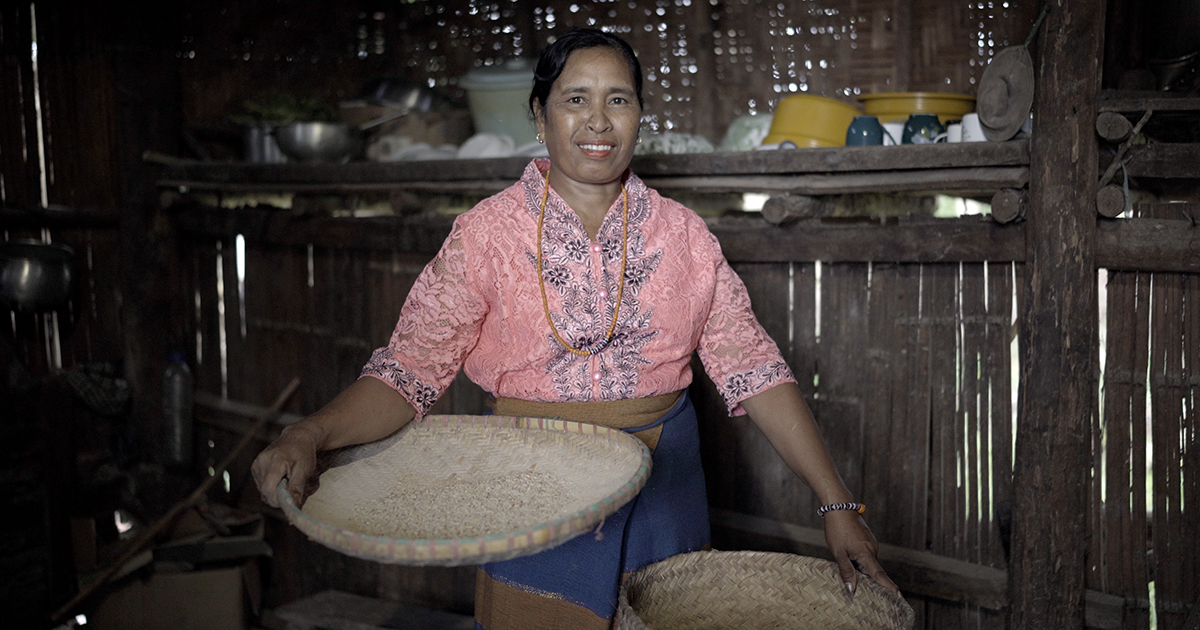
“My hopeis for my child to go to school, and for there to be enough to eat.”
Semis, a rice farmer in rural Sumba
Our partners
Maha Bhoga Marga Foundation (MBM) is the development agency of the Protestant Christian Church in Bali (GKPB). For more than 40 years, it has worked with poor communities in Bali, running health programs, supporting survivors of domestic violence and standing with families through economic hardship. It now shares that experience in Sumba.
The Sumba Christian Church (GKS) is the local church in East Sumba. In March 2025, its leaders and GKPB’s signed an agreement to work together, and GKS gave MBM office space in its compound, opened doors with the regional government, and helps MBM understand the local culture. The project grew out of a relationship between the two churches, not a plan drawn up from outside.
Every year, more young people leave Sumba. They go to Bali, or Java, in search of work and a future they feel their own island cannot provide. Fields go unplanted. Churches empty out. They leave and they don’t come back. UnitingWorld is supporting our church partners to change that.
When migrants suddenly started turning up in Bali from the nearby island of Sumba, many people assumed the worst. Would they be a strain on housing, jobs and social harmony? One more group of outsiders to be tolerated or pushed aside? But for Rev Betha and her team at MBM (the development agency of the […]
Before the COVID-19 pandemic, significant progress had been made to alleviate poverty. In the first two decades of the millennium, global poverty rates had been cut by more than half and there was good reason to be optimistic about the future. The optimism spurred world nations to come together in 2015 and agree to work […]
Here at UnitingWorld, we believe the most effective way to help people overcome poverty for good is sustainable development in partnership with local communities. Our partner church’s project to end poverty in rural Bali is a great example of the lives that we can change, and how by working together we make a bigger impact […]
Pipit Purwadi MBM Foundation, Protestant Christian Church in Bali (GKPB) Lord Jesus, we are grateful for Your presence in our lives. Towards the end of the year, there were many natural disasters around us. Floods, landslides, earthquakes, and volcanic eruptions. Previously, Covid-19 haunted our lives. Many of our brothers and […]
An estimated 202,000 people are experiencing poverty in Bali, and as COVID-19 continues to take its toll, that number is only expected to rise. With limited funding going to local governments, many people struggle to access the housing, electricity, water and other basic services they need. But for the most vulnerable groups, including women and […]
A huge thank you to everyone who has taken part in Lent Event and donated to projects that are helping our global neighbours stand strong against COVID-19. Over just the past few weeks, we’ve received $140,000, well on the way to our fundraising target of $330,000. People like Wayan and his wife (above), who benefited […]
With international borders still closed, and far fewer tourists visiting places like Bali, we spoke to our partners in Indonesia to find out what life is like in the grip of the pandemic. “People here are more worried about having no food and no jobs than about the pandemic,” says our Southeast Asia Regional Coordinator, […]
Our partners in Bali have been finding innovative ways for children to stay safe, connected and spreading important information about COVID-19. As part of safety lockdowns to prevent the spread of COVID-19 in Indonesia, the Bali provincial government recommended all school children study at home. With children isolated in their houses, our partners MBM held […]
Last month our partner in Bali MBM provided food assistance to 2,338 people, health packages containing masks, soap and vitamins to 320 families and health education brochures to 708 families. 1,000 fruit and vegetable plants have been prepared to help improve the long-term food security and nutrition of people who lost work and must stay […]
Imagine two groups – one male, one female – crouched around a sheet of butcher’s paper. In regional Bali, Indonesia, village members have been asked to note on the image of a large clock what their activities are throughout the day, with men and women commenting on each other’s use of time. The results are […]
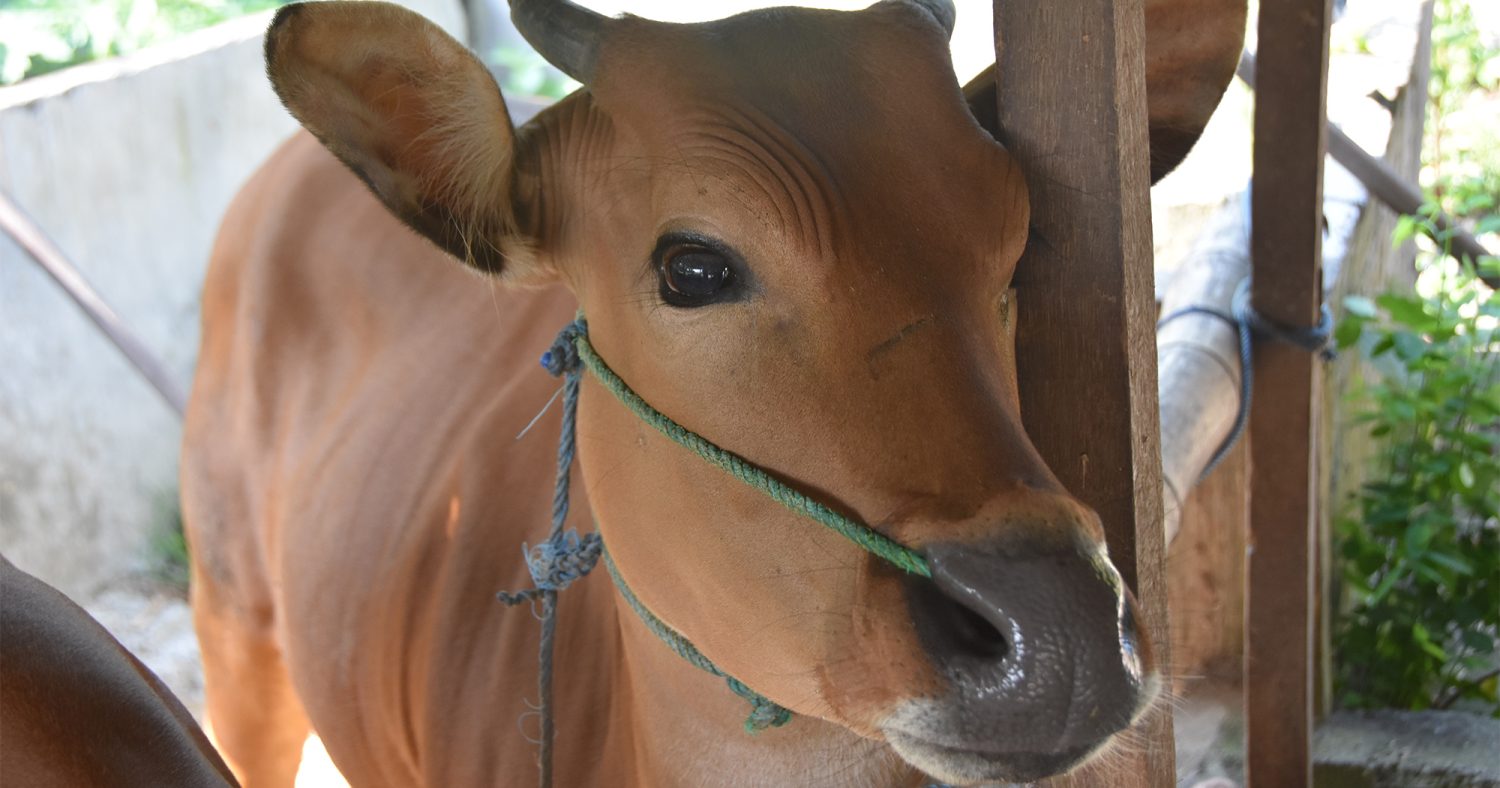
Dolores (name changed to protect privacy) has the most soulful eyes you could hope for on a cow. Part of her earnest expression, I’m pretty sure, has to do with her confidence that not only is she saving the planet – she’s going to give families a chance to end poverty. Most of her daily […]
In the mountains of Bali, where it is cool, 5 groups of people in a small community are working to breed goats provided through income generating opportunities by our partners MBM. More than 30% of people in the community are poor. Only 50% of children progress further than elementary school study and 20% of children […]
Read more
Help families in Sumba and Bali grow, stay healthy and weather the dry years
Your gift helps the church and local villages grow nutritious food, protect their water and build steadier incomes.
In Punjab, caste has shut Dalit families out of schools, services and decisions for generations. Children, especially girls, fall behind or leave school early, and families struggle to claim the pensions and support they’re entitled to.
The Church of North India’s Diocese of Amritsar runs study centres in villages near the Pakistani border, where children get homework help, coaching and life skills, with extra support for adolescent girls to stay in school and aim for higher education. Staff work closely with parents on why education matters, help community groups take part in village decisions, and help families claim pensions, disability certificates and other government support.
The results are clear. A study of the project from 2008 to 2023 found that the share of children in the target villages staying in school until age 15 rose from 38% to 100%, with most going on to finish 12th grade, and credited the study centre staff’s steady work with parents. Over its history, the project has reached 20 villages and 2,700 households, most of them Dalit families.
“Now, I no longer see any challenge as a hardship. I feel strong and independent... Without the project, I might not even be alive today.”
Bevi, a program participant who went on to become a Community Organiser to help her neighbours and advocate for justice.
Our partner
The Diocese of Amritsar, part of the Church of North India, has been UnitingWorld’s partner in this work for well over a decade. It serves Dalit communities in Punjab, and its leaders say the partnership is helping people rise above social, economic and political oppression.
For generations, a Dalit* community near the India-Pakistan border had no land, no vote, and no say over their own lives. Then one small classroom changed everything: first for the children inside it, then for the whole village.
In 2008, just 38 per cent of children in targeted Dalit* communities along the India-Pakistan border were enrolled in school. Today, that number is 100 per cent, across a project that has grown from 10 villages to 20, now reaching 9,678 people. Whether you’ve been with us since the beginning or joined more recently, this […]
Read more
Help every child in Punjab stay in school
Your gift helps the Diocese of Amritsar keep children learning, especially girls, and helps Dalit families claim the services and the voice they’re entitled to.
In West Bengal, caste and religious discrimination shut families out of schools, health care and government support, and keep them poor. Children from excluded families fall behind, and people with disabilities, women and farmers struggle to earn a living.
The Church of North India’s Diocese of Durgapur runs study centres where children from excluded families get homework help, coaching and encouragement. It offers training in skills and farming to women, farmers and young people, and helps families find out about government services and schemes and claim them.
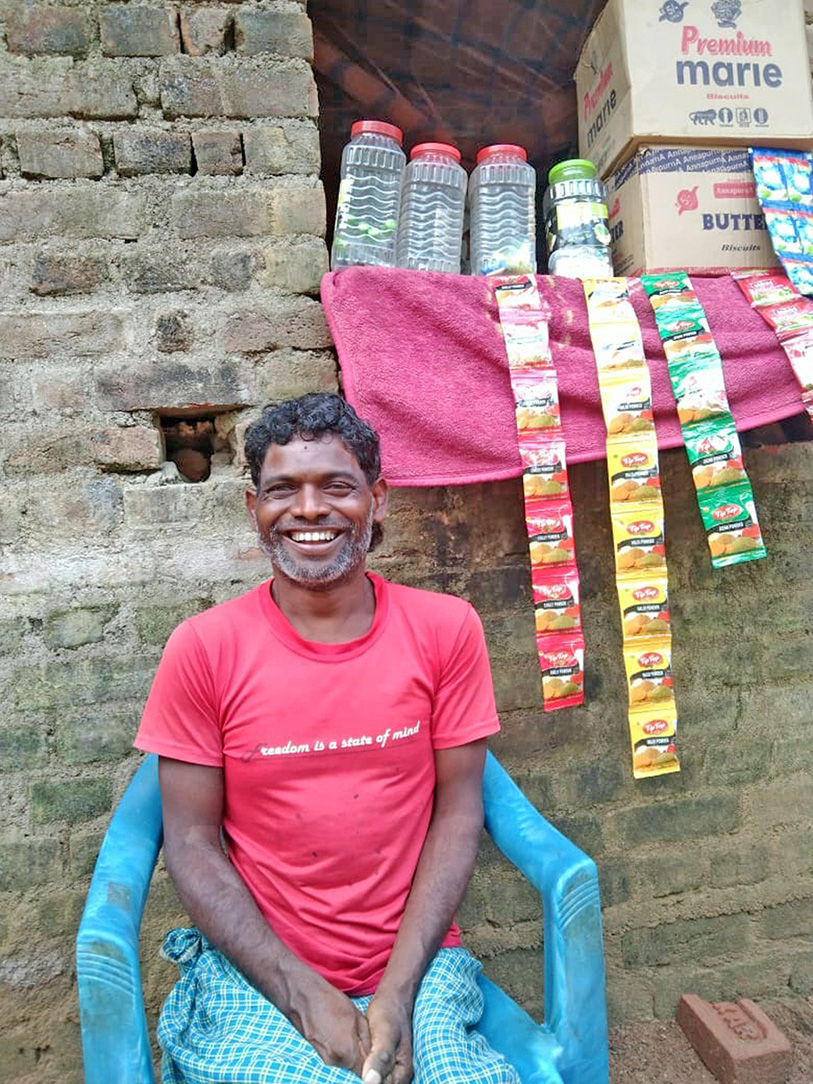
People with disabilities, whom communities often overlook, are found and helped to earn an income. Khokan, who was born with a physical disability, couldn’t earn for his family until a one-time grant let him open a variety store at home. Now he supports them, saves for the future, and he and his wife have built a permanent home.
When farmers kept losing crops for lack of water in the dry season, the diocese renovated old rainwater harvesting structures that had silted up, with the farmers co-investing, and provided pumps. In 2024–25, that brought irrigation water to more than 90 families.
“Before it was very difficult for me and my wife to run the household and we had to depend mostly on forest resources. But getting financial assistance from the project gave me a greater vision, and I’m planning to extend my business in future.”
Khokan from Durgapur, India, who was born with a physical disability.
Our partner
The Diocese of Durgapur, part of the Church of North India, serves communities across West Bengal, including those the wider society overlooks. Our partners there work for justice and dignity for all, through education, advocacy and practical support.
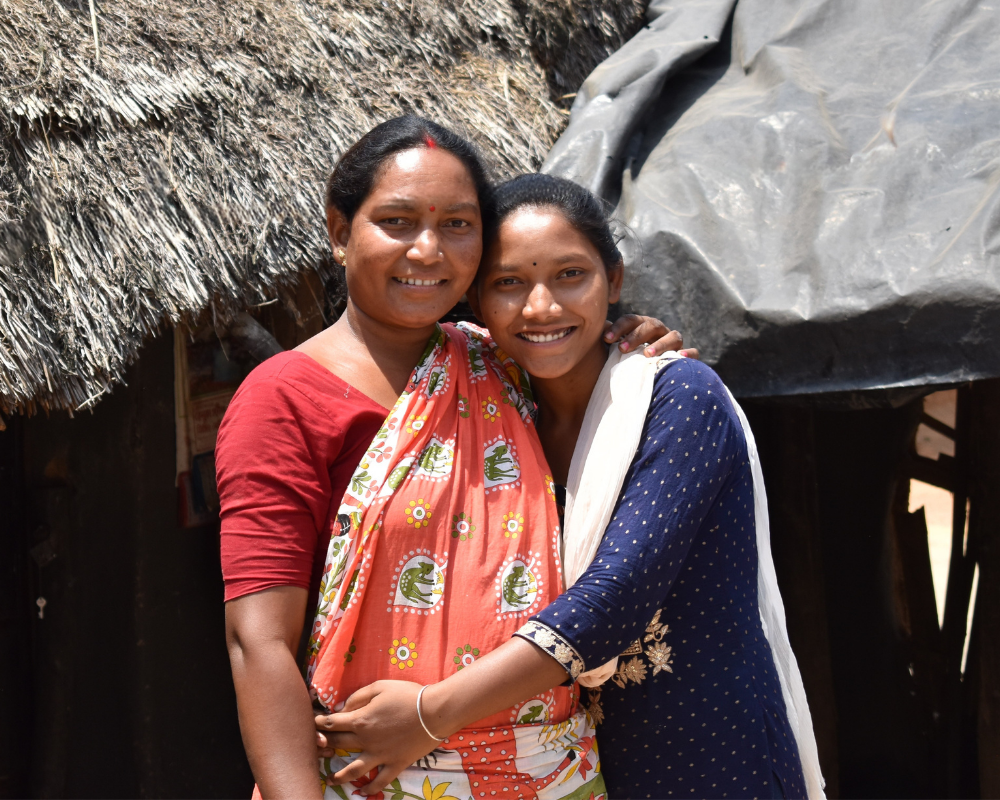
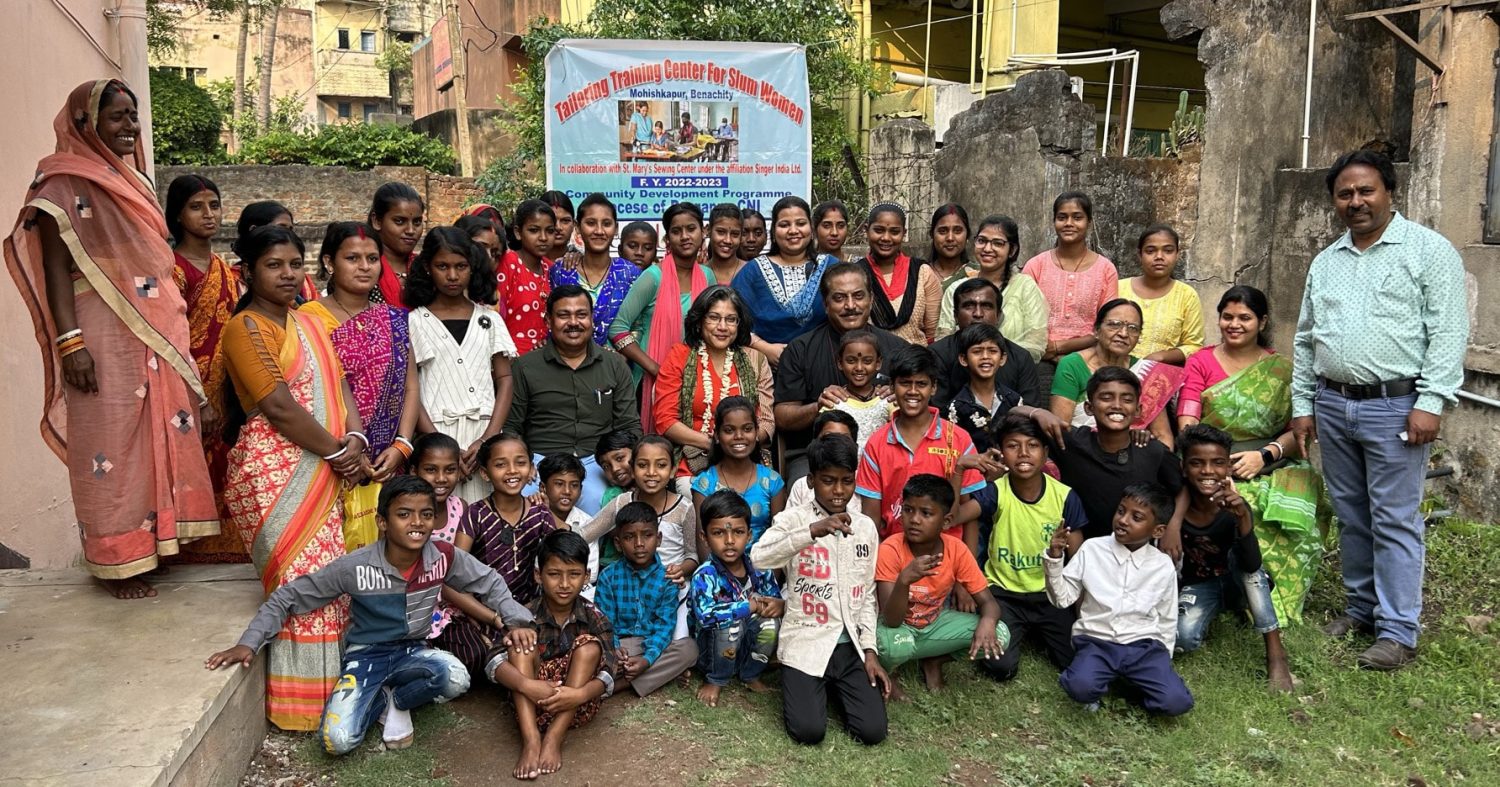
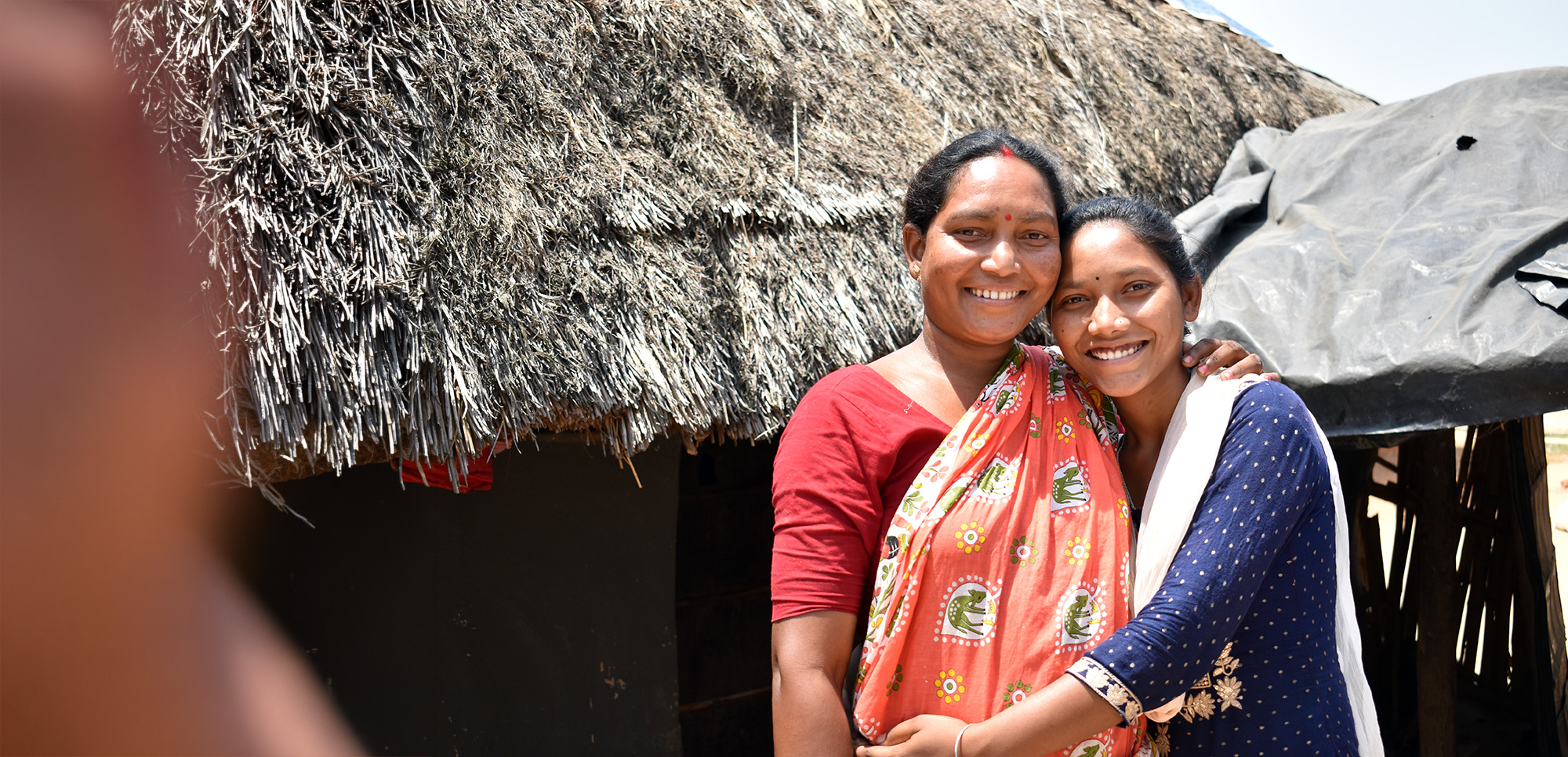
Laboni (pictured above with her mother) grew up in a typical rural village in West Bengal, India, where education is out of reach for many because families are too poor to invest in it. Our church partner, the Church of North India-Diocese of Durgapur, saw the situation and believed that things could, and should, be different.
They supported Laboni’s education, and she became the first in her family to ever finish school. Today she’s pursuing her dreams: working on a university degree and hoping to return to her community as a teacher to inspire others to follow in her footsteps.
This International Women’s Day, the global theme is ‘Balance the Scales.’ It is a call to address the structural barriers that continue to deny women and girls equal access to justice, opportunity and political power. For UnitingWorld and our partners, it is a theme we see reflected every day in the communities we work alongside. […]
When Sohadi Soren received a single goat through her local self-help group, she never imagined how much her life could change. A mother and grandmother from a small rural village in eastern India, Sohadi was struggling to make ends meet after the sudden loss of her husband. Her family survived on a small plot of […]
In the final months of the financial year, we told the story of Laboni, who grew up in a tribal village in remote West Bengal, India. It’s a place where education is out of reach for many because families are too poor to invest in it. Children grow up to help in the household or […]
Read more
Help children in West Bengal learn and families earn
Your gift helps the Diocese of Durgapur keep children in school, give families skills and income, and help excluded communities claim the services they’re entitled to.
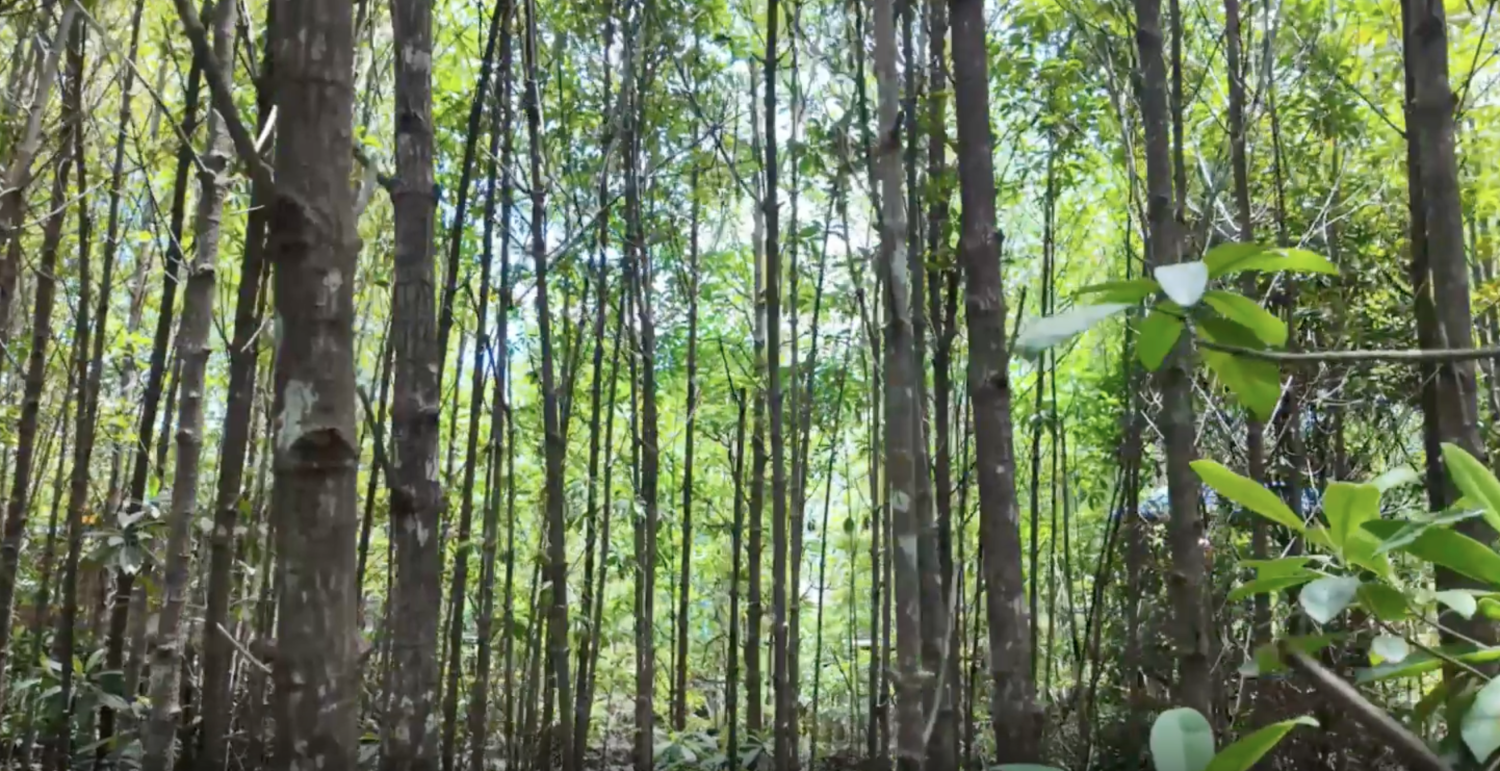
In Tambrauw, West Papua, Indigenous families farm by shifting cultivation, and unpredictable rains are cutting harvests and incomes. Logging by outside investors strips the forest and brings floods and new risks each year, and women and children are hit hardest, with more malnutrition and illness.
Our partners, the Evangelical Christian Church in the Land of Papua (GKI-TP), through its new Climate Change Action Team, is working with communities in Tambrauw to help families feed themselves and earn a living through changing seasons, and to protect the forest that both depend on.
The church helps families to grow kitchen gardens that keep children fed through dry spells, and to develop farming and small livelihoods that cope with unpredictable rain and bring in steady income without cutting down the forest. They are also training local health volunteers in each village to teach nutrition and hygiene and to prevent violence against women.
Communities also speak up for their land. In consultations before the project began, people in Tambrauw mapped the climate risks they face themselves, as part of the project’s design. They use that kind of local evidence to press local government for stronger forest protection and disaster planning.
“This is the first time people have come to ask us about ourchallengesand the changing environment. Thank you.“
-Maria, a community member who participated in climate and gender consultations in 2025
Our partner
The Evangelical Christian Church in the Land of Papua (GKI-TP) has served West Papuan communities since 1855. With more than 800,000 members, it’s the largest civil society organisation in West Papua, and in Tambrauw it’s the one institution present in nearly every community. Its leaders speak up for forests and Indigenous land rights, and we’re backing its Climate Change Action Team as it listens first, then builds food, income and forest protection with local families.
“Papuans call the forest ‘mother’, the coast ‘child’, and the sea ‘father’. These are sacred relationships.” Albert, GKI-TP elder and conservationist West Papua is home to some of the world’s richest ecosystems. Ancient rainforests, sprawling mangrove swamps, and coral reefs teeming with life. Together with Papua New Guinea, this region holds the world’s third-largest rainforest, […]
Along the far north coast of West Papua, Indonesia, people are facing an intensifying struggle to survive on lands and seas that have sustained them for generations.
On a small island out on a lake in West Papua, a group of women are crafting themselves out of poverty by keeping a disappearing local art tradition alive. The banks of their lake home skirt the far limits of Papua’s most modern city, Jayapura, but people here still travel between the islands using wooden canoes. Traditional bark paintings […]
Earlier this year, I made a trip across West Papua. It’s just 150km north of Australia, but it feels a world away – one of the poorest regions in the Asia Pacific. Yet everywhere I went, what struck me most was the profound generosity and sense of community that bound people together. This runs deep in […]
Read more
Help families protect the forests that feed them
Your gift helps the church and local communities in West Papua protect the forests they depend on, grow food that lasts and build steadier incomes.
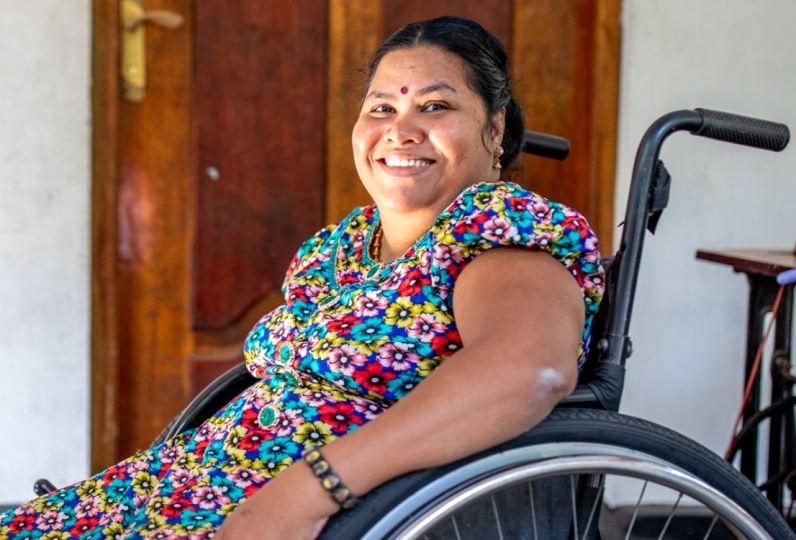
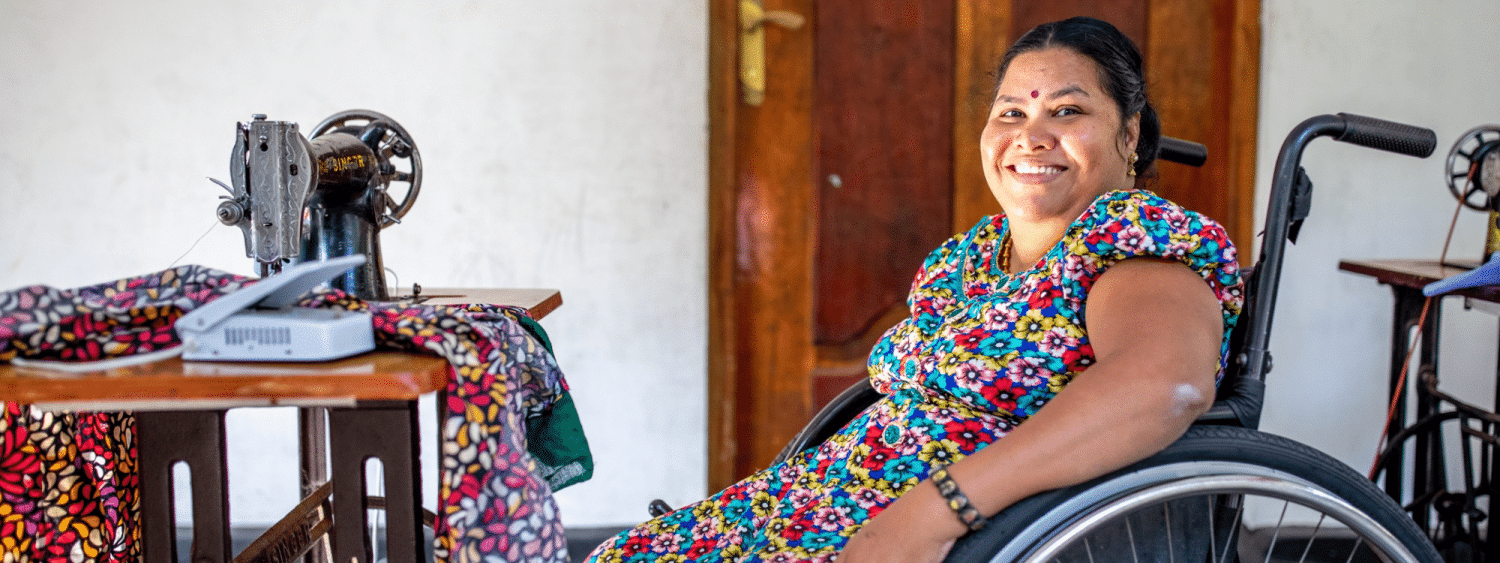
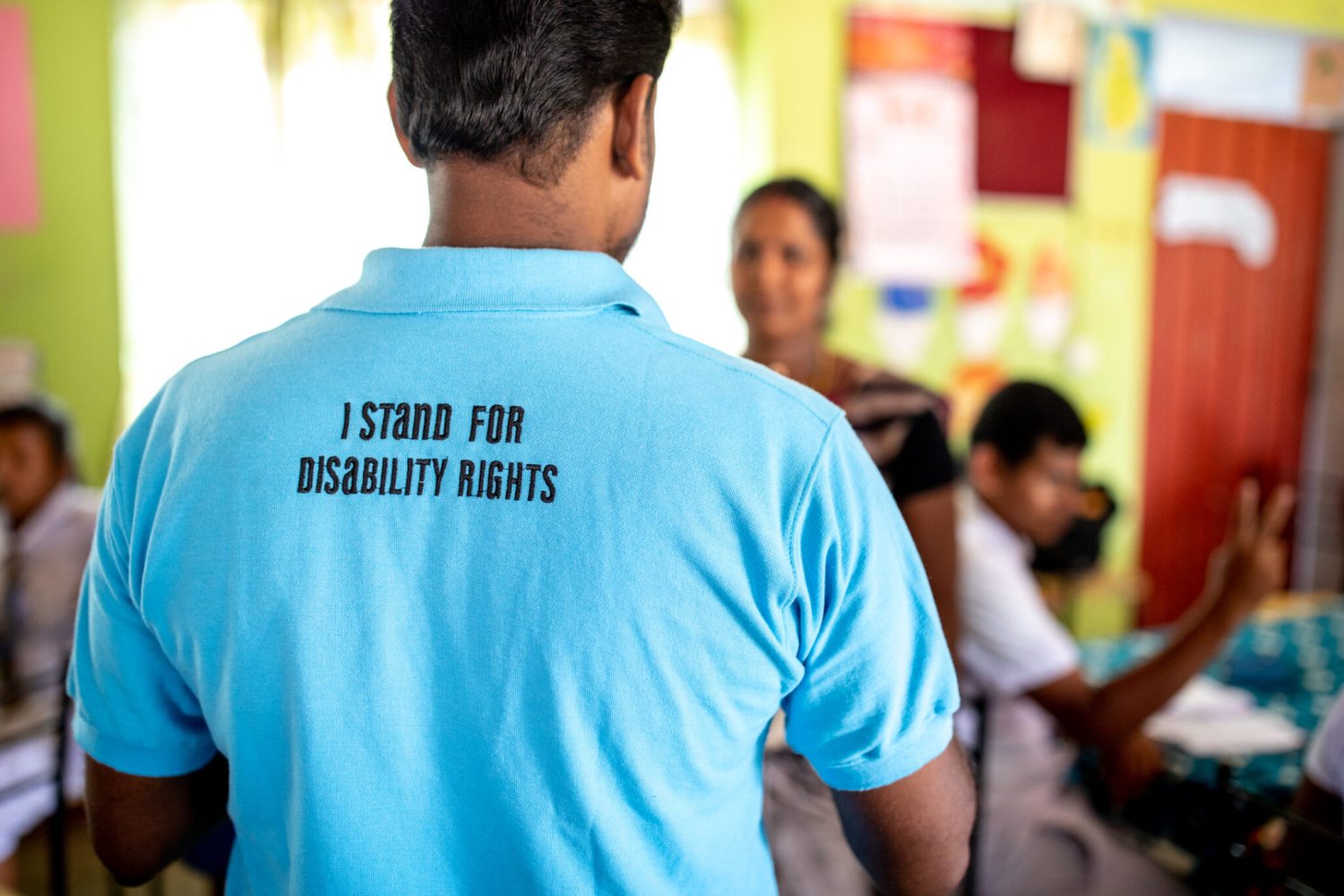
People with disabilities are some of the most vulnerable people in Sri Lanka. They are often excluded from society, lack access to services and find it difficult to secure employment. We support our partner Deaflink, a ministry of the Methodist Church in Sri Lanka, to provide access to education for children with disabilities and vocational training and livelihood support to people with disabilities.
Schools that include everyone.
The mission of this project is to ensure that people with disabilities are accepted, equal, and valued members of society in the Northern and Eastern Provinces of Sri Lanka.
It aims to empower and improve the wellbeing of people with disabilities, through improving access to education, safety and protection, and livelihood opportunities for children with disabilities and their families.
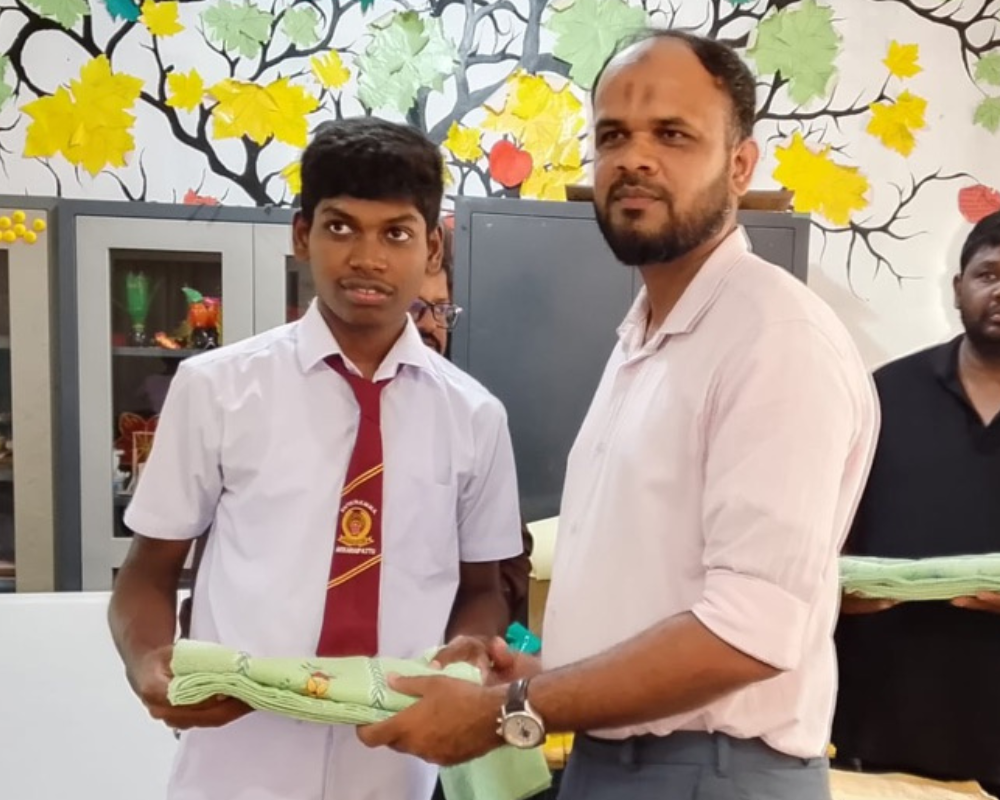
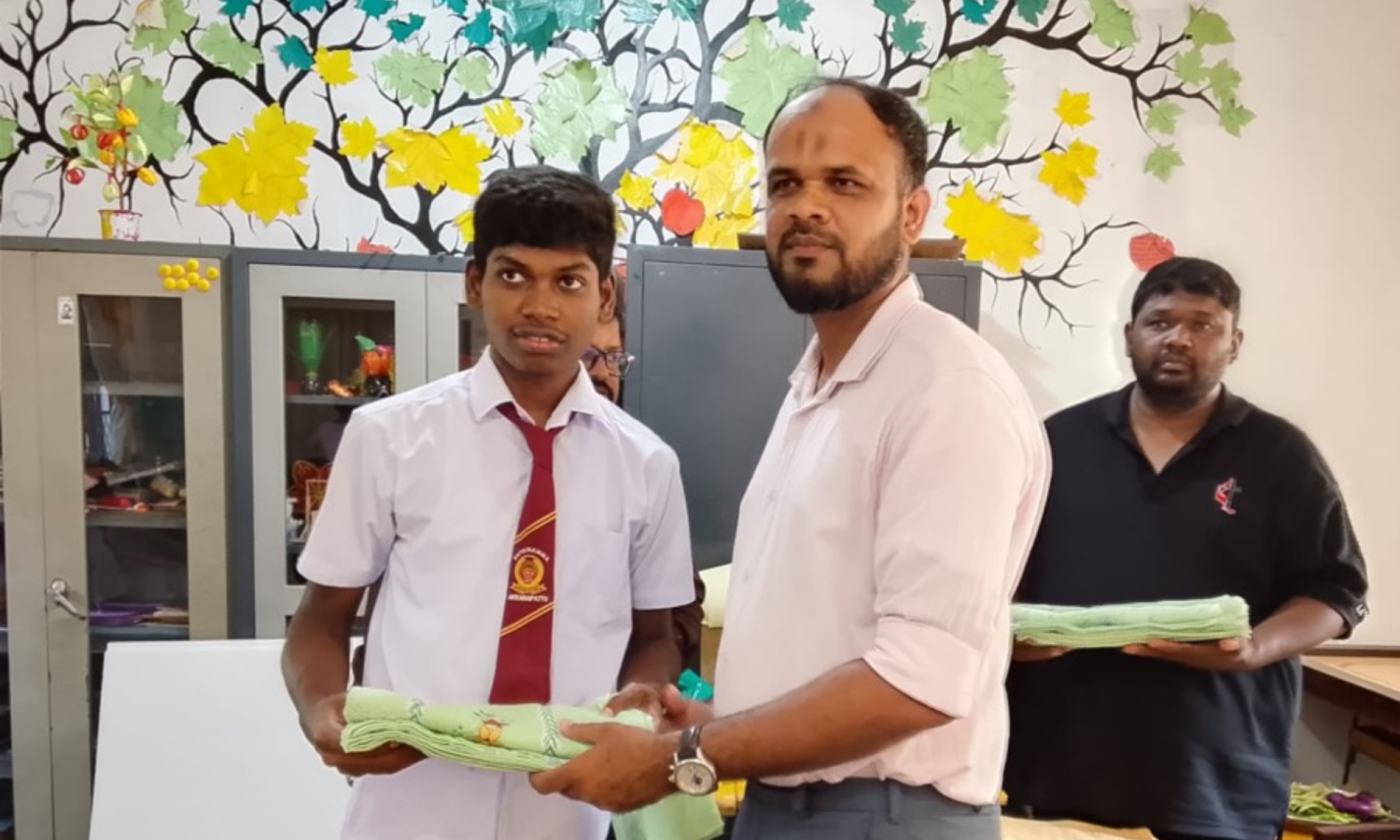
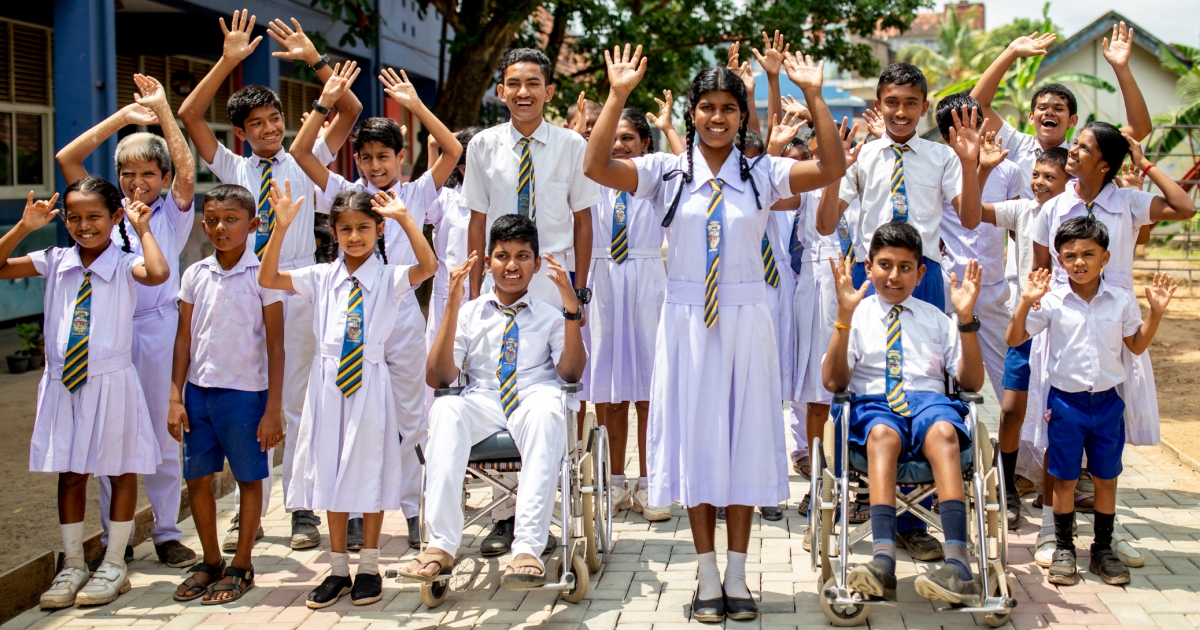
The project is implemented by Deaflink, a ministry within the Methodist Church of Sri Lanka, who use UnitingWorld funding to train teachers in inclusive education and to resource Special Education Units within government schools.
It also works through Self Help Groups comprised of adults with disabilities and parents of children with disabilities, who are supported through vocational and financial training to set up small businesses to improve their livelihoods.
Work during FY26
249
additional boys and girls with disabilities enrolled in school
57
teachers trained to improve learning outcomes
112
people received training in disability awareness and inclusion
Sangeeth’s journey from academic struggle to all-round success is a powerful reminder that with the right support, belief and opportunity, every child can find their path to shine. Story here.
Our partner
The Methodist Church of Sri Lanka has its roots in the work of Wesleyan missionaries commencing in 1814. Today, the Methodist Church continues its mission of spreading the Gospel and serving the needs of the Sri Lankan people. Deaflink, a division of the Methodist Church of Sri Lanka, shares this commitment to Christ-centered service by empowering people with disabilities, not just those within the Deaf community. Their work primarily focuses on war-affected areas in the North and East of Sri Lanka. Through various initiatives, they aim to provide resources, advocate for inclusion, and create a more just society for all.
When he started school, Sangeeth struggled with traditional learning and fell behind. His parents then enrolled him in the Special Education Unit at their local school. Caring teachers saw his deep passion for sports, arts and music, and built his confidence to enter the world of learning. His determination and hard work began to shine.
Rev. Samuel Gnanarajah Deaflink, Methodist Church Sri Lanka All mighty Heavenly Father, People with disabilities are one of the most marginalized and vulnerable minorities in Sri Lankan society. They are less likely to have access to education, health care facilities, economic and social status than those without disabilities. Our prayer is that the ‘self-help’ […]
Education is a gateway towards a fulfilling future, equipping the next generation with the knowledge, skills and confidence they need to lead a life of their choosing. But for children with disabilities, one of the most marginalised minorities in Sri Lanka, accessing an inclusive education is difficult. As a result, these children are less likely […]
During the worst economic crisis in Sri Lanka’s history, our partners have been reaching out to help vulnerable communities. With inflation now above 50%, the cost of everyday goods like food, fuel and medicine has skyrocketed. Essential services have shut down and there have been widespread power cuts. As frustrations boil over and protests escalate, […]
People with disabilities are some of the most vulnerable people in Sri Lanka. Without support, disabilities can become a huge barrier to accessing appropriate education, employment and full participation in community life. Because of this, people with disabilities are up to five times more likely to live below the poverty line. Some people never get […]
Darshi was born without hearing in an area of Sri Lanka’s west coast which was devastated by the Boxing Day tsunami of 2004. The population are mostly Tamil, and they’ve worked hard to recover and build a better life for their kids. But people with disabilities are up to five times more likely to live in poverty. They represent the most vulnerable group […]
In India, girls are more disadvantaged than boys in terms of access to education, as a poor family will choose to pay for the advancement of male children. Our partner, Church of North India – Diocese of Amritsar, runs a hostel to support disadvantaged girls to access education and other life opportunities.
What we do
We support a girls’ hostel, enabling vulnerable girls to access high-quality education, accommodation and care during the school term to holistically support their growth and development. Many of them are from the Dalit caste, which is the lowest within the Indian caste system, with many of their families politically powerless and living in poverty.
As well as education, the girls are also supported to participate in extra-curricular activities including celebrations/festivals and local outings, as well as sports, dance, singing, music and cooking. The girls access regular health check-ups and participate in information sessions on health and hygiene practices. As many of the girls are from single parent homes, new activities are being introduced to ensure healthy transitions towards adulthood, including life skills and counselling to develop emotional resilience. The hostel supports the girls to maintain close family ties and spend as much time as possible in their home communities during school breaks.
Our support also includes training our partner staff in planning, management and child-protection, and safeguarding and inclusion initiatives have been included in the project design.
Results so far
Every year since this project started, we have been providing hostel accommodation and remedial education to 25 to 30 girls from disadvantaged backgrounds, enabling them to succeed in their schooling. The project is now seeing students graduate from high school and continue their links with the Hostel as they attend tertiary education or training.
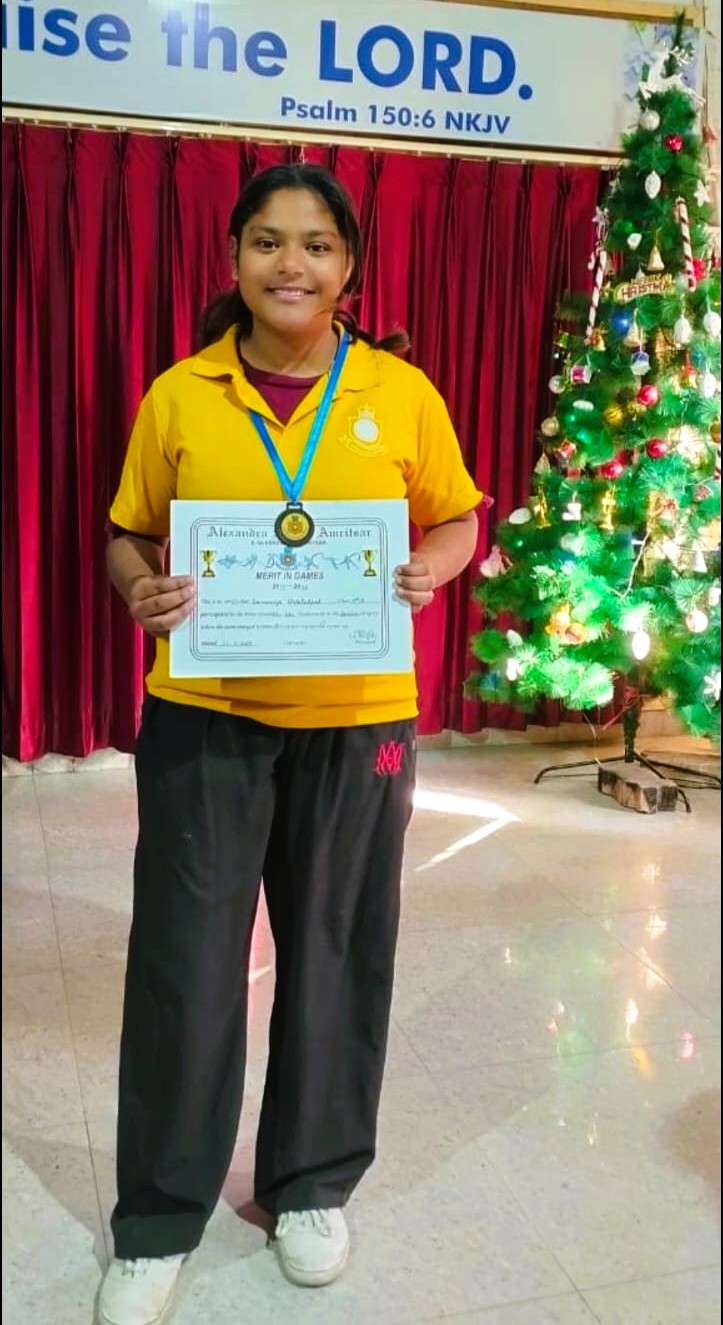
Samaniya’s journey is important because it shows that when a child receives love, guidance and opportunities, she can heal from past difficulties and move toward a brighter future. With the continued support of the Diocesan Girls Hostel, Samaniya is growing into a confident and hopeful young girl, ready to follow her dreams. Story here
Our partner
The Church of North India (CNI) is the main united Protestant denomination in northern India. It is a member of the World Methodist Council and the worldwide Anglican Communion, as well as the Christian Conference of Asia and the World Council of Churches. CNI’s Diocese of Amritsar serves communities in its region through religious oversight, education and healthcare. Its social outreach programs work towards social empowerment and improved livelihoods among the most disadvantaged families and communities.
Samaniya had a difficult childhood. The Diocese of Amritsar’s Girls Hostel has helped her to overcome challenges and health concerns, and she is now growing into a confident and hopeful young girl, ready to follow her dreams.
Jaya is a 13-year-old girl from a small village of 300 people in rural Punjab, India. Her father died when she was four and her mother couldn’t afford to raise her, so she left Jaya with her grandmother. Jaya’s grandmother works as a cook, and over the years it became increasingly difficult for her to […]
Food security and climate resilience in Timor-Leste
Families in Timor-Leste live from what they grow, but droughts, unpredictable rains and soil erosion are withering and washing away their crops. The “hungry season” that once lasted a month has become chronic, and nearly half of the country’s children are stunted by malnutrition, among the highest rates in the world.
FUSONA, the development agency of the Protestant Church of Timor-Leste, helps families grow enough food to feed their children and earn a living as the climate changes. Trained village health volunteers bring health, nutrition and sanitation education to mothers and young children, and families are supported to start kitchen gardens and learn farming that stands up to drought and unpredictable rain.
Communities also look after the land and water their food depends on, planting trees to protect springs and working with village leaders to put climate action into local custom and rules.
The approach works. In one village, FUSONA helped 15 families work together on a garden of almost 8,000 square metres, growing vegetables, corn and sweet potatoes. With a reliable water supply from irrigation wells, yields have risen sharply, children are better nourished, and selling the surplus pays for other needs. The group is led by Calisto, a traditional leader, who joined because he was worried about malnourished children and women in his community.
“When FUSONA’s staff came to introduce the kitchen garden program to me and my neighbours, I was excited and happy to join because they offered different seeds for us to grow and we don’t need to spend money to buy them.”
Bernadeta, community member and group leader, Timor-Leste
Our partners
FUSONA is the development agency of the Protestant Church of Timor-Leste (IPTL). Deeply rooted in its communities and driven by the conviction that the Good News of Jesus is tangible and practical, FUSONA works with families across Timor-Leste on food security, maternal health, water access and climate resilience. UnitingWorld has backed FUSONA for years, funding, resourcing and standing with its work as a long-term partner.
UnitingWorld has been supporting our partner in Timor-Leste to help communities prepare for and respond to the impacts of El Niño. As a small island nation, Timor-Leste relies heavily on rain-fed agriculture and imported food. Since September 2023, the El Niño weather event has led to drought-like conditions, irregular rainfall, and flash floods during the […]
46-year-old Bernadeta has long been a gardener. Around her home in rural Timor-Leste, she’s tried her hand at growing more than just staples. “I was growing vegetables such as bitter-gourd, string-beans, eggplants, water-spinach, green vegetables, lettuce and spinach,” she says. But it wasn’t until UnitingWorld’s partner FUSONA* offered her some assistance and invited her to […]
There’s a food crisis in two of the poorest places in our region. Our partners have a plan to beat it. Malnutrition, particularly among children, has been a huge problem in Timor-Leste and Maluku (East Indonesia) and now there is a hidden hunger crisis being made worse by the rising cost of living, global conflict and […]
Act2 is a major transformational change project focused on shaping the future of the Uniting Church in Australia (UCA). As part of the Act2 Project, every Uniting Church member, council and community is being invited to take part. We’ve contributed our perspective through a written submission, and in an online forum where we were joined […]
Read more
Help families in Timor-Leste grow food that lasts
Your gift helps feed children, protect springs and soil, and build steadier incomes. This approach could reach every village in the region if the resources were there.