Every year, more young people leave Sumba. They go to Bali, or Java, in search of work and a future they feel their own island cannot provide. Fields go unplanted. Churches empty out. They leave and they don’t come back. UnitingWorld is supporting our church partners to change that.
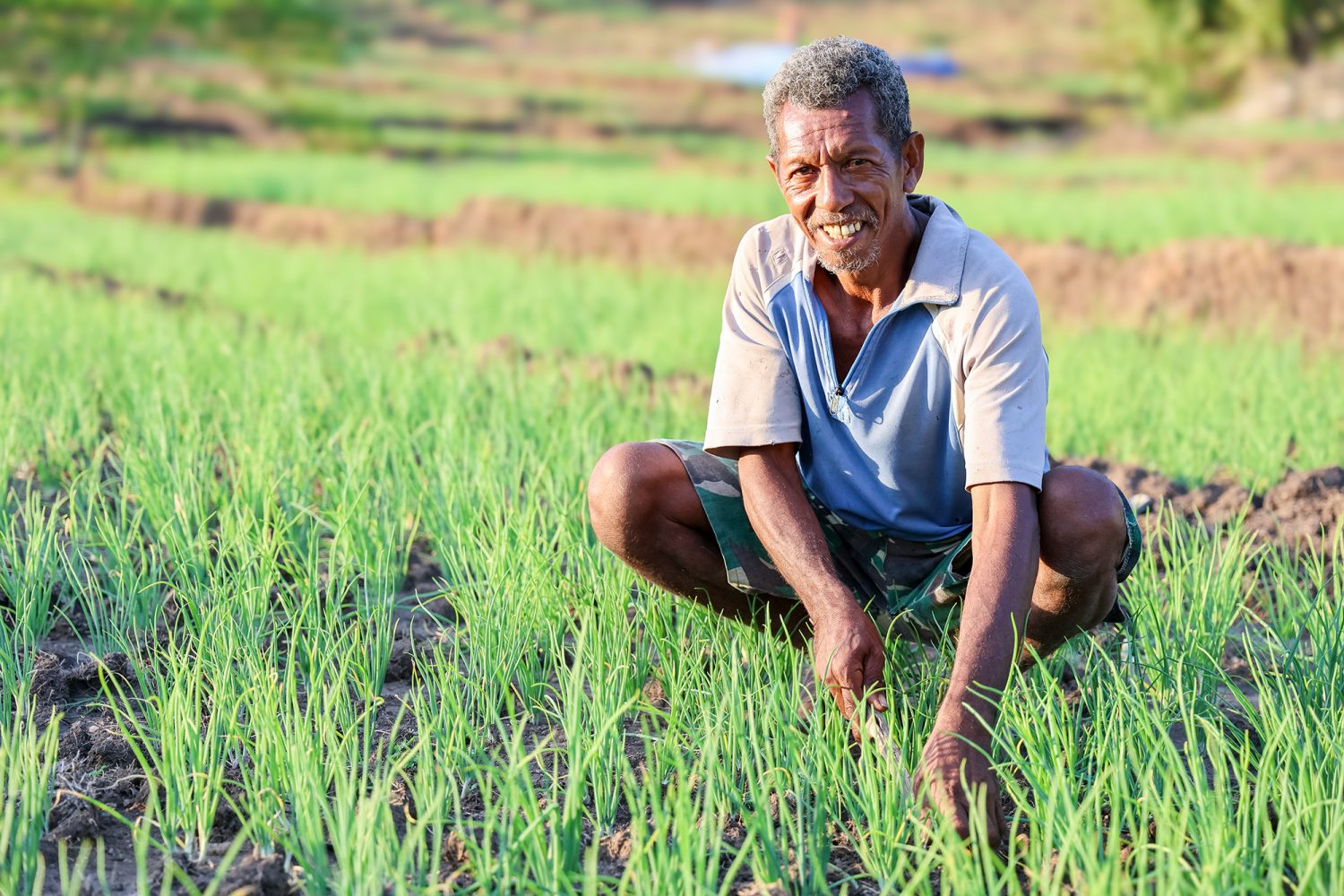
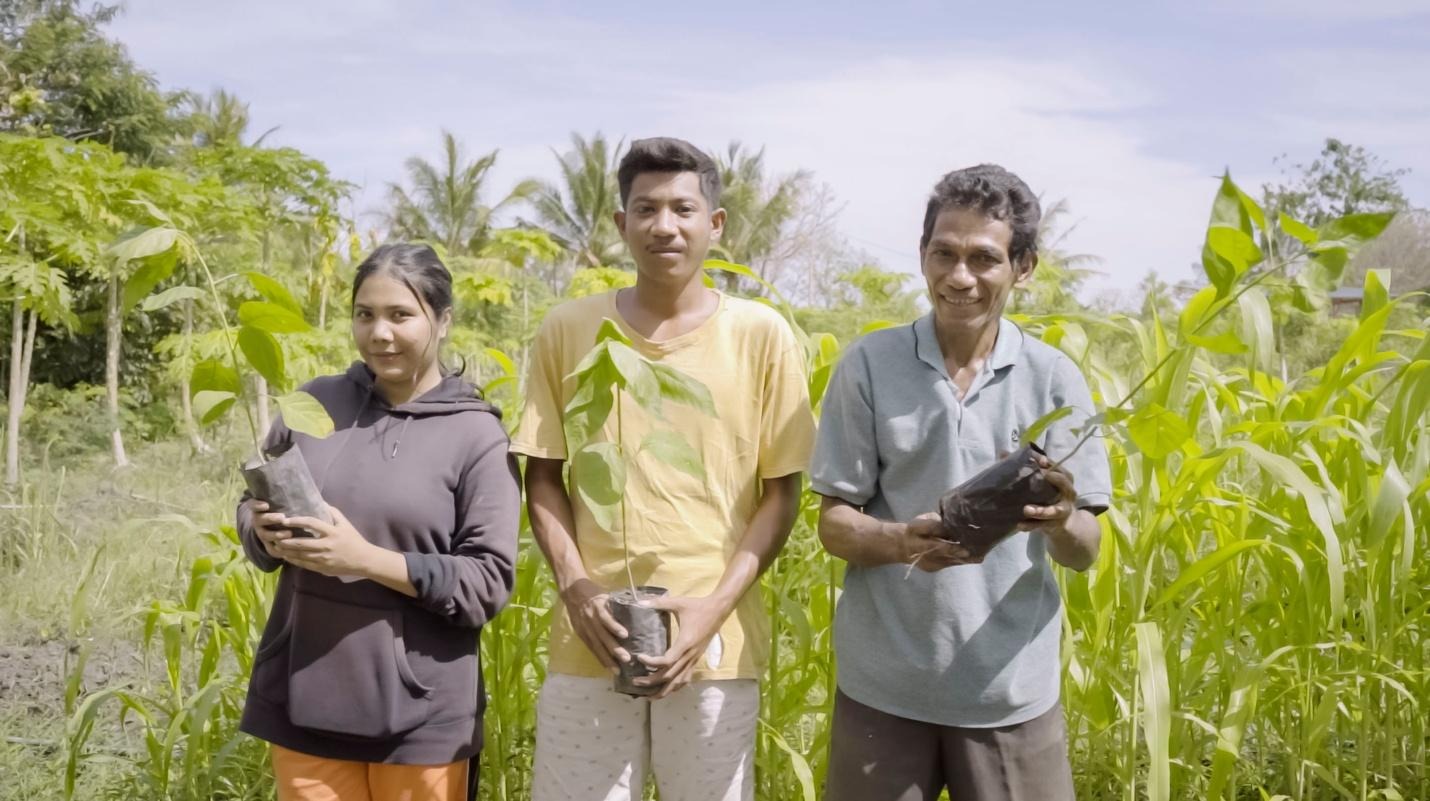
Petrus Pandanga has watched this happen for forty years. He is 60 years old, a farmer and member of the Sumba Christian Church, and he has spent most of his working life trying to convince people that Sumba can sustain them if they farm it differently, think longer-term, plan further ahead.
“When the planting season begins, family incomes are at their lowest,” he says. “That’s a huge obstacle. That’s what farmers feel.”
He is describing the hungry season: the months between harvests when food runs low, rice prices double, and families with no savings and one harvest a year face a brutal choice. Borrow money they may not be able to repay just to survive, go without food, or leave.
The statistics frame it starkly. Sumba is among the poorest regions in Indonesia, with nearly a third of its population living below the poverty line. But the numbers don’t capture what Petrus sees when he walks through villages: communities where virtually everyone under 40 has already gone.
“If it continues,” he says, “it will create greater dependency. Young people only think about looking for work outside. The chance of food security being disrupted in the future is quite large.”
Climate change has sharpened every edge of this crisis. It hasn’t necessarily made Sumba drier. It has made the seasons unpredictable. Rain that farmers could once rely on every year now comes later and less often. Crops planted in hope die in the ground. Replanting costs money families don’t have. An African Swine Fever outbreak stripped many households of their pigs, the traditional savings account, the financial backstop when everything else failed.
Subsistence farming families like those in Sumba sit at the most vulnerable end of global economic and environmental shocks. They have no buffer: no savings, no insurance, no alternative income. When the rains shift by two weeks, when commodity prices spike, when a disease sweeps through the livestock, the consequences land immediately on families already living on the edge of not enough. The distance between a good year and a catastrophic one is measured in days of rain.
So people leave. They take the boat to Bali, arriving without qualifications, without connections, and too often without an understanding of the cultural differences that await them. They find themselves in double poverty: struggling back home and struggling again at their destination without support.
A church that looked to the root causes
This is the pattern Rev Dr Betha Meidyawati, Director of UnitingWorld’s partner, the Maha Bhoga Marga Foundation (MBM), had been seeing in Bali for years.
MBM is a foundation of the Protestant Christian Church in Bali (GKPB). For more than 40 years, it has worked with poor and vulnerable communities in Bali, running health programs, supporting survivors of domestic violence, and accompanying families through economic hardship. It is an organisation that is trusted by the people because it is deeply rooted in the communities it serves.
But when Rev Betha reviewed MBM’s direction at the start of her leadership in 2023, she kept coming back to a question: why were so many of Bali’s most vulnerable migrants coming from Sumba?
The answer was exactly what Petrus described: extreme poverty. Drought. Crop failure. A hungry season that came every year without fail. Communities with no safety net and no way to plan beyond the next harvest.
“I prayed to God, asking for wisdom,” she says. “I was reminded of my experiences doing outreach to urban migrants in Bali. Many migrants shared that the primary driving factor for people from Sumba to seek work in Bali was extreme poverty.”
The insight that followed was simple but significant. MBM had been supporting people after they arrived in Bali, after they got into trouble and ran out of options. What if MBM went to Sumba instead, and walked alongside the Sumba Church to help communities before desperation forced the journey?
“Through this work, we hope to support vulnerable communities in Sumba at the roots of the problems, within their own villages, rather than only after they have already migrated to Bali and face new challenges.”
“There are still many people living in poverty and vulnerability. Through shared efforts, accompaniment and compassion, these communities can be supported to rise, regain hope, and secure decent and healthy livelihoods.”
Rev Dr Betha Meidyawati, Director,Maha Bhoga Marga Foundation, Protestant Christian Church in Bali
Church to church, island to island
What makes this story distinctive is that this was not a program designed in Sydney or Geneva or Canberra. It grew out of a relationship between two churches on different islands of Indonesia.
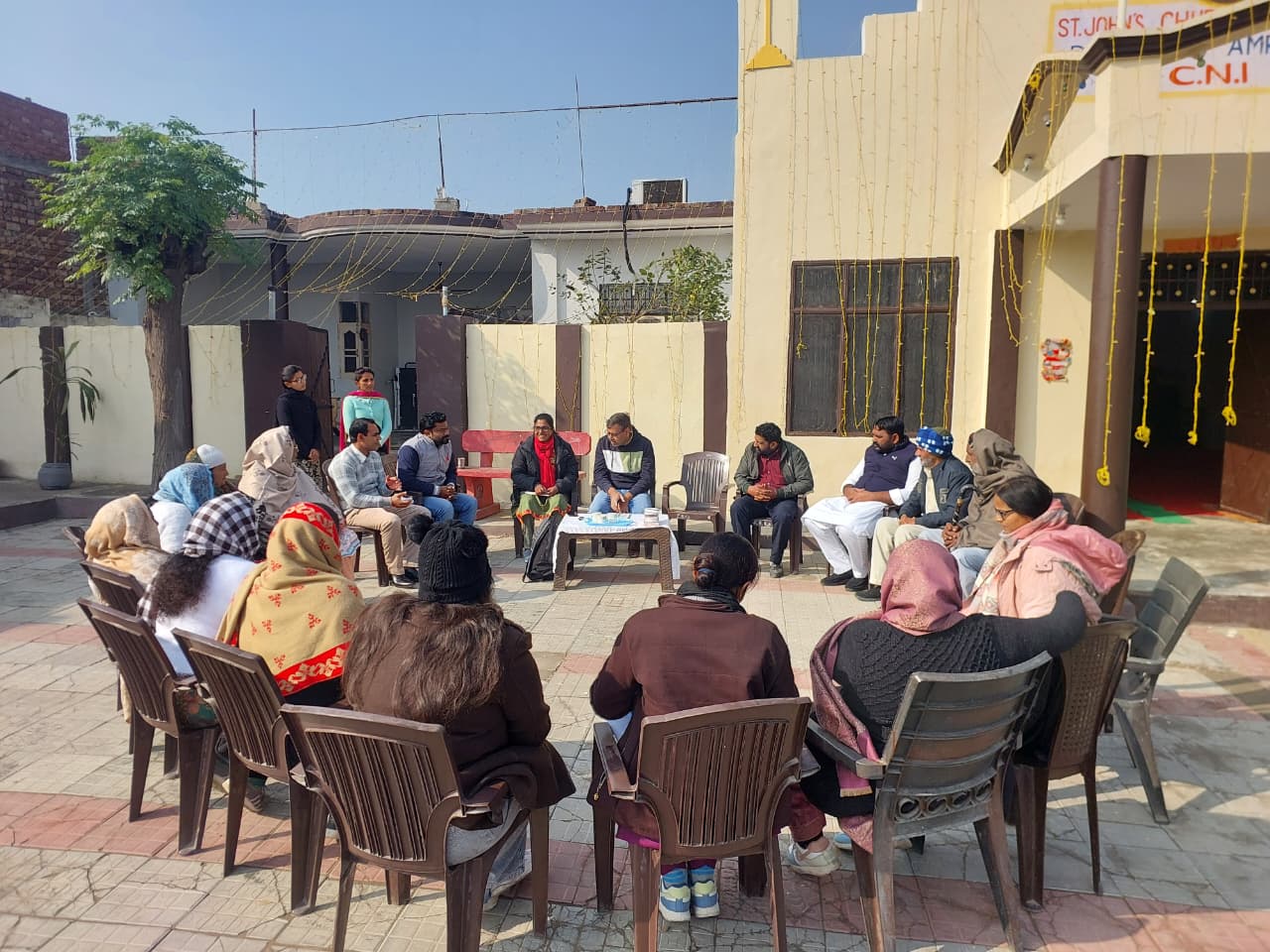
In March 2025, the leaders of the Protestant Christian Church in Bali and the Sumba Christian Church (GKS) signed a Memorandum of Understanding, formalising a partnership built through deep conversations over preceding years. MBM gained office space within the GKS compound in Sumba. GKS leaders opened doors with regional government. A new collaborative project was born.
“With the generous accompaniment of GKS leadership,” Rev Betha says, “MBM has been introduced to and supported in engagements with the East Sumba Regional Government. In many respects, the management and staff of MBM have also gained trusted partners for discussion and for learning the local cultural context.”
It is a model the Uniting Church has long championed but doesn’t always get to see in practice: local churches leading transformation from within their own communities, with external partners walking alongside rather than dropping in with answers from outside.
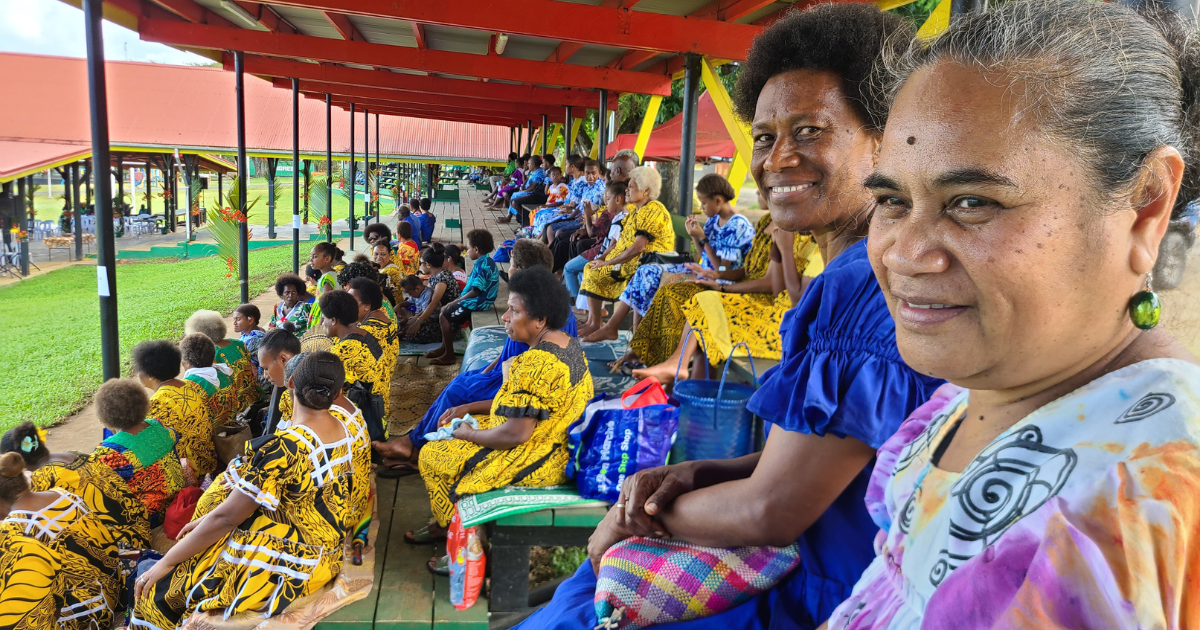
The project is now working across three villages in Sumba, bringing kitchen gardens, health education, water access, climate-resilient farming and sustained mentoring through trained village cadres. Women are at the centre. The program is built around the belief that food security, family health and women’s empowerment cannot be addressed separately but as a whole.
Petrus is part of it. His demonstration farm, the place he has tended for decades, is now part of a broader network of learning and change.
“Change doesn’t always start with many people. One person learns, and then brings two more. Those two tell others. Knowledge spreads like that.”
Petrus (right)
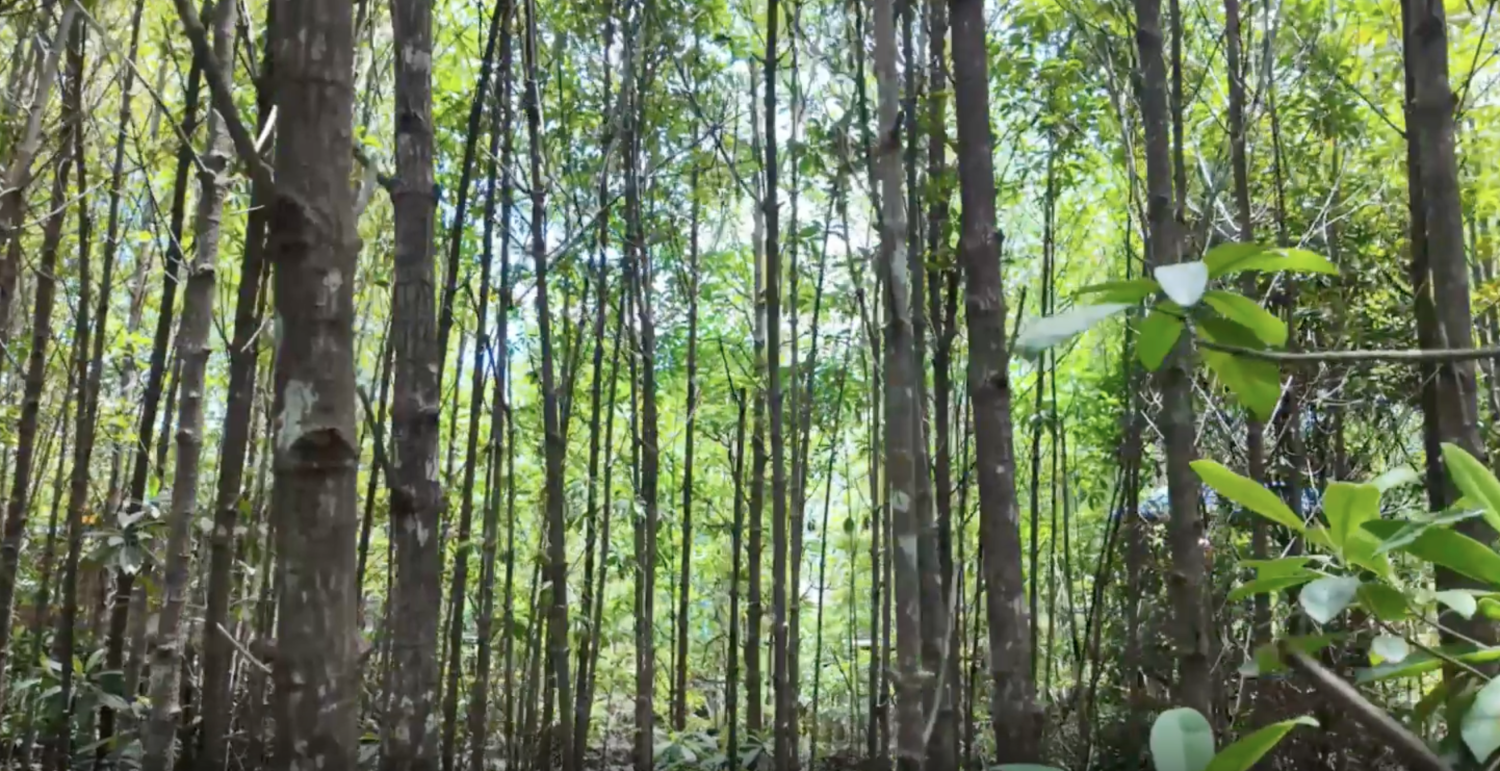
For Semis, a farmer in the highlands, the vision is not abstract. She pounds rice by hand every morning to feed her family, because there is no mill nearby. She and her husband farm 20 acres of land, once a year, if the rains come. When the crop fails, they forage in the forest for wild plants and roots.
Her hope she says, is “that my child can go to school, and that there will be enough to eat.”
That hope, modest, practical and entirely achievable, is what this partnership is working toward.
From scarcity, abundance. That is what is being built, church to church, island to island, together.
Your gift helps break the cycle of poverty and hunger in the world’s poorest places.
Poverty isn’t a failure of effort, it’s the result of systems stacked against people who have the least, or who were born into the world’s hardest places. Our church partners in Asia, Africa and the Pacific are changing things from the inside: building food security, bringing clean water closer to home, creating lasting livelihoods and walking alongside communities until the change sticks.
This project is supported by the Australian Government through the Australian NGO Cooperation Program (ANCP).