Skip to content
Donate now
    • Make a donation
    • Start a fundraiser
    • Gift catalogue
    • Include a gift in your Will
    • Workplace giving
    • Advocacy
      • Clean Water & Nutrition
      • Health & Education
      • Gender Equality
      • Disaster Ready Communities
      • Emergency Relief
      • Pacific
      • Asia
      • Africa
      • Middle East
    • Engage your congregation
    • Request a Speaker
    • Resources
    • Lent Event 2027 (coming soon)
    • Our Approach
    • Our People
    • News & Updates
    • Annual Reports
    • Policies
    • Contact us
Donate
  • Challenges to the relief effort in Papua New Guinea

    Challenges to the relief effort in Papua New Guinea

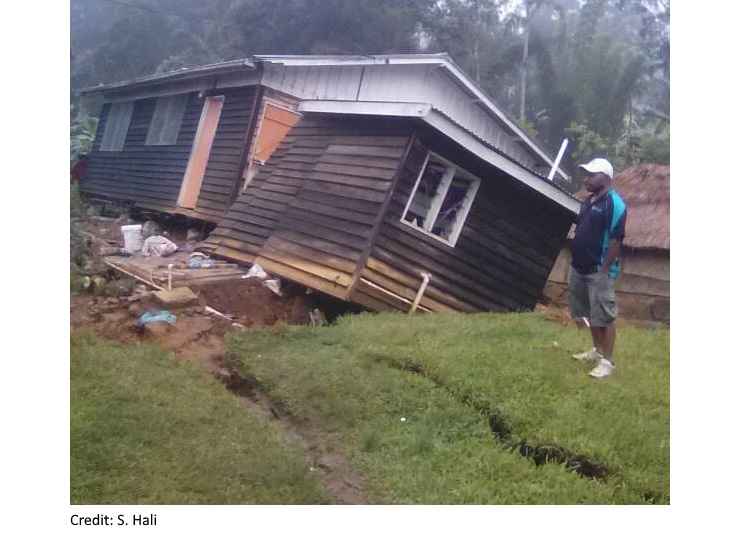
    On 26 February a 7.5 magnitude earthquake struck the highlands region of Papua New Guinea, decimating the area. Tragically more than 150 people have been killed, and many others lost everything they have.

    UnitingWorld responded as soon as possible, working with our partners, the United Church Papua New Guinea (UCPNG), to help them provide thorough assessments of earthquake affected areas. All initial assessments have been completed, resulting in the identification of 12 communities in the region most affected and in need after the initial distributions.

    We’ve been in constant contact with UCPNG to help coordinate the response, however there have been significant delays in distributing support to more regional areas as quickly as is needed. This has been an issue across the province, the remoteness of affected areas, and the recent intensification of civil unrest has restricted access for many relief agencies.

    In response to this a joint Church response plan has been developed through the collaboration of UCPNG with other Churches in PNG, supported by UnitingWorld and other Australian NGOs. We are now in the process of leveraging significant government funding for an initiative designed to best meet the needs of the communities affected. They include:

    – Phase 1 Emergency (The next 1-4 months): distribution of vital supplies including water containers, hygiene, sanitation and shelter kits, addressing protection, conflict resolution and psychosocial support.

    – Phase 2 Early Recovery (4-8 months): semi-permanent reconstruction (houses, latrines, schools, infrastructure) protection, conflict resolution and ongoing psychosocial support.

    – Phase 3 Recovery (8-12 months): permanent reconstruction (houses, latrines schools, infrastructure), protection, conflict resolution and psychosocial support.

    UCPNG are committed to providing support to these communities, and have already helped agencies to distribute emergency supplies to many of the communities most in need through the information gained from the assessment. We understand that the need is great and are working closely with UCPNG to help speed up processes, with the procurement and logistics planning for the first phase now underway.

    Our partners have been directly affected by this disaster. They are not only working to access to the communities most affected by this tragedy, they ARE part of these communities.

    To make a donation to the relief efforts please visit: https://unitingworld.org.au/pngearthquake

    The Australian Council for International Development (ACFID) state the most efficient and cost-effective way of helping those affected by this disaster is with your donation. We ask you to please refrain from sending physical items. For more information please click here
    admin

    April 6, 2018
    News
    All Things Pacific, Climate change, disaster relief, Papua New Guinea
  • I saw the impact of a cyclone first hand

    I saw the impact of a cyclone first hand
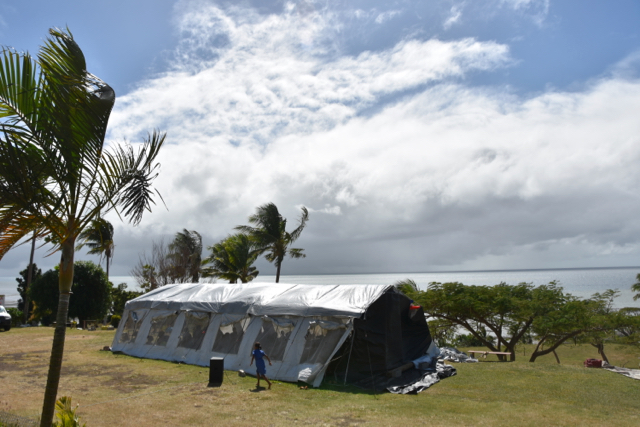
    I travelled with my family as part of an Exposure trip through UnitingWorld to Fiji. One of the most meaningful experiences for me was going by speedboat to the island Ovalau, significantly damaged by Cyclone Winston in February of 2016.

    Talking to our guide James Baghwan, we came to understand that the majority of the people on the island barely had the means to provide for their family’s basic needs. They don’t have the capability to move somewhere else, even to the main island, where they would be better equipped during times of cyclones. Even if they did, most are living on the land that their ancestors did, and so have significant cultural and historical ties to the land, which provides them with a sense of identity.

    Cyclone Winston was expected to completely miss the island, and so the people were unprepared. You can imagine the chaos, panic, and terror they would have experienced in the mad rush to secure what little they had with heavy materials and find a place where they might be safe. The damage was strong enough to beach a ship, lift up and move water tanks as well as destroy houses and buildings.

    James told me people would probably have run up the mountain and lay on one of the ringing roads, holding onto whoever or whatever they could. They would have stayed like this for many hours, desperately hoping and praying that they wouldn’t be blown away or hit by debris, all the while listening to the terrifying sounds of everything they knew being ripped violently apart.

    We can only begin to imagine the fear, panic and desperation they would feel and how psychologically damaging this would be. Their whole lives dictated by this fear, trapped in this cycle of working to repair what is lost only to see it destroyed the next time and have to begin again.

    This fear would only be intensified by the threat that global warming places on them – of bigger, more powerful, more unpredictable cyclones. Add to this the sheer frustration they must feel watching the powers of the world – who could do something to help them or to help prevent global warming – yet who debate that it exists.

    After this conversation, I began to wonder: in the midst of all of this, how do people on that island find true peace and happiness, when they are under such threat and have so little? And the people that we met did seem happy and were welcoming.

    And it reminded me of a Bible passage from Matthew 6:19-24: “Do not store up for yourselves treasures on earth, where moths and vermin destroy, and where thieves break in and steal. But store up for yourselves treasures in heaven, where moths and vermin do not destroy, and where thieves do not break in and steal. For where your treasure is, there your heart will be also.”

    Thanks to sixteen year old Hannah for allowing us to share her reflection with you.

    If you’re keen to find out more about what the Pacific church is doing to protect against cyclones and how they’re working to save lives in disaster, read more about the project or make a donation here.


    admin

    February 28, 2018
    Blogs
    Climate change, disaster reduction, Fiji, Pacific
  • Methodist Church in Fiji sails for climate solutions

    The President of the Methodist Church in Fiji (MCIF) is to join the crew of Fiji’s iconic traditional sailing canoe the ‘Uto Ni Yalo’ this week, as it sails to Matuku in the Lau group of islands.

    Rev. Dr Tevita Nawadra Bainivanua will join the Uto Ni Yalo in Moala and participate in activities on the island that focuses on building community resilience to climate change as well as explore opportunities to advance traditional seafaring as a means of reducing Fiji’s eastern islands reliance on fossil fuels.

    He and his wife will then sail on the Uto Ni Yalo to Matuku where they will join in environmental and climate change awareness activities as well as officiating the induction of the Divisional Superintendent of the Methodist Church’s Matuku Division.

    “I have followed the voyages of the Uto Ni Yalo and heard a lot about their work and mission from their volunteer chaplain Rev. James Bhagwan,” said Rev. Dr. Banivanua.

    “The church’s symbol of its New Exodus is a Drua sailing through rough seas. The work of the Uto Ni Yalo Trust is an example to the church of visionary courage and commitment to care for the ocean and environment and resilience in the face of climate change through sustainable sea transport.”

    “I’m grateful to the Trust for accommodating me on their voyage and look forward to a taste of what they experience in their voyaging.”

    Uto ni Yalo Trust secretary Dwain Q alovaki says that the Lau group of islands is highly biodiverse in reef fish that support wellbeing and livelihoods. The Lau voyage is an opportunity to progress community-led solutions to climate change among our maritime islands by employing a faith-based approach to environmental stewardship.

    Follow their journey on Facebook

    For further information contact MCIF Secretary for Communication and Overseas Mission jamesb@methodistfiji.org or UNYT Secretary dqalovaki@gmail.com

    Download MCIF press release

    admin

    September 11, 2017
    Blogs, News
    Church partnerships, Climate change, Methodist Church in Fiji, News
  • Pacific churches call for climate action at COP23

    Pacific churches call for climate action at COP23

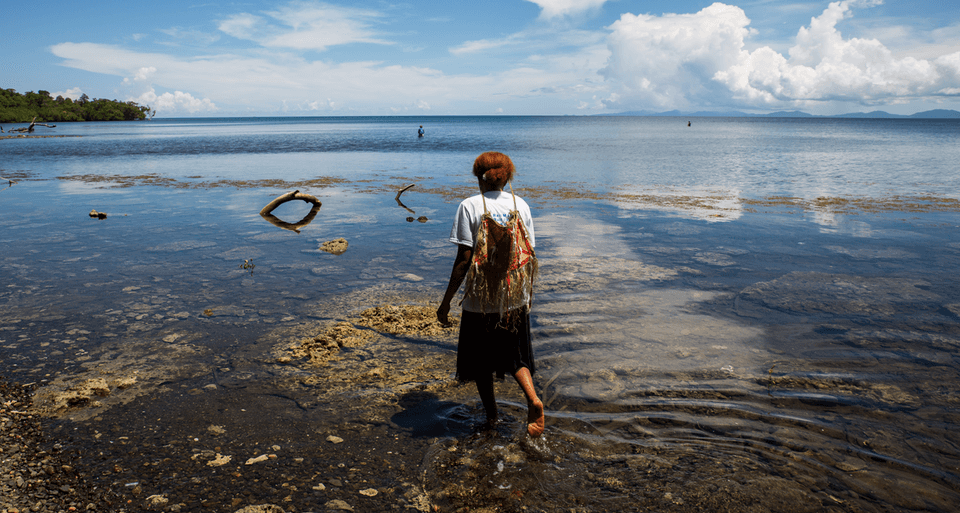
    The Pacific Conference of Churches (PCC) has called for the urgent implementation of the 2015 Paris climate agreement, and for leaders to hear the voices of Pacific Islanders – the most vulnerable people to the impacts of climate change.

    The PCC made its statement during a meeting of church leaders in Auckland, New Zealand this week.

    The meeting comes as Fiji prepares to chair the 23rd Conference of Parties (COP23), the annual climate change conference of 196 countries to be held in Bonn, Germany in November.

    The statement calls on governments to increase their pledges to keep the global average temperature rise below 1.5℃, and to support local and community-based approaches to risk management and climate change resilience.

    The Pacific Church leaders said: “We exercise our prophetic voice as churches and believers of the faith to amplify the cries of our people and Moana (ocean) who are directly or indirectly affected by climate change and encourage the spirit of stewardship among ourselves as custodians of God’s creation.”

    “We recognise the existing local knowledge and community strengths as an important factor in building a more sustainable and climate resilient Pacific. We call for full consultation and participation of our communities in national climate adaptation planning processes… and to create a new culture of proactive rather than reactive risk management.”

    UnitingWorld this week launched an appeal to support our partner churches in the Pacific as they build critical resilience to disasters and climate change. Our partners have highlighted their urgent need for disaster preparation and how it will save lives in their communities.

    The PCC also issued statements on nuclear proliferation in the region and a series of ‘calls to action’ on the self-determination of Papua New Guinea’s Autonomous Region of Bougainville, the French territory of New Caledonia and the Indonesian provinces of Papua and West Papua.

    Pacific church leaders also called on churches in Australia and New Zealand to be spaces where Pacific Island diaspora communities are affirmed of their identities.

    The PCC is a fellowship of 27 churches and nine member councils of churches in 17 island states across the Pacific. The Uniting Church in Australia is a member.

    admin

    August 17, 2017
    News
    Climate change, Leadership, Pacific
  • SPEAK UP! (Lent Week 4)

    SPEAK UP! (Lent Week 4)

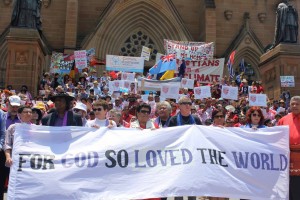
    As followers of Jesus, we’re called to stand alongside those who are working for justice around the world and particularly to help give a voice to those who struggle to be heard.  We’re the modern day prophets:  defending those who are weak, speaking the truth to those who are powerful.  It’s not an easy job.

    This week, we hope you’ll enjoy hearing about the work our partners are doing in their own communities to speak up for justice and peace in places where it’s desperately needed.  Throughout Asia, Africa and the Pacific, these communities are passionate, well equipped and vocal about their own needs and how they can bring about solutions to their own problems.

    In Fiji, for example, the Methodist Church is deeply committed to finding solutions to the problem of changing climate, which has a major impact on the poorest among them but impacts most of their islands in various ways.  45 communities already need to be relocated because of high tides that are reclaiming homes, schools and graveyards.  The Church is holding four days a year where local congregations reduce their use of energy – using public transport – get involved in clean ups, plant trees and speak up about the need to care for creation.  It’s a humbling display given that Fiji’s environmental footprint is so small in contrast to Australia’s.

    Pacific nations have also been vocal at the Paris Convention calling upon leaders to commit to targets that will impact most upon the most vulnerable nations of the world.  These leaders understand the nature of changing climate and are not silent in the face of the future.  They need our support to convince western nations to take responsibility for the burdens they place on those who have not caused, and have the least resources to deal with, the impact of changing climate.

    You can find out how to SPEAK UP for responsible environmental policies  by checking out the work of our partner here in Australia, Micah Challenge.

    Another organisation doing great work among our partners is MeDRA – the Methodist Relief and Development Agency.  Read about the creative work of people who’ve been equipped to speak up for the poor in their midst through MeDRA’s training.  And find out about how YOU can advocate for more support for excellent in-country initiatives like this by speaking to our political leadership about the need for us to continue our Australia Aid program.  You can join the campaign for Australian Aid here.

    UnitingWorld is committed not only to seeing you, our supporters, well equipped to providing support for people who struggle with poverty, but also to equipping our partners to find their own solutions and give voice to their own needs.  You can be part of that through our crucial leadership training programs.

    admin

    February 29, 2016
    News
    All Things Pacific, Climate change, social action, social justice
←
1 2 3

UnitingWorld is the international aid and partnerships agency of the Uniting Church in Australia.

1800 998 122
Donate
  • About
  • Annual reports
  • FAQ
  • Contact us
  • Make a complaint
  • Policies

As a member of ACFID, UnitingWorld is held accountable to the highest standards of governance, financial transparency and effectiveness in our work.

UnitingWorld gratefully acknowledges the support of the Australian Government through the Australian NGO Cooperation Program (ANCP).

We acknowledge the sovereign First Peoples of the lands on which our office is located, the Gadigal People of the Eora Nation.

Privacy Policy

Website by Creative Freedom

© UnitingWorld 2026. ABN 47 817 183 926. Level 3, 262 Pitt Street Sydney NSW 2000

Follow us on:

  • Facebook
  • Instagram
  • Bluesky