
In a place of extraordinary hardship, people still rise
Earlier this year, I made a trip across West Papua. It’s just 150km north of Australia, but it feels a world away – one of the poorest regions in the Asia Pacific. Yet everywhere I went, what struck me most was the profound generosity and sense of community that bound people together. This runs deep in local culture and traditions, expressed so naturally it almost seems to grow up out of the soil. It’s also what makes our work with the local Church so effective.
Over the coming weeks, I’ll be sharing stories of change and highlighting the work of our partners to tackle hunger, empower women and confront communicable disease in West Papua.
I’d like to start with the story of Beni and his family.
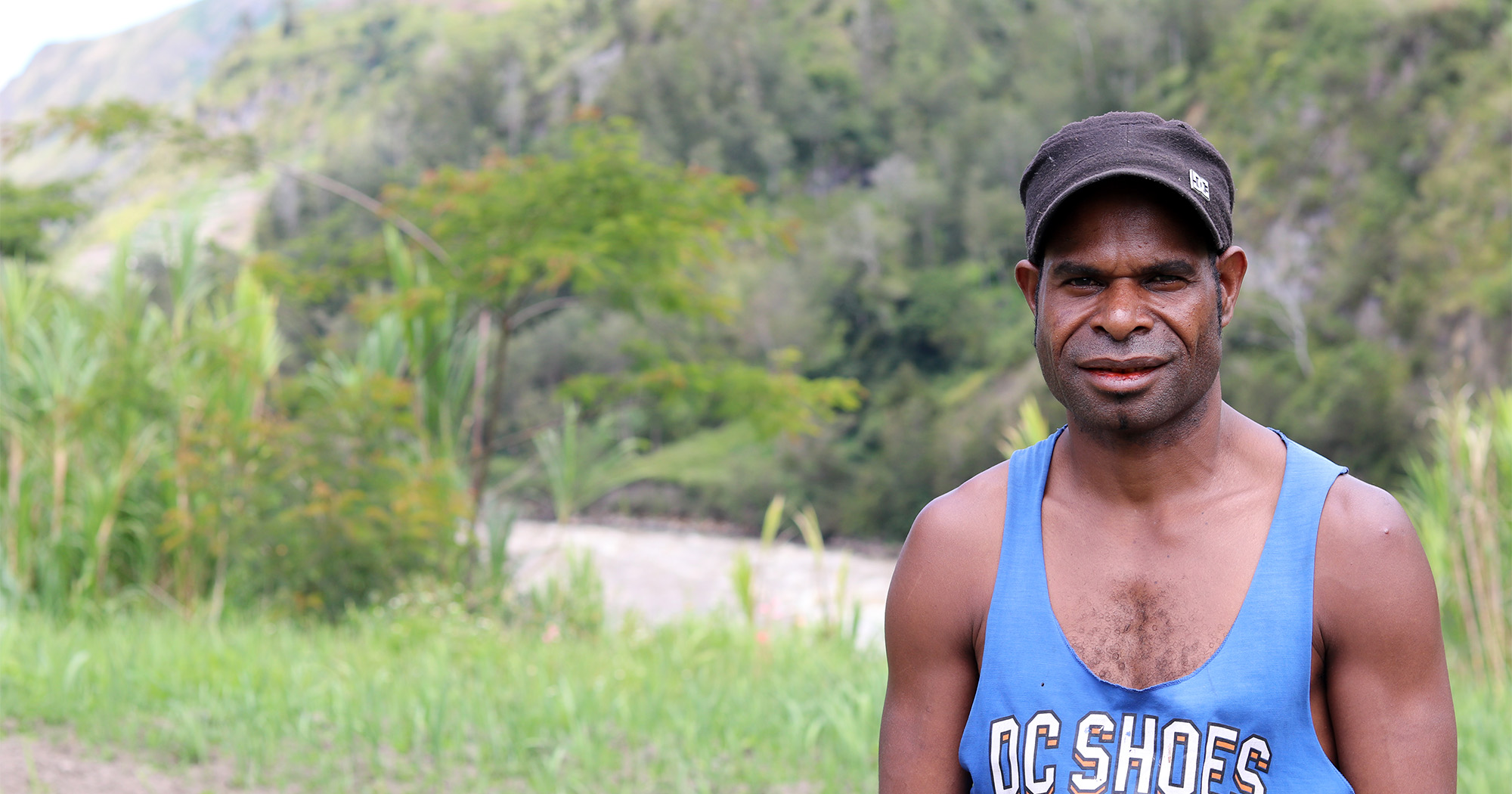
Beni and his wife Sarah live way up in the remote highlands of West Papua. When I met Beni in his garden one afternoon, he had been working all day but couldn’t stop smiling – even as he spoke about his recent struggles to put food on the table.
In 2016, the area he lives was gripped by one of the worst droughts in living memory. Crops right across the region failed. Beni and Sarah’s sweet potato, their main food source, was decimated.
“Our crop grew tiny and hard with the lack of rain; it was the same across the entire region, so everyone was worried… The whole village was wondering if we would all starve if we didn’t leave the area,” said Beni.
 Thankfully, UnitingWorld’s local church partners were there to help during and after the crisis. Our partners gave Beni seeds and training to nurture the family garden and enter into field-sharing arrangements with his neighbours to test out how different crops grow across the mountain.
Beni says the help provided by the project has allowed his family to plan for the lean seasons.
He was beaming when he showed me his latest soybean plants sprouting up, and was keen to explain how well it had gone – not just for him but his whole community.
You can help us invest in training and equipping more families like Beni’s.
Imagine what it’s like to have – for the first time ever – the ability to plan confidently for your future. That’s the experience of Beni and Sarah today. Proud of their hard work and expertise, they’ve now expanded their skills to making tofu, much sought after in the highlands. It’s giving them a small additional income for medical and school needs for their children.
Our partners are providing the expertise and training these families need – but they can’t do it without our support. Your gift can get more workers in the field, supply more seeds and nurture more families to take up life-changing opportunities.
With your support, together with the hard work of people like Beni and his family, we’re helping communities grow better futures.
I’m looking forward to sharing more stories of change over the coming weeks!
In hope and peace,
Marcus Campbell
UnitingWorld
Donate now to help people grow a new future in West Papua.
 P3W is the Training and Development Centre for Women in West Papua and it aims to empower and support women in remote and rural areas. Founded in 1962, the centre today has three regional offices comprising four units: Education and Training, Research, Documentation, Information and Publication; and Counselling and Income Generation. With the help of 30 staff and 12 field workers, the centre currently has 30 active projects. One of them is the Livelihoods Project, which is training women in the highlands to understand the potential resources of their land and supporting them to grow crops – in particular soya beans to produce tofu and tempeh.
 Ranging from raising awareness about HIV and domestic violence, to providing dormitories and information courses to students from remote areas, the centre has a strong focus on helping women. Towards the end of our chat, Hermina reflected upon the journey of the P3W and the positive impact it has had on the lives of countless Papuan women. I was moved by the genuine devotion she had for her work and the lives of her fellow Papuans. I could tell that for her, this was much more than a job – she was investing her heart and soul for the future of West Papua.
 At its head office, P3W runs courses teaching basic maths, crafting, women’s leadership, nutritional information, cooking and more. This basic knowledge is beneficial to the women of West Papua, especially when they return to their villages to spread what they’ve learnt. The centre also houses facilities for children who are too young for mothers to leave behind. While at the centre I had the opportunity to play with a little boy just under the age of three. He was one of the most active little ones I’ve ever met. We ran around the centre together and took selfies making funny faces. A special moment I will keep with me for years to come.