1800 998 122Contact

Advocacy Tag

Last week, UnitingWorld’s National Director Dr Sureka Goringe joined the Micah Australia Women Leaders Delegation at Parliament House for three days of meetings with Members of Parliament from across the political spectrum. Now in its seventh year, the delegation brought together 48 women leaders from 13 denominations and church-based agencies, united in calling for a stronger Australian aid program as a pathway to peace and stability.

The group met with more than 40 MPs, including Foreign Minister Penny Wong and Assistant Minister Anne Aly, to highlight the importance of restoring the aid budget to 1% of GNI and to draw attention to urgent needs such as the crisis in Myanmar. The reengagement with MPs was warm and substantive, with bipartisan support for the message that aid is prevention and an important expression of Australia’s global leadership.

For Dr Goringe, the experience was not only about speaking with decision-makers, but also about standing alongside a powerful and diverse network of Christian women committed to advocating for the vulnerable and marginalized.

“I don’t know which is more stimulating”, she said, “talking to politicians of every stripe about the importance of investing in peace and stability through aid, or hanging out with the incredible diversity of Christian women who come from such different kinds of traditions and theologies, but are equally committed to showing up for the vulnerable and poor.”

Micah Australia is a coalition of churches and Christian organisations raising a powerful voice for justice and a world free from poverty. UnitingWorld is a member of Micah Australia.

Dr Sureka Goringe, National Director of UnitingWorld, recently joined around 60 civil society leaders from across the Pacific, Australia and Aotearoa New Zealand at the Civil Society Climate Summit in Suva, Fiji.

Convened by the Pacific Islands Association of NGOs (PIANGO) and the Australian Council for International Development (ACFID), with support from WWF, the gathering brought together diverse voices to coordinate regional advocacy ahead of COP30 and COP31— the latter set to be hosted by Australia.

“Everyone agrees on the high-level demands,” said Dr Goringe. “We’re all calling for strong mitigation, an exit from fossil fuels, a just transition and investment in loss and damage, adaptation and climate migration. The real challenge lies in how this advocacy happens, and who gets heard.”

Pacific civil society organisations have long collaborated to raise a united voice on climate justice. Their key call is for a COP31 presidency that ensures real influence and access for Indigenous and grassroots leaders, not symbolic participation.

“What Pacific and Indigenous leaders want is a seat at the table, not the side show,” said Dr Goringe. “They’re seeking a COP process that makes space for civil society to help shape decisions, not just respond to them.”

Meanwhile, Australian civil society acknowledged significant gaps in First Nations representation, raising difficult but necessary questions.

“Many First Nations communities are sensing yet another vital conversation happening without them,” Dr Goringe shared. “Everyone wants to centre First Nations voices, but the path to doing that well is complex. It requires time, trust and tangible support. There’s a real commitment to try, but no easy answers.”

“Justice is about the ‘how’ as much as it is about the ‘what,’” she reflected. “Relationships, trust and good process are what build lasting change.”

Australian delegates made two key commitments:

  1. To support the Pacific’s climate justice agenda through their own advocacy, and

  2. To work actively to remove barriers that prevent Pacific civil society from participating meaningfully in COP31, through lobbying, funding and platform-sharing.

“This is where solidarity becomes real,” said Dr Goringe. “It’s about sharing resources, stepping back, and making space for others to lead.”

The second annual Pacific Australian Emerging Leaders’ Summit (PAELS) took place in December.

More than 70 young Christian leaders from across the Pacific and Australia came together for connection-building, leadership development and dialogue over a week-long program, coordinated by Micah Australia*.

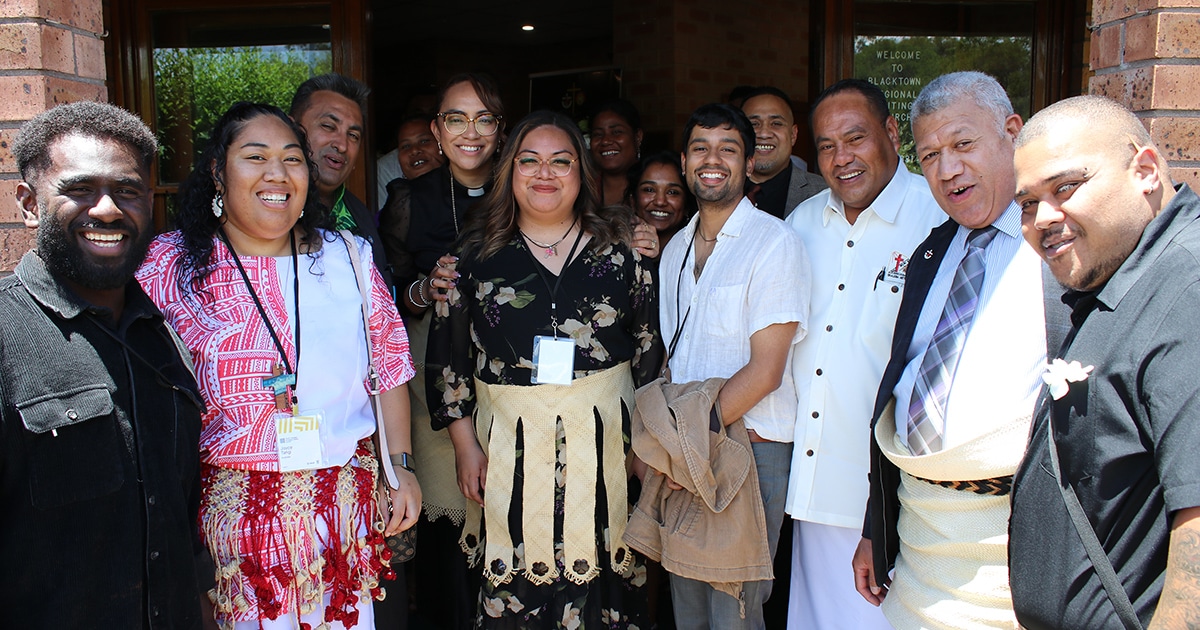
As part of the program, delegates were hosted for worship services at Blacktown Regional Uniting Church and Campbelltown Uniting Church.

At Blacktown Uniting, President Elect of the Uniting Church in Australia, Rev Charissa Suli, gave a sermon that encouraged the young delegates to boldly share their stories and their authentic selves.

“Your advocacy and voices are critical in shaping a future where the dignity of all human life and God’s creation is recognised and celebrated,” she told them.

Delegates went on to two days of advocacy training and a day of meetings with more than 50 members of Parliament in Canberra, where they discussed key development priorities for young people and their communities.

Raúl Sugunananthan, Policy and Advocacy Officer for the Uniting Church in Australia Assembly was one of those leaders. He spoke to us at Parliament House about the importance of community organising and political advocacy to make change. Watch what he shared below.

*UnitingWorld is a member of Micah Australia, a movement of Australian Christians to advocate on the most urgent global justice issues facing our world today – extreme poverty, rising conflict and climate change.

100 young people from across the Australia-Pacific region gathered on Ngunnawal country (Canberra) this week to build relationships and advocate together for the issues that matter to them. 

Coordinated by Micah Australia and the Pacific Conference of Churches (PCC), the inaugural Pacific Australian Emerging Leaders Summit (PAELS) brought together delegates from more than a dozen Pacific Island nations and First and Second Peoples from across Australia, including Pacific diaspora communities.

Young people from the Uniting Church in Australia (UCA) and the Uniting Aboriginal and Islander Christian Congress (UAICC) were part of the summit, as well as UCA partner churches from Tonga, Papua New Guinea, Fiji, Tuvalu, Kiribati, Samoa, the Solomon Islands and West Papua.

Climate change, gender equality, self determination, youth empowerment and economic recovery were key issues for the delegation.

Led by First Nations Christian leaders, delegates spent the first two days listening, learning and sharing their cultures and experiences with one another. They heard about the issues affecting the First Peoples of Australia and responded with lament, prayer and commitments of solidarity.  

The deep conversations and learning from First Peoples continued as the delegates were invited to the Aboriginal Tent Embassy, where they received a generous welcome and storytelling from elders. 

The site is the longest-running protest for Indigenous land rights, sovereignty and self-determination in the world, marking its 50-year anniversary this year. 

PCC General Secretary Rev James Bhagwan responded to their welcome as an elder of the Pacific delegates. 

“The Australian Government wants to have a First Nations foreign policy, and we welcome that,” he said. “But we have learned that we cannot have a First Nations foreign policy until we have a truly First Nations-led domestic policy in this land.” 

The Pasifika young people also shared the Fijian hymn Noqu Masu (this is my prayer).

After being equipped for relational advocacy together in small and diverse lobby groups, delegates headed to Parliament House for meetings with more than 80 Members of Parliament.

They were welcomed by Minister for International Development Pat Conroy and Shadow Minister Michael McCormack.  

On the second day at Parliament House, Minister for Indigenous Australians Linda Burney gave a powerful address to the delegates about the struggle for a voice, treaty and truth telling; encouraging them to not be disheartened by setbacks.   

As part of a workshop panel sharing stories of climate action, Raúl Sugunananthan and Mikali Anagnostis from Christian Students Uniting shared their experiences of organising in the Uniting Church to turn out 360 people to the School Strike for Climate march in Sydney in 2019.

Raúl shared a reflection about his time at the Micah summit.

“Connecting with leaders from across Australia and the Pacific was such a valuable experience because it showed me the vibrancy and diversity of the church beyond my Inner-West Sydney bubble, he said.

“Through the amazing young leaders I met, I learnt first-hand that God is moving through the leadership of First Nations communities from Arnhem Land to Sydney. God is moving through the Pasifika songs and stories woven throughout their island nations and diaspora communities. God is moving through the courage and determination of people striving for self-determination across our region, including Australia.”

“I can’t wait to continue this journey with emerging leaders from many cultures, genders and abilities who are all unified through their passion for Jesus and justice,” said Raul.

UnitingWorld Program Manager and Uniting Church member Mia Berry was also a delegate at the summit.

“Connecting with young leaders from across the Pacific and Australia was such a valuable opportunity for listening to the experiences, barriers and priorities for young people across our region, and learning to advocate as a united Pacific region,” she said.  

“The conversations and relationship-building that took place across the four days have laid the foundations for an ongoing network and community amongst the delegates, which will allow us to keep momentum.

From the perspective of my work at the UnitingWorld, the opportunity to meet with young leaders from the communities and churches we work with has given me a new and deeper understanding of these contexts.”

It was an incredible time of strengthening connections across cultures, learning from First Peoples and showing what is possible when people of faith work together for a more just and sustainable future.

We can’t wait to see what comes next for this powerful network of  leaders!

See photos from the event.

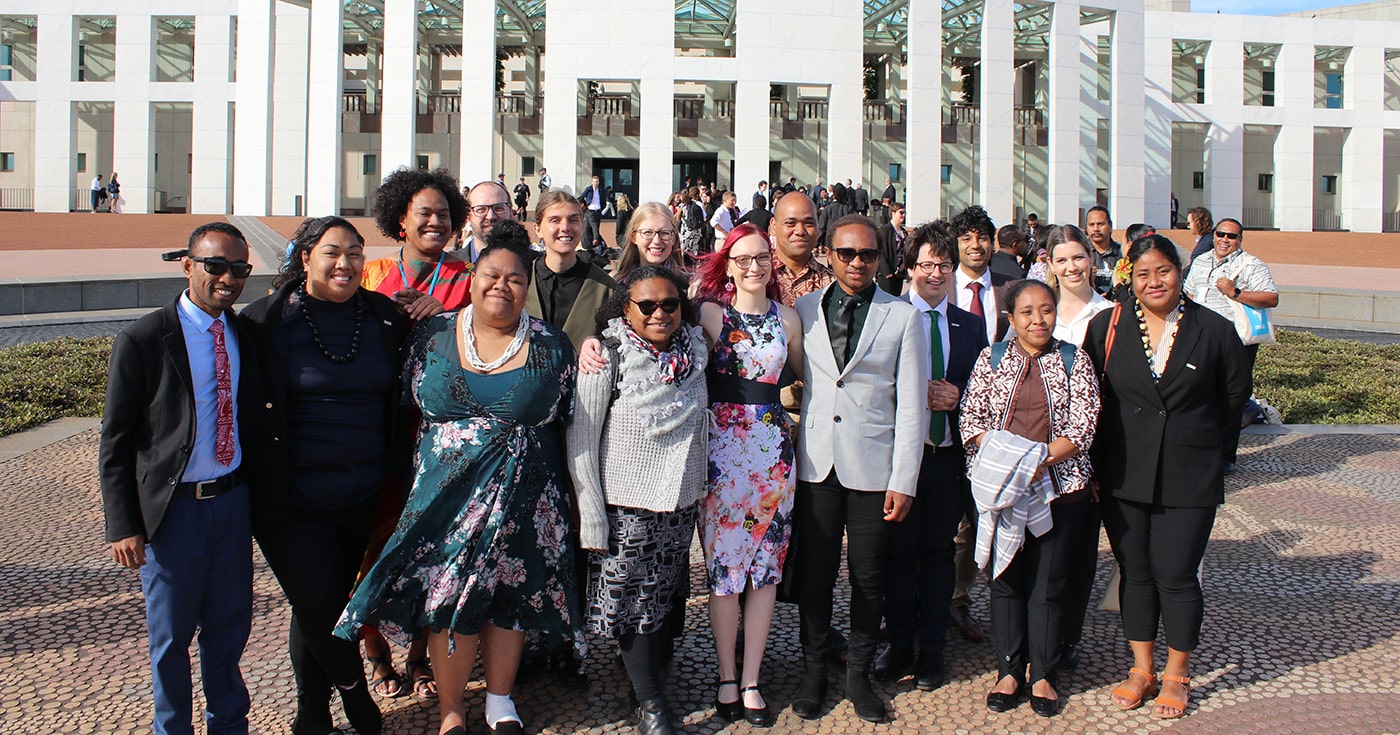
 (Photo header: UCA and UAICC summit delegates with representatives from UCA partner churches, UnitingWorld staff and other Uniting Church members)

UnitingWorld is a member of Micah Australia. The Uniting Church in Australia is a member of the Pacific Conference of Churches.

A major delegation of women Christian leaders has urged all sides of politics to back a $150 million emergency package to save lives from starvation in Africa and the Middle East.

With Somalia teetering on the brink of a catastrophic famine, the Micah Women Leaders Delegation met with senior government ministers, key opposition figures, cross bench MPs and minor party representatives in Canberra on Wednesday.

The group of 40 women made the case for Help Fight Famine, a coalition of Australia’s leading aid and development organisations, which is campaigning for Treasurer Jim Chalmers to spend $150 million on the hunger crisis threatening almost 50 million lives in 45 countries.

The Horn of Africa is experiencing its worst drought in four decades. But the added pressure from climate change, Covid and the war in Ukraine has made this hunger crisis unlike any other.

UnitingWorld National Director Dr Sureka Goringe was part of the delegation, alongside Uniting Church in Australia colleagues, Rev Amel Manyon, Rev Charissa Suli and former UCA President Deidre Palmer.

Reverend Amel Manyon is a South Sudanese community leader and minister in Adelaide. She came to Australia as a refugee in 2008.

Food insecurity has reached its most extreme levels in her home country since independence in 2011. Three quarters of the population – 8.3 million people – are facing severe food insecurity.

Rev Manyon recently visited relatives in a Ugandan refugee camp, where a family of 10 receives 5kg of grain to feed them for a month. That barely lasts a week. Some leave the camp in search of food.

“While I was there I was told there would be not enough food, especially after Covid and the war in Ukraine,” she said.

“Many children have died, women, vulnerable people – they died because they went searching for something to eat.

“I’m asking the government in Australia, please do something now.

“People are dying because of hunger and it’s not good for us to sit and listen to their stories and not do something.

“I believe the government of Australia which helped me come to Australia to have this opportunity to support my family will do something right now because that’s the government I believe in.”

A decade ago the world was slow to act in Somalia and 260,000 people – half who were children – died of starvation.

UN aid chief Martin Griffiths overnight gave a “final warning” we are in the “final minute of the 11th hour” in Somalia.

During the 2011 famine in Somalia, Australia contributed $135 million in today’s terms.

A Department of Foreign Affairs and Trade evaluation found Australia’s contribution was commendable, but would have been more effective if delivered earlier.

Help Fight Famine is calling for $150 million to address the unfolding catastrophe in the worst-affected hunger hotspots in the Horn of Africa, Afghanistan, Syria and Yemen.

The Micah Women’s Delegation consists of senior women in the Australian Church across the different denominations and Christian women from leading aid and development NGOs. UnitingWorld is a member of Micah Australia.

TAKE ACTION

Donate now to our emergency appeal

Write to your MP via the #HelpFightFamine campaign