

Thriving Church in China Part 3 – A Meeting of the Minds
“When friends come from afar, how could one not be happy?”
This Confucian saying captures the spirit of the third meeting between two presidents, one from the Australian Uniting Church, the other from the China Christian Council.
Chaired by Gen Sec Rev Kan, a team of 10 people from the CCC shared various ministries. The UCA President opened his conversation by reflecting the concept of Guanxi – relationship from the perspective of Trinitarian life, God’s relationship with the Creation, and Christ’s relationship with us.
“We are here to continue our relationship”, the President said.
For the ancient Chinese, a myriad of things derived from the interplay of two dynamic forces, Yin and Yang. Today the relationship between our two churches is underlined by a sharing – not only of joys, but also challenges – within the universal Body of Christ.
At the meeting three national leaders, Rob Floyd, Lin Hatfield-Dodds, and Andrew Glenn reflected two arms of this relationship: theological education and social service. Since 2010, there have been 7+7 mutual exchanges supported by the UW relational platform. In 2013, we jointly held a historic conference on Theology of Unity. In response to the ageing society we see in both countries, UnitingCare conducted two training conferences for 200 people. These two arms of engagement can be summarised as “unity in theology” and “unity in praxis”.
In 1984 when Bishop K. H. Ting visited WCC in Australia he requested a meeting with the UCA leaders. When he was asked why, he replied: “I have read your Basis of Union. We have a lot to learn from the Uniting Church in Australia about a theology of unity”. Stuart recalled this story in Rev Prof Andrew Dutney’s book. Indeed it has taken 30 years for us to recapture Bishop Ting’s foresight. Within this relationship, there is a core value overlapping two identities, namely God’s reconciliation in Christ Jesus. “Inner virtue enables outer ruling”. Our doing derives from our being.
Travelling to Nanjing was comfortable and quick. The 300km section is a part of 1400km railway built during the Global Financial Crisis. It took 3.5 years to complete and cost trillions of RMB. Although the tickets would never pay for the construction (A$30 to Nanjing), the network is designed to create a “same-city-effect”. It takes about the same time to Nanjing (65mins) as from one side of Shanghai to the other. The railway links an economic zone with a radius of 350km, and tax income pays for further development. China has a 16,000km high-speed railway network, and it will reach 30,000km by 2020.
In Nanjing we visited the Mausoleum of Dr Sun Yatsen(1866-1925). On the gate, there were two characters 博爱 – unbound love. When the last dynasty collapsed under the colonial powers, Dr Sun started the revolution in 1911 to replace the imperial system with a state of Republic. Married to a Methodist, one of three sisters of Song, he combined Christian love with Confucian morality and used the unbound love to heal the wondered nation. His “Three-People Principles 三民主义” – People’s Governance, People Livelihood, People’s Authority – replaced the idea of Son of Heaven, and moved politics from the One to the many. The job of a government is to “Serve Everyone Under Heaven 天下为公”. Forever he rests under the cosmic potency: “The Heaven and the Earth is set upright by Qi 天地正气”.
In the first week of Pentecost we came to Nanjing Union Theological Seminary. After a successful theological conference in 2013, we visited once again to speak about the practical implications of unity. Four speakers took the stage before 200 students. They spoke about their fields of leadership and also formulated four questions for further discussion.
- The relationship between God and people enables the UCA to journey with the First Peoples. “How do you enable this God-people relationship to flourish in your context?”
- The story of UnitingCare is a bottom-up unity from the laity. “How do you identify the painful needs in the society and empower the congregation to respond to the brokenness of this world?”
- UCA international relationships derive from an outgoing spirit of unity to form specific relationships with our neighbours in Asia and the Pacific. “If you were a future leader, how do you shape unity in relationship with Asian church neighbours?”
- The UCA is going through major change and requires ministers to facilitate these shifts. “How do you become a facilitator of spirit filled change in our locations?”
These questions invited students to form discussion groups. After 10 minutes of animated discussion, each group was invited to present their findings. The speakers were very surprised and encouraged by the answers: thoughtful, articulate, and targeted.
This week’s lectionary teaches us a biblical lesson: The Spirit’s renewal = God’s movement + people’s correspondence. Here among the students, it is evident that the Spirit is renewing the church. Where is God in all of these? God is moving in the margins. Missio Dei has called the church into being. We have been invited to participate in, and contribute to, people’s correspondence.

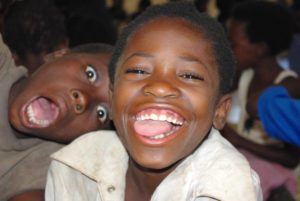 Thanks for sticking with us. We hope this honest answer to your question encourages you not to feel guilty about your giving, and explains why we continue to ask. Please know that we take great care with your gifts and appreciate your generosity. Most of all, the people to whom you give appreciate it more than we’ll ever know.

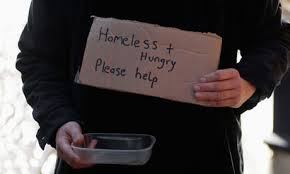
 That’s how the globe operates too. Even from a purely selfish perspective, it’s to our benefit to live in a more stable world; one that helps countries develop peacefully and equally so that extreme ideas are less likely to get a foothold – the seed bed for terrorism. It’s to our benefit to keep working worldwide against easily communicated diseases; to help hose down conflicts so that they don’t swallow up whole regions; to work for peace and stability between nations so that the economy grows and trade benefits us all.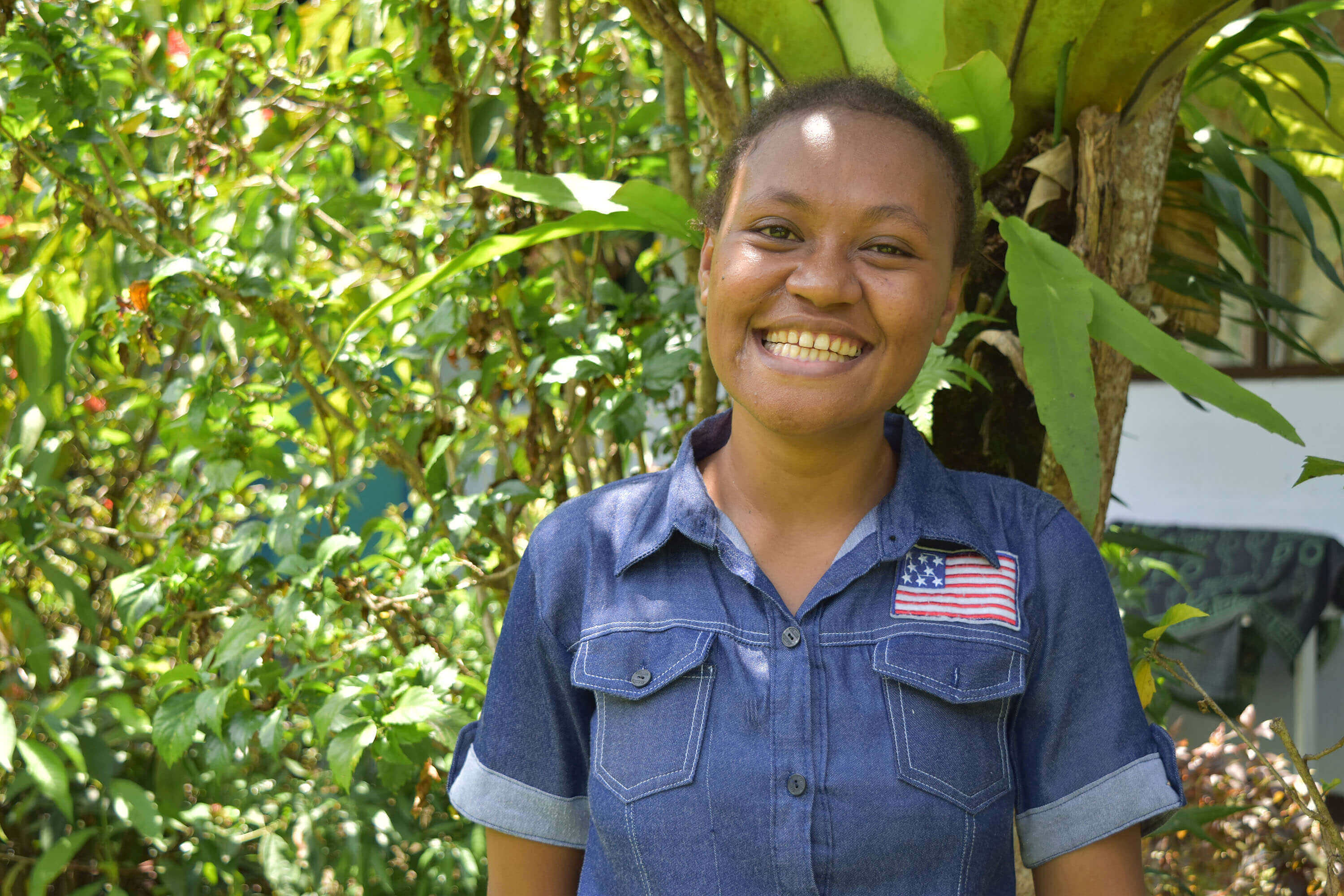
 P3W is the Training and Development Centre for Women in West Papua and it aims to empower and support women in remote and rural areas. Founded in 1962, the centre today has three regional offices comprising four units: Education and Training, Research, Documentation, Information and Publication; and Counselling and Income Generation. With the help of 30 staff and 12 field workers, the centre currently has 30 active projects. One of them is the Livelihoods Project, which is training women in the highlands to understand the potential resources of their land and supporting them to grow crops – in particular soya beans to produce tofu and tempeh.
 Ranging from raising awareness about HIV and domestic violence, to providing dormitories and information courses to students from remote areas, the centre has a strong focus on helping women. Towards the end of our chat, Hermina reflected upon the journey of the P3W and the positive impact it has had on the lives of countless Papuan women. I was moved by the genuine devotion she had for her work and the lives of her fellow Papuans. I could tell that for her, this was much more than a job – she was investing her heart and soul for the future of West Papua.
 At its head office, P3W runs courses teaching basic maths, crafting, women’s leadership, nutritional information, cooking and more. This basic knowledge is beneficial to the women of West Papua, especially when they return to their villages to spread what they’ve learnt. The centre also houses facilities for children who are too young for mothers to leave behind. While at the centre I had the opportunity to play with a little boy just under the age of three. He was one of the most active little ones I’ve ever met. We ran around the centre together and took selfies making funny faces. A special moment I will keep with me for years to come.